





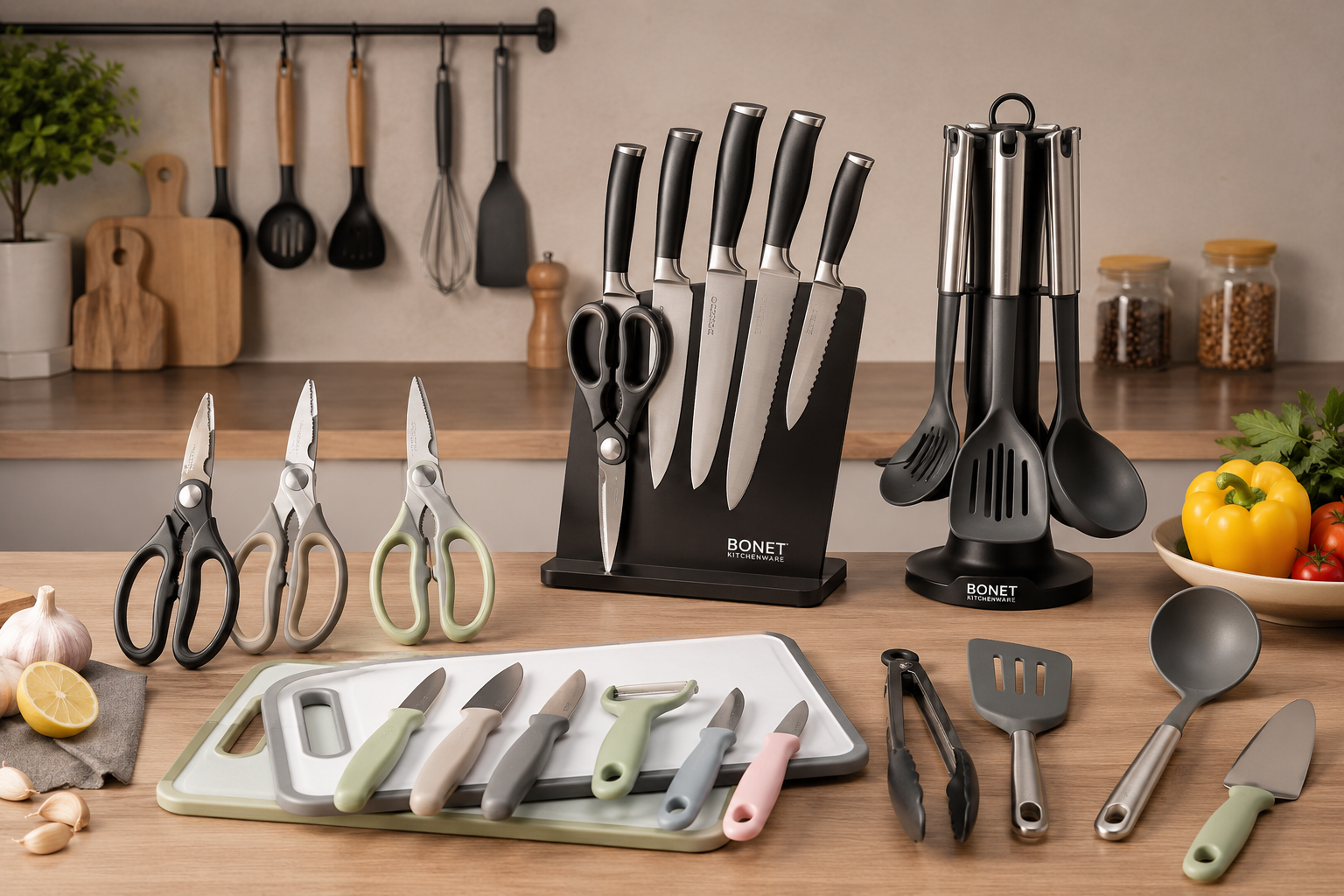
A retail kitchen tool line can look attractive in a sample box, yet still become difficult to sell after bulk delivery. The common issues are familiar to importers: scissors that cut well at first but lose bite quickly, knives with uneven handle balance, silicone tools that feel too soft, peelers that bend under pressure, or packaging that looks fine in photos but fails during shipment. A reliable kitchen tools supplier must solve these problems before production starts. BONET HOUSEWARE CO.,LTD is based in Yangjiang and presents its business around kitchenware, professional scissors, kitchen knives, utensils, chopping boards, and multi-functional tools for global buyers.
Material Fit Is the First Sourcing Filter
The first technical question is not “How much is it?” but “Does the material match the job?” Kitchen scissors and knives rely on stainless steel for cutting stability, corrosion resistance, surface finish, and cleaning performance. Handles may use PP, TPR, ABS, or soft-touch materials, and each one changes grip comfort, perceived value, and long-term durability. Silicone utensils need balanced flexibility: soft enough to protect non-stick cookware, firm enough to stir, scrape, and serve without feeling weak.
This is not only a design issue. The U.S. FDA explains that food-contact substances can include cookware, processing equipment, food preparation surfaces, and packaging components, so material control is directly related to sourcing confidence for kitchen products.
How Product Structure Affects Daily Use
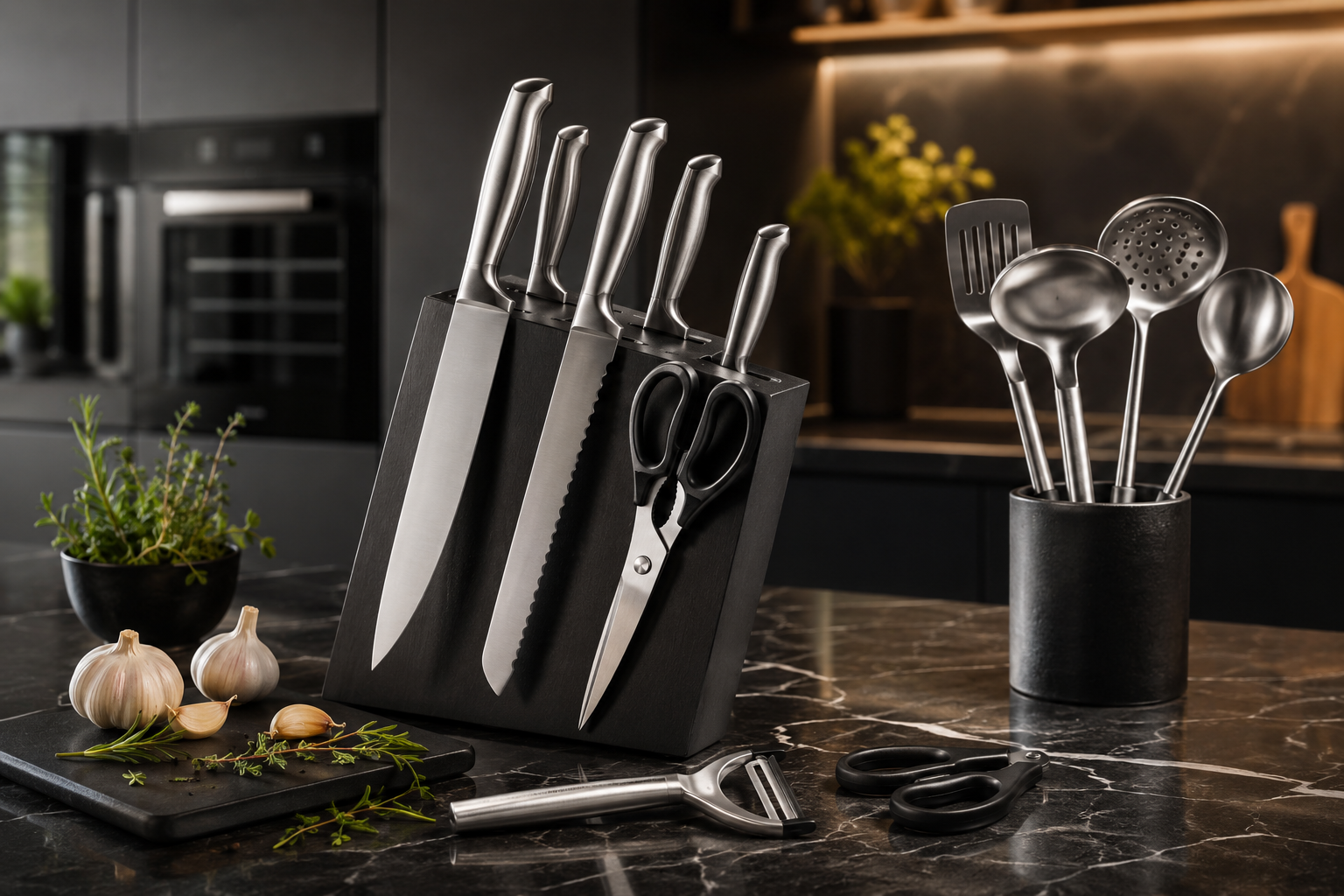
A good kitchen tool works because material, geometry, and hand feel support the same purpose. A kitchen shear needs blade alignment, pivot stability, serration design, and handle comfort. A knife set needs blade thickness, edge finishing, balance, and grip shape. A silicone spatula needs a smooth working edge and enough rigidity near the neck. A peeler needs a blade that stays stable when crossing uneven surfaces such as carrots, potatoes, or citrus peel.
For buyers, this principle is important because weak products often fail in small moments. The customer does not analyze steel hardness or handle molding. They simply feel that the tool slips, bends, scrapes badly, or looks cheap. That is why a kitchen tools supplier should discuss product structure before price negotiation becomes the only topic.
Ordinary Catalog Buying vs Structured Product Development
| Sourcing Approach | Common Result | Better Direction |
|---|---|---|
| Buying random low-cost SKUs | Product line feels scattered | Build by use case: cutting, peeling, serving, food prep |
| Only checking sample appearance | Bulk order may vary | Define material, process, and inspection points |
| Treating packaging as the last step | Shipping damage or weak shelf appeal | Plan packaging with product function and channel |
| Using one design for all buyers | Poor channel fit | Adjust for supermarket, online retail, wholesale, or private label |
| Choosing only by price | Higher complaint and reorder risk | Balance cost, durability, usability, and presentation |
This comparison reflects the real difference between buying products and building a sellable retail program. A price-only decision may work once. A structured sourcing plan supports repeat orders.
A Better Solution Starts With Product-Line Planning
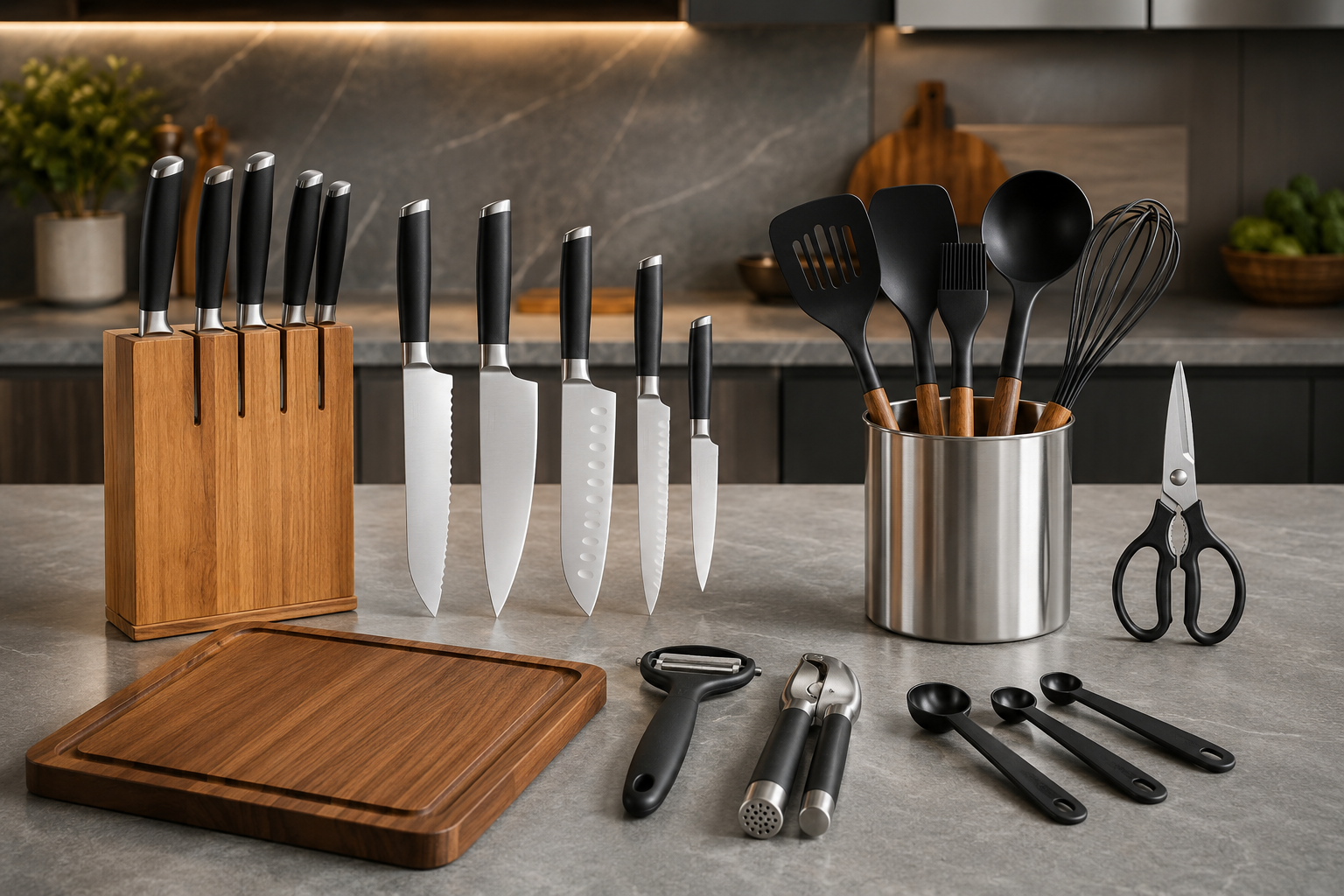
A capable kitchen tools supplier should help buyers organize SKUs around how customers actually cook. One line can focus on daily meal preparation: kitchen scissors, chef knives, peelers, and chopping boards. Another line can focus on non-stick cookware: silicone spatulas, spoons, ladles, and tongs. A third line can focus on compact kitchens or online retail: multi-functional scissors, 3-in-1 tools, garlic tools, and easy-storage peelers.
This structure makes sales easier. Supermarket buyers can understand shelf placement faster. Amazon sellers can create clearer product images and bullet points. Distributors can group products by price level and channel. Private-label buyers can build a coherent family instead of collecting unrelated items.
Why BONET Fits Retail-Ready Kitchen Tool Programs
BONET’s strength is the combination of product range and manufacturing background. Its public product direction includes kitchen scissors, knife products, kitchen utensils, chopping boards, and multi-functional tools, which gives importers more room to build coordinated programs from one supply base. The company also highlights Yangjiang’s knife-and-scissors heritage and describes its philosophy as creating tools that act as an extension of the user’s hands.
For B2B buyers, quality management matters as much as product design. ISO describes ISO 9001 as a quality management standard that supports quality improvement and customer satisfaction, which aligns with what importers need from repeat production: consistency, inspection discipline, and process control.
Production Control Behind Stable Bulk Orders
The real test of a supplier is not the first sample. It is whether the second, third, and tenth shipment remain stable. For stainless steel products, forming or stamping controls shape accuracy. Heat treatment influences cutting performance and blade durability. Grinding and polishing affect edge feel and surface finish. Injection molding affects handle fit, grip comfort, and structural reliability. Assembly determines whether scissors open smoothly, pivots stay firm, and moving parts feel controlled.
A strong kitchen tools supplier should be able to define inspection points before production begins: blade alignment, burr control, handle fitting, silicone surface smoothness, peeler blade firmness, packaging fit, and carton protection. These checkpoints reduce the risk of discovering problems only after goods arrive at the buyer’s warehouse.
Practical Case: A Kitchen Tool Line for a Homeware Importer
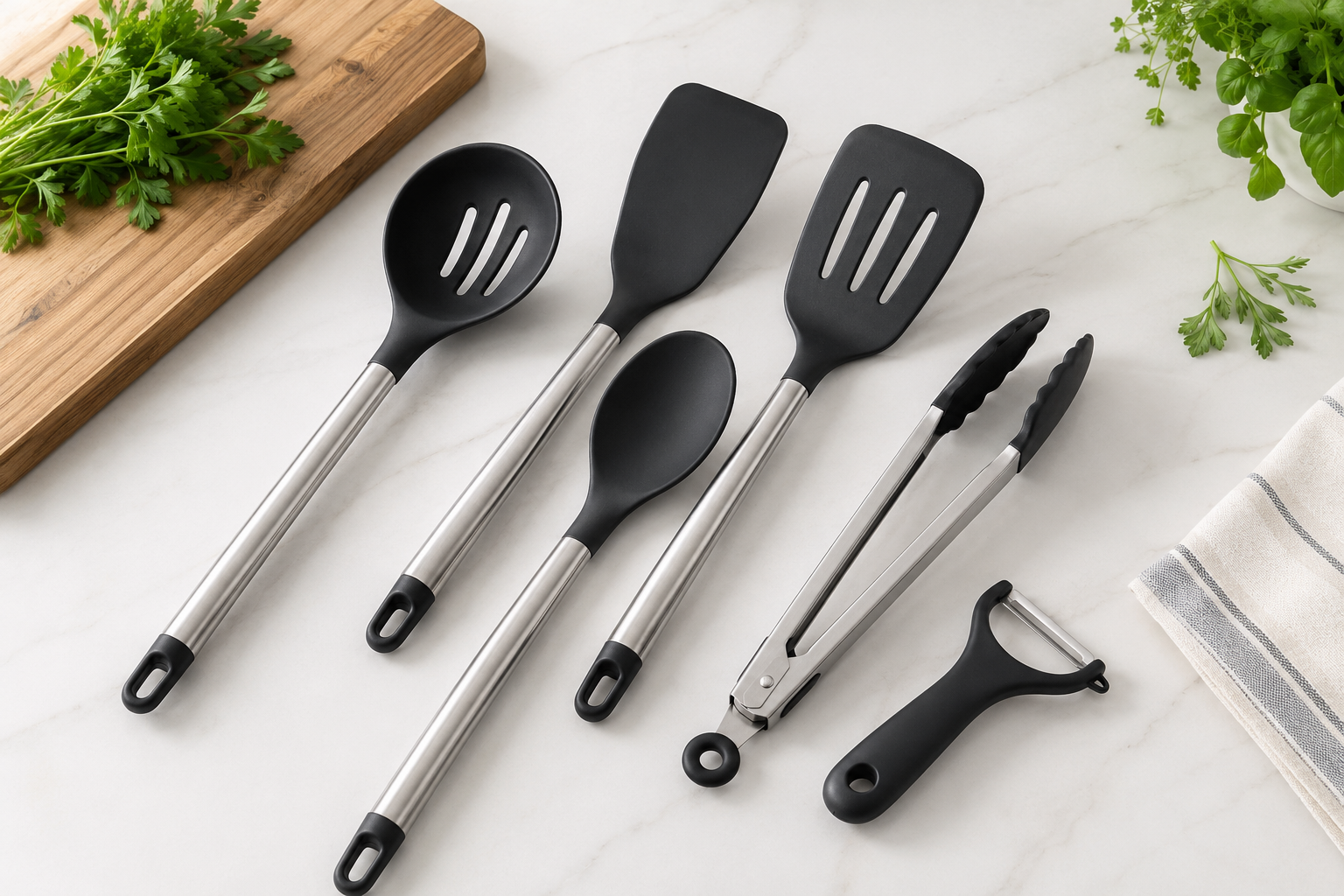
Consider a homeware importer preparing a retail kitchen tool program for supermarkets and online stores. The buyer wants kitchen scissors, silicone utensils, peelers, knife sets, and chopping boards. The simple route is to buy the lowest-priced SKU in each category. The smarter route is to build three levels.
Entry-level products use simple functions and clean packaging. Mid-range products improve handle comfort, surface finish, and product presentation. Premium products use stronger packaging, more refined tool details, and better visual storytelling. For example, kitchen scissors can be divided into standard household shears, detachable cooking shears, and multi-purpose models with opener or nutcracker details. Silicone utensils can be grouped around non-stick cookware. Knife sets can target family cooking, starter kitchens, or gift programs.
This kind of planning turns scattered products into retail-ready kitchenware.
Application Scenarios That Buyers Should Match
Different buyers need different product logic. Supermarkets need simple selling points, safe packaging, and stable price bands. Online sellers need visual clarity, compact shipping, and strong product-page communication. Wholesalers need product breadth and reorder stability. Private-label brands need color options, handle design, logo support, and packaging consistency. Gift channels need tools that look complete, practical, and easy to present.
For outdoor cooking or BBQ channels, multi-functional scissors, tongs, spatulas, and compact tools can work well. For family kitchens, knives, peelers, silicone spoons, chopping boards, and scissors remain practical. For small apartments, space-saving tools and multi-purpose kitchen gadgets offer stronger appeal.
Selection Guide Before Confirming Samples
Before choosing a kitchen tools supplier, buyers should review these points:
- Does the product solve a clear kitchen task?
- Are the materials suitable for food-prep and repeated use?
- Is the handle comfortable and stable in real hand movement?
- Are blade, pivot, edge, and surface details controlled?
- Can packaging protect the product and explain the function?
- Can the supplier support repeat orders, product updates, and private-label requirements?
- Is there a source for product knowledge, usage advice, and common questions?
For buyers who want to review BONET’s product directions, the product range is available through the BONET product page. Product articles and common questions can be explored through the BONET blog page.
FAQ
Q1: What products should importers source from a kitchen tools supplier?
Common product groups include kitchen scissors, kitchen knives, silicone utensils, peelers, garlic presses, tongs, spatulas, chopping boards, and compact multi-functional tools.
Q2: How can buyers avoid unstable bulk quality?
They should confirm material requirements, sample standards, production checkpoints, packaging tests, and pre-shipment inspection criteria before mass production begins.
Q3: Which kitchen tools are suitable for private-label programs?
Private-label kitchen tools often include scissors, knife sets, silicone utensils, peelers, chopping boards, and multi-functional gadgets because they allow color, packaging, logo, and product-line customization.
Building a Kitchen Tool Program That Can Keep Selling
The right kitchen tools supplier helps buyers move beyond random catalog purchasing. BONET’s product range covers scissors, kitchen knives, silicone utensils, chopping boards, and multi-functional tools, making it suitable for importers, distributors, supermarkets, online sellers, and private-label brands building practical retail programs.
For product selection and category planning, start with the BONET product page. For company background, Yangjiang manufacturing positioning, quality philosophy, and partnership information, visit the BONET About Us page.