





A retailer does not buy kitchen tools only because they look useful. They buy them because the products can survive shelf handling, daily kitchen use, customer comparison, shipping pressure, and repeat orders. That is where many sourcing projects become difficult: scissors feel sharp in the sample but inconsistent in bulk; peelers look simple but bend too easily; silicone utensils look clean but feel too soft; packaging shows the product but fails to protect it. A professional kitchen tools manufacturer must solve these problems before production, not after complaints arrive. BONET HOUSEWARE CO.,LTD, based in Yangjiang, presents itself as a kitchenware and professional scissors manufacturer, with products covering kitchen scissors, knives, utensils, chopping boards, and multi-functional kitchen tools.
Material Fit Comes Before a Good Catalog
Kitchen tools are small, but their material logic is serious. Stainless steel scissors and knives need corrosion resistance, edge stability, clean surface finishing, and controlled hardness. A kitchen shear that cuts herbs, poultry, packaging, or fish requires a different blade feel from a lightweight household scissor. A kitchen knife set needs blade geometry and handle balance, not just a shiny surface.
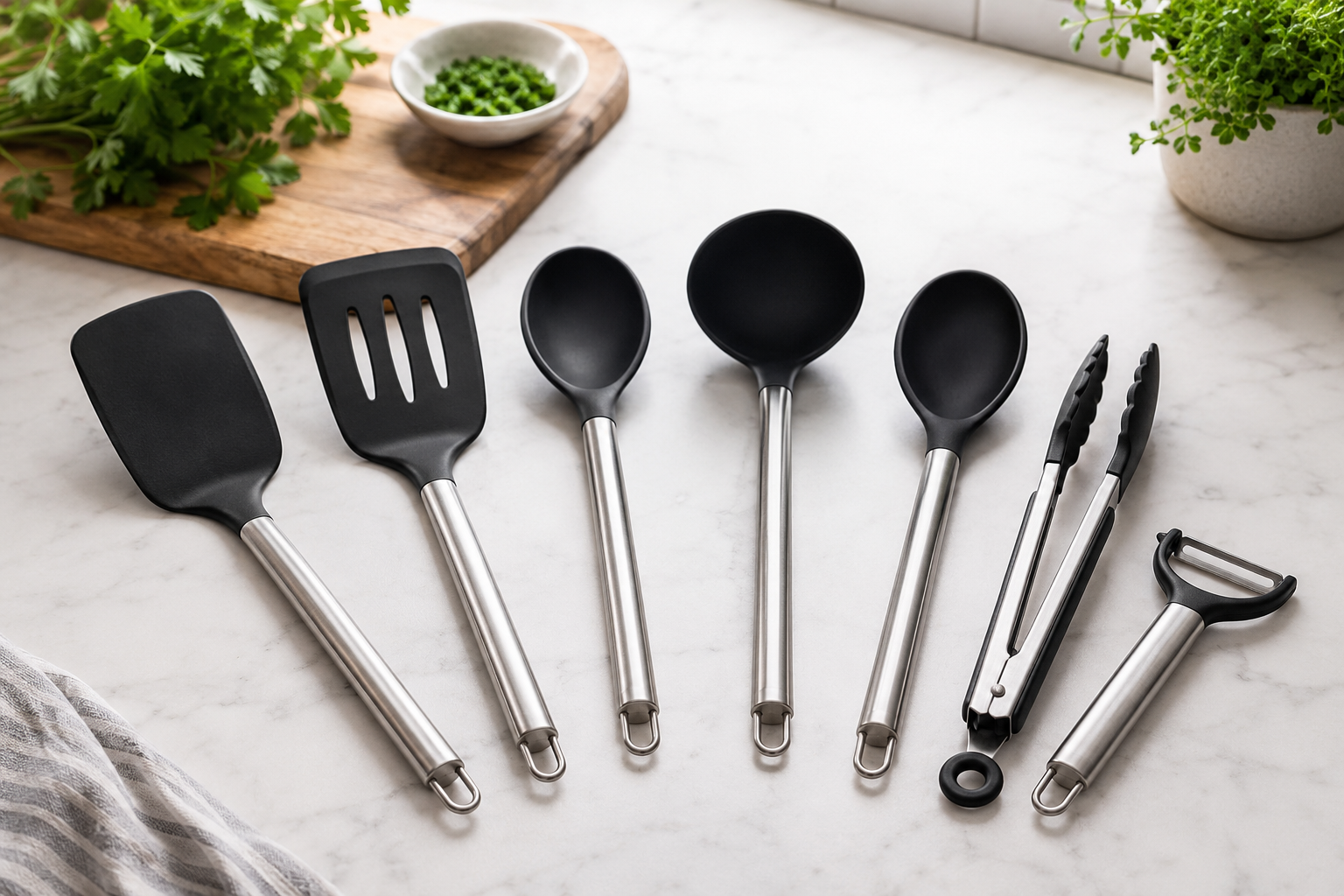
For handles, PP, TPR, ABS, silicone, or soft-touch materials influence grip, fatigue, anti-slip feeling, and perceived value. For silicone utensils, buyers should check surface smoothness, odor control, flexibility, and heat-use expectations. The U.S. FDA explains that food-contact substances can include cookware and food preparation surfaces, which makes material review a direct sourcing issue for kitchen products, not just a design preference.
Why Choose BONET for Professional Kitchen Tool Programs?
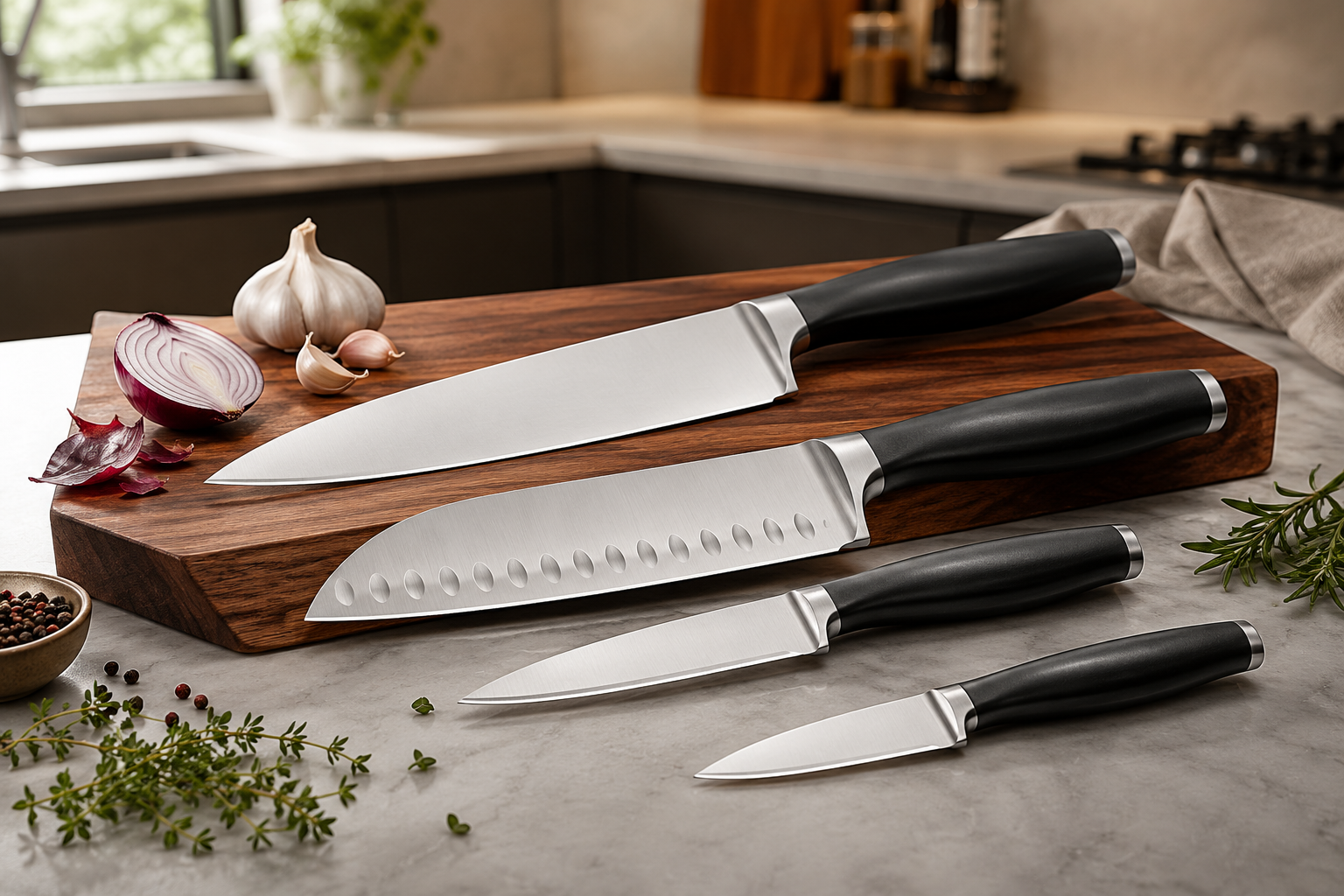
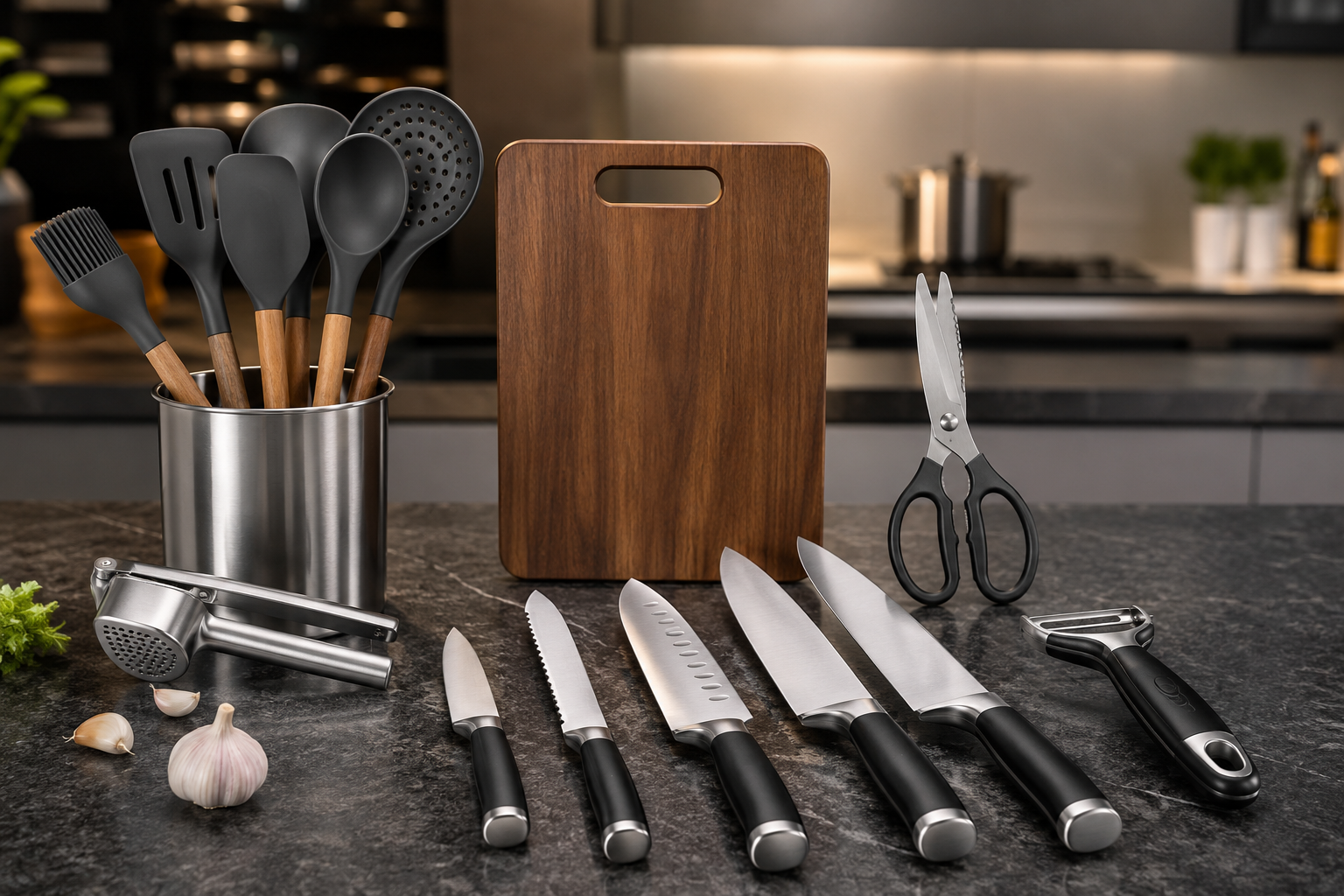
BONET’s advantage is its product fit with real kitchenware channels. The company is not limited to one isolated item. Its product direction includes kitchen scissors, kitchen knives, utensils, chopping boards, and multi-functional tools, which allows importers and distributors to build a wider retail line from one supply base. For buyers, this reduces communication cost and makes product planning more coherent.
The company’s About page also lists ISO9001, BSCI, and Sedex-related qualifications, which can support buyers who care about quality management, social compliance, and responsible sourcing signals. ISO describes ISO 9001 as a quality management standard connected with customer confidence, effective complaint resolution, and robust quality control processes. For kitchenware buyers, this matters because repeat orders depend on repeatable production, not only a good-looking first sample.
What a Kitchen Tools Manufacturer Must Control in Production
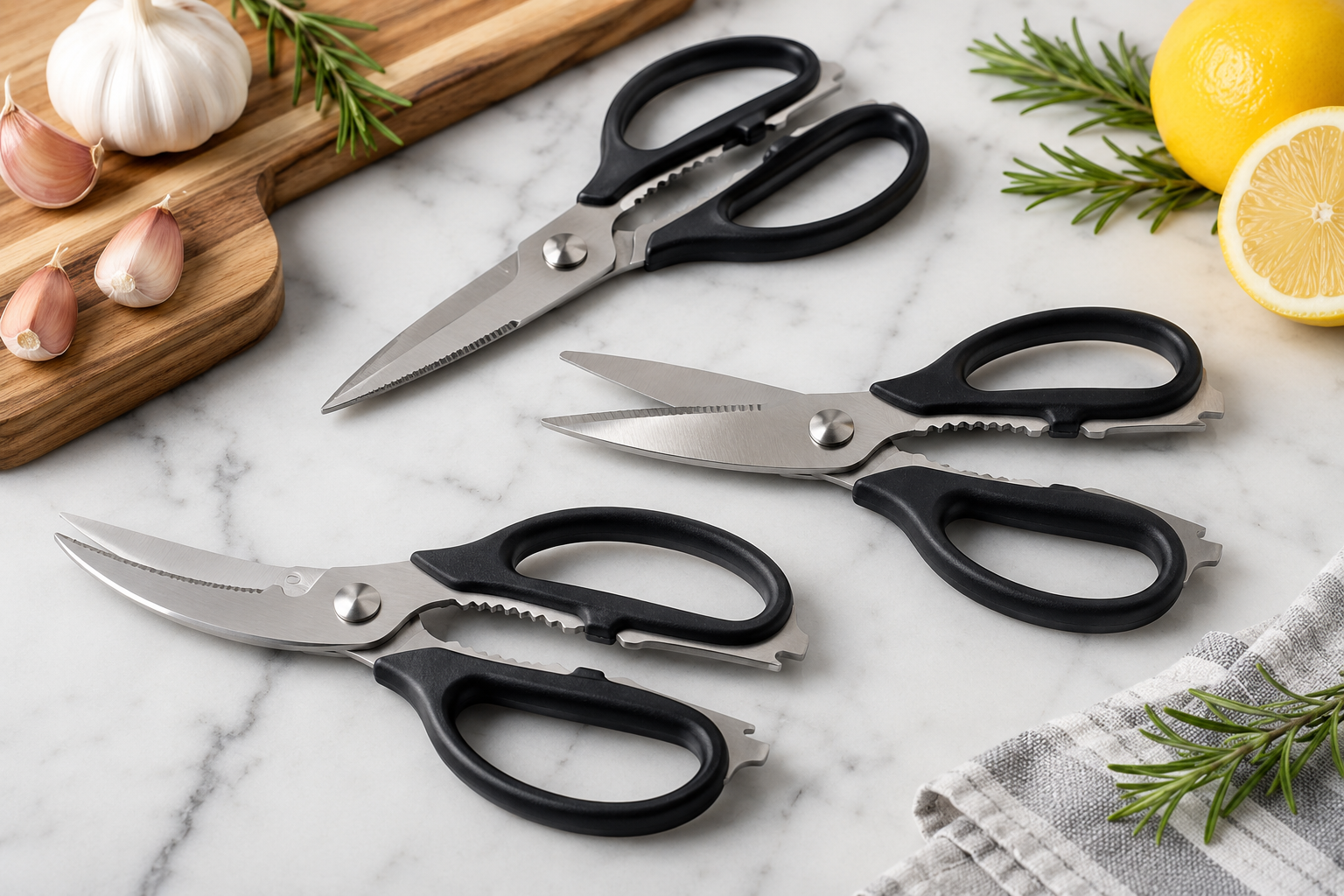
A dependable kitchen tools manufacturer should understand how each process affects the final product. For stainless steel tools, stamping or forming determines the basic profile. Heat treatment influences hardness and long-term cutting performance. Grinding affects edge feel. Polishing affects appearance and corrosion resistance. Injection molding affects handle fit and comfort. Assembly determines whether scissors open smoothly, pivots stay stable, and handles remain firm.
This is not decoration. A small error in pivot alignment can make kitchen scissors feel cheap. Poor edge finishing can make a knife difficult to use. A weak handle joint can turn a good-looking utensil into a return risk. For importers, the supplier should be able to explain how materials, tooling, production sequence, and inspection points are controlled before mass production starts.
Product Design Should Help the Buyer Sell Faster
The best kitchen tools are easy to understand. A customer sees the product and immediately knows the job it solves: cut, peel, stir, scrape, serve, open, crush, or prepare food safely. This is where industrial design and retail thinking meet.
For kitchen scissors, multi-function details such as bottle opener sections, nutcracker grips, detachable cleaning structures, or serrated blade areas can create a stronger retail story. For knives, the mix of chef knife, santoku knife, utility knife, and paring knife should match the target market. For silicone utensils, the tool head shape should fit real cooking habits: scraping pans, serving soup, turning food, or protecting non-stick cookware. For chopping boards, size, weight, surface texture, and handle opening all affect whether the product feels practical.
Supplier Comparison for Retail Buyers
| Evaluation Area | Weak Supplier Approach | Strong Supplier Approach |
|---|---|---|
| Product planning | Sells random items from a catalog | Builds product lines by use case and retail channel |
| Materials | Describes only “stainless steel” or “silicone” | Explains material function, handle feel, and food-use suitability |
| Production | Focuses on finished appearance | Controls forming, grinding, molding, assembly, and inspection |
| Packaging | Added after product confirmation | Designed for safety, shelf display, and shipping protection |
| Bulk order quality | Checks samples only | Defines inspection points before mass production |
| Retail value | Low price first | Clear function, stable quality, and better customer perception |
This kind of comparison helps buyers avoid the most common sourcing trap: choosing a low-cost tool that looks acceptable in a photo but performs poorly in the user’s hand.
A Practical Case: Building a Kitchen Tool Line for a Homeware Importer
Imagine a homeware importer preparing a new kitchen tool line for supermarkets and online retail. The buyer wants five product groups: kitchen scissors, a small knife set, silicone utensils, peelers, and chopping boards. The goal is not only to fill a container. The goal is to build a line that feels consistent, sells at different price levels, and reduces after-sales problems.
A practical solution would start with channel segmentation. Entry-level products need simple functions and cost-efficient packaging. Mid-range products need better handles, cleaner surface finishing, and stronger visual presentation. Premium items need more refined packaging, clearer function icons, and better product storytelling.
For example, scissors can be divided into standard kitchen shears, detachable cooking shears, and multi-purpose shears. Knife sets can be positioned for daily family cooking or gift-ready retail. Silicone utensils can be grouped around non-stick cookware protection. Chopping boards can be used to complete the “food preparation” line. This is the kind of planning that turns individual tools into a retail program.
Packaging and Shipment Protection Decide the Final Impression
Many buyers underestimate packaging until the first shipment arrives. For sharp tools, packaging must prevent blade exposure, scratches, movement, and carton damage. For small kitchen gadgets, packaging must show the function quickly. For online retail, the product should photograph clearly and arrive without deformation. For supermarkets, hanging cards, blister packs, color boxes, or simple display packaging should match the shelf environment.
Packaging also affects trust. A well-made tool placed in weak packaging looks cheaper than it is. A product with unclear packaging creates hesitation at the shelf. For B2B buyers, packaging should be discussed together with the product, not treated as the last step.
Buyer Checklist Before Confirming Samples
Before approving samples, buyers should check:
- Blade sharpness, blade alignment, and pivot stability for scissors.
- Knife edge finish, handle balance, and grip comfort.
- Silicone utensil flexibility, surface smoothness, and odor control.
- Peeler blade firmness and handle strength.
- Chopping board flatness, edge finish, and surface feel.
- Packaging protection, display clarity, and carton strength.
- Supplier ability to support repeat orders, not only sample production.
The right kitchen tools manufacturer should welcome this level of review because it reduces misunderstanding and protects both sides before bulk production.
FAQ
Q1: What kitchen tools are suitable for importers and retail buyers?
Kitchen scissors, kitchen knife sets, silicone utensils, peelers, garlic presses, chopping boards, and compact multi-functional tools are suitable because they solve daily kitchen tasks and are easy to present in retail channels.
Q2: What should buyers check before choosing a supplier?
Buyers should review materials, production control, handle comfort, edge finishing, packaging design, inspection standards, compliance support, and whether the supplier can maintain consistent quality in repeat orders.
Q3: Why are multi-functional kitchen tools popular in retail?
They help users save space, reduce tool clutter, and solve several preparation tasks with one product. For retailers and online sellers, this creates clearer selling points and stronger product-page communication.
Building a Kitchen Tool Line That Buyers Can Trust
A strong kitchen tools manufacturer helps importers move from scattered product purchasing to structured retail supply. BONET’s product direction covers scissors, kitchen knives, silicone utensils, chopping boards, and multi-functional kitchen tools, making it suitable for buyers who need practical products with clear functions and export-ready presentation. To review available product directions, visit the BONET kitchenware product page.
For long-term sourcing, buyers should look at more than price. Material selection, process control, design clarity, packaging planning, and supplier experience all shape whether a kitchen tool becomes a repeat order. To understand BONET’s company background and manufacturing positioning, visit the BONET About Us page.