





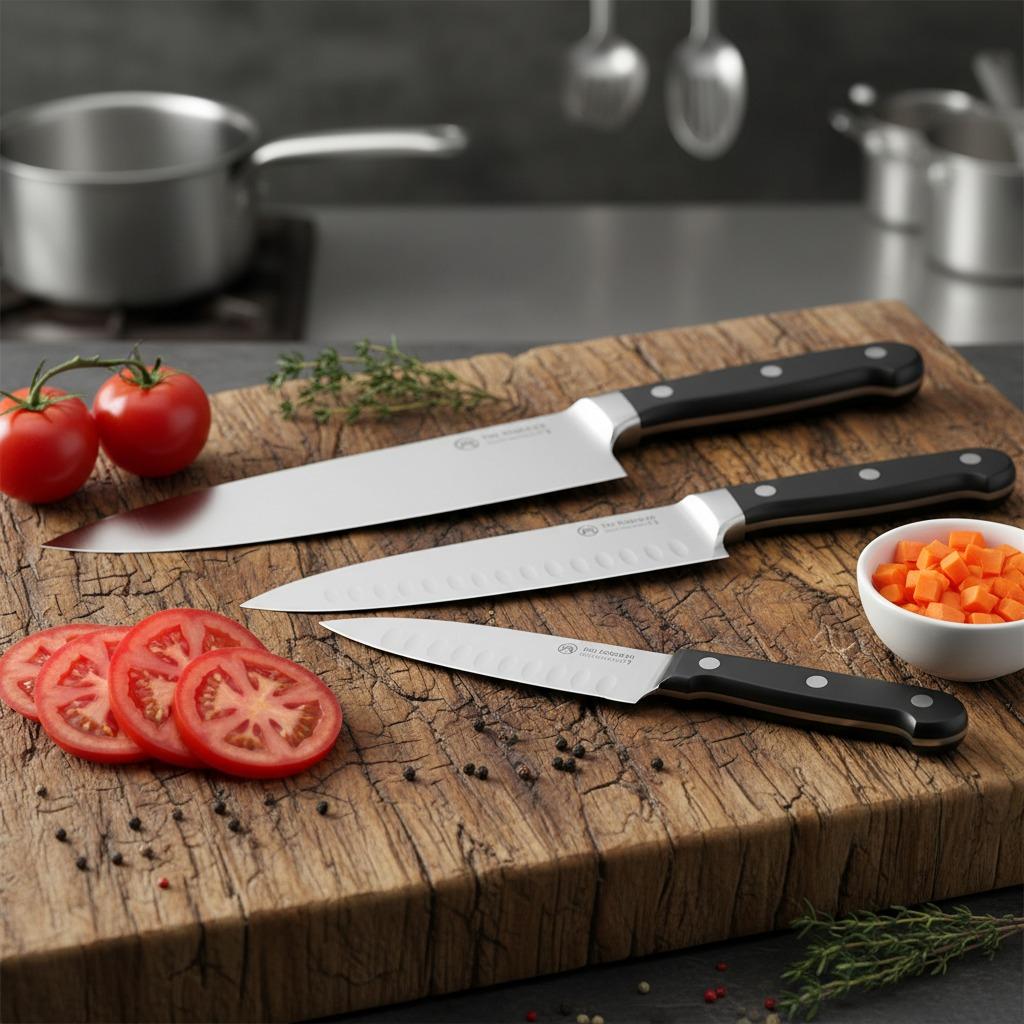
:max_bytes(150000):strip_icc()/sea-chefs-knives-primary-rkilgore-1366-6673e5a13d164c58a7f4a5fb4e24913e.jpeg)

The Role of Vanadium and Chromium in Blade Durability: Why These Elements Make Your Kitchen Knife Last Longer and Stay Sharper
In every professional kitchen, the humble kitchen knife is the workhorse that slices, dices, and chops day after day. But what separates a blade that dulls after a week from one that retains its razor edge for months? The answer lies deep in the steel’s chemistry—specifically the roles of vanadium and chromium. These two alloying elements transform ordinary iron into super-durable knife steel, delivering the perfect balance of edge retention, corrosion resistance, and toughness that every serious home cook or chef demands.

Chromium: The Guardian Against Rust and Wear
Chromium is the element that turns carbon steel into stainless steel (minimum ~13% Cr). It forms a passive oxide layer on the blade surface that shields the metal from moisture, food acids, and dishwasher detergents—critical for any kitchen knife that constantly meets tomatoes, citrus, or raw meat.
Beyond rust protection, chromium improves hardenability and contributes to carbide formation, which slightly boosts hardness. However, too much chromium can reduce toughness, so premium steels carefully balance it at 14–20%.
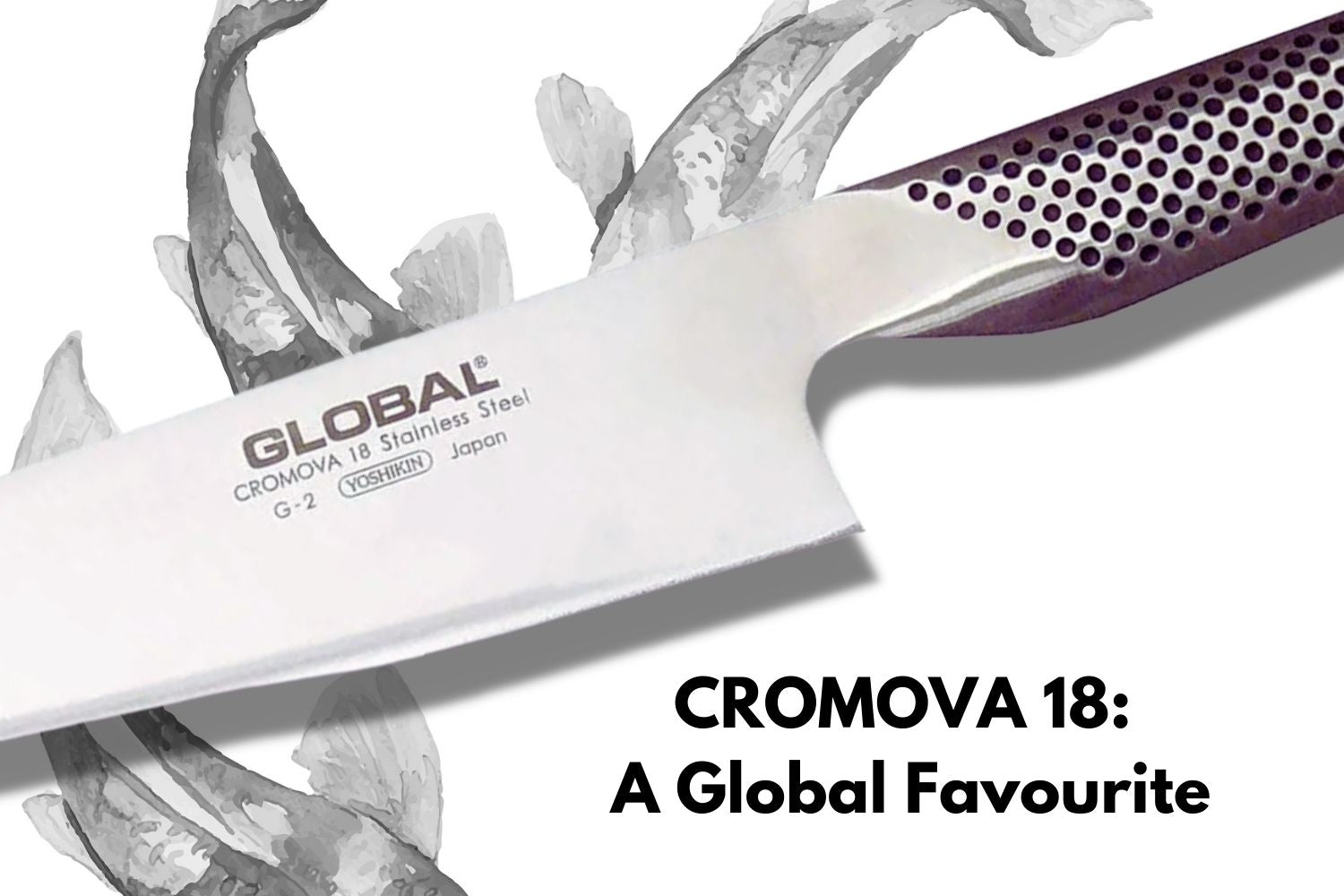
Real-world benefit for your kitchen knife: A chromium-rich blade like Global’s CROMOVA 18 or VG-10 stays bright and rust-free even after years of daily use, saving you from constant oiling or worry about pitting.
Vanadium: The Secret to Legendary Edge Retention
Vanadium is the “edge-keeper.” At just 0.5–4% (or higher in super-steels), it creates extremely hard vanadium carbides—among the hardest particles in steel. These tiny, evenly distributed carbides resist abrasion when slicing through tough vegetables, herbs, or fibrous meat.
Vanadium also refines the grain structure during heat treatment, making the steel tougher and less prone to chipping. The result? Your kitchen knife stays scary-sharp far longer than standard steels.


The colorful electron microscopy image above reveals vanadium carbides (bright green V) and chromium carbides (yellow Cr) working side-by-side—exactly what you see in high-performance powders like CPM-S30V or S35VN.
Synergy in Action: Why V + Cr = Superior Kitchen Knife Steel
When vanadium and chromium team up, magic happens:
- Chromium provides stainless protection.
- Vanadium delivers wear-defying carbides.
- Together they create steels that score 9–10/10 on edge-retention charts while remaining easy to sharpen and corrosion-resistant.
Popular examples used in today’s best kitchen knives:
- CPM-S30V (14% Cr + 4% V): The gold standard for premium chef knives.
- VG-10 (15% Cr + 1% V): Japanese favorite in Shun and Miyabi blades.
- M390 / 20CV (20% Cr + 4% V): Ultra-premium choice for long-life kitchen knife sets.


Comparison Table: How Vanadium & Chromium Elevate Blade Performance
| Property | Without V/Cr (Basic Carbon) | With Chromium Only | With Vanadium + Chromium | Best Kitchen Knife Benefit |
|---|---|---|---|---|
| Corrosion Resistance | Poor (rusts quickly) | Excellent | Excellent | No pitting after chopping acidic foods |
| Edge Retention (wear) | Low | Medium | Extremely High | Holds sharpness 3–5× longer during prep |
| Toughness | Medium | Slightly reduced | High (grain refinement) | Resists chipping on bones or hard veggies |
| Hardness (HRC) | 56–58 | 58–60 | 60–64 | Cleaner cuts with less effort |
| Typical Steels | 1095 | 440C / AUS-8 | S30V, VG-10, M390 | Professional-grade daily drivers |

Choosing the Right Kitchen Knife for You
Next time you shop for a new kitchen knife, check the steel specs. Look for “V” (vanadium) and high “Cr” (chromium) numbers on the box or manufacturer site. A $150–$300 investment in a vanadium-chromium enhanced blade will outlast three cheap knives and keep your prep work joyful instead of frustrating.
Whether you’re a home cook slicing onions or a chef prepping for service, these two elements are quietly working behind the scenes to make your kitchen knife more durable, reliable, and satisfying to use.

Ready to upgrade? Grab a vanadium-rich kitchen knife and feel the difference in every slice. Your cutting board (and your patience) will thank you!
Sources synthesized from metallurgical data on knife steels including S30V testing and alloy charts. Happy chopping!