





The Impact of HRC: How Hardness Affects Your Edge
Understanding Rockwell Hardness and Why It Matters for Every Kitchen Knife
In the world of kitchen knives, sharpness isn’t just about how well you hone the blade — it’s largely determined by the steel’s hardness. That’s where HRC (Rockwell Hardness C scale) comes in. Whether you’re a home cook or a professional chef, knowing how hardness affects your kitchen knife’s edge can transform how you shop, maintain, and use your most important tools in the kitchen.
Today we’re diving deep into the science behind HRC and its real-world impact on kitchen knife performance.

What Is HRC?
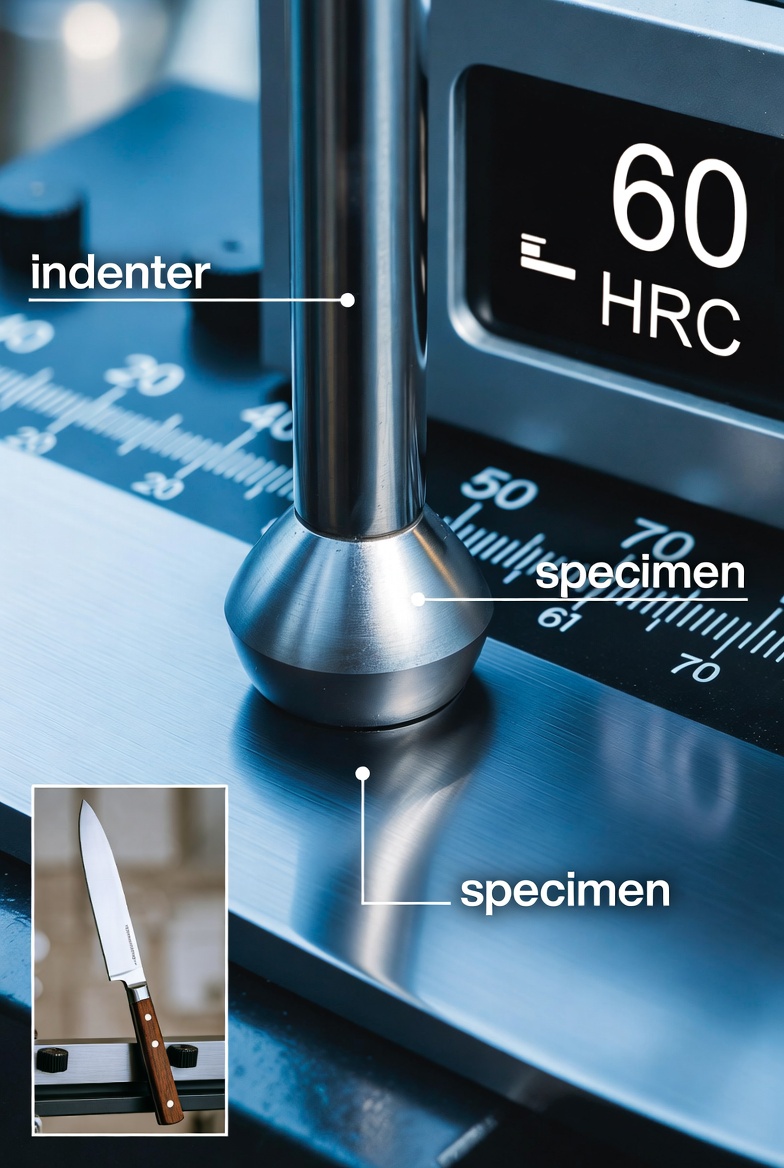
The Rockwell Hardness C (HRC) scale measures a material’s resistance to permanent indentation. A diamond-tipped cone is pressed into the steel with a known force, and the depth of the impression determines the hardness number.
For kitchen knives, HRC typically ranges from 54 to 65. Higher numbers = harder steel. This single number tells you almost everything about how your kitchen knife will behave day after day.
How Hardness Directly Affects Your Kitchen Knife Edge
Here’s the trade-off every serious cook needs to understand:
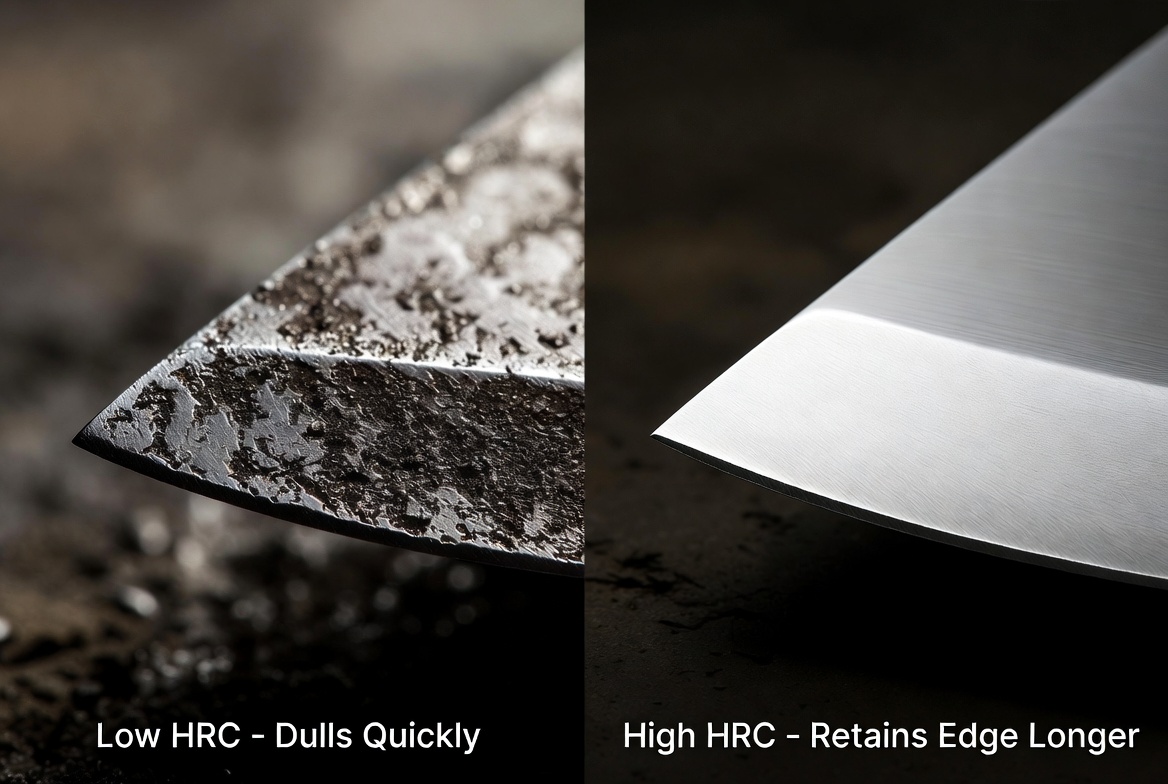
- Higher HRC (60+): Exceptional edge retention. Your kitchen knife stays razor-sharp longer, even after slicing hundreds of vegetables, herbs, and proteins. Ideal for precision work.
- Lower HRC (54–58): Tougher and more forgiving. The edge is less likely to chip if you accidentally hit a bone or cutting board, but it will dull faster.
This balance is why professional chefs often own multiple kitchen knives — one for heavy chopping (lower HRC) and one for delicate slicing (higher HRC).

HRC Sweet Spot for Kitchen Knives
Most high-quality kitchen knives fall into these ranges:
| HRC Range | Typical Steel Type | Edge Retention | Sharpening Ease | Brittleness Risk | Best Kitchen Knife Use |
|---|---|---|---|---|---|
| 54–57 | German stainless (e.g. Wüsthof, Zwilling) | Fair | Very Easy | Very Low | Heavy chopping, bones, tough veggies |
| 58–60 | Versatile stainless (Global, Victorinox) | Good | Easy | Low | Everyday all-purpose kitchen knife |
| 61–63 | Japanese high-carbon (Shun, Miyabi) | Excellent | Moderate-Hard | Medium-High | Precision slicing, sushi, fine herbs |
| 64+ | Super steels (Aogami Super, CPM-154) | Outstanding | Difficult | High | Enthusiast precision kitchen knives |
Pro tip: For most home cooks, a 58–60 HRC kitchen knife offers the best everyday balance.


Choosing the Right Hardness for Your Kitchen Knife
- Beginners & heavy users: Start with 56–58 HRC kitchen knives. They forgive mistakes and sharpen quickly on a simple whetstone.
- Home enthusiasts: 59–61 HRC gives that satisfying “paper-cutting” sharpness that lasts weeks.
- Professional chefs: Often carry both — a tough 57 HRC workhorse kitchen knife and a 62 HRC slicing knife.
Remember: Even the highest HRC kitchen knife needs proper care. Never put it in the dishwasher, always hand-wash, and use a proper cutting board.
Final Thoughts
The next time you pick up a kitchen knife, ask yourself: “What HRC rating does this blade have?” That single number will tell you whether it’s built for brute force or surgical precision.
Understanding HRC doesn’t just make you a smarter buyer — it makes every cut in your kitchen more enjoyable and efficient.
What’s your favorite HRC range for kitchen knives? Drop a comment below and tell us which kitchen knife is your daily driver!
Happy slicing! 🔪