





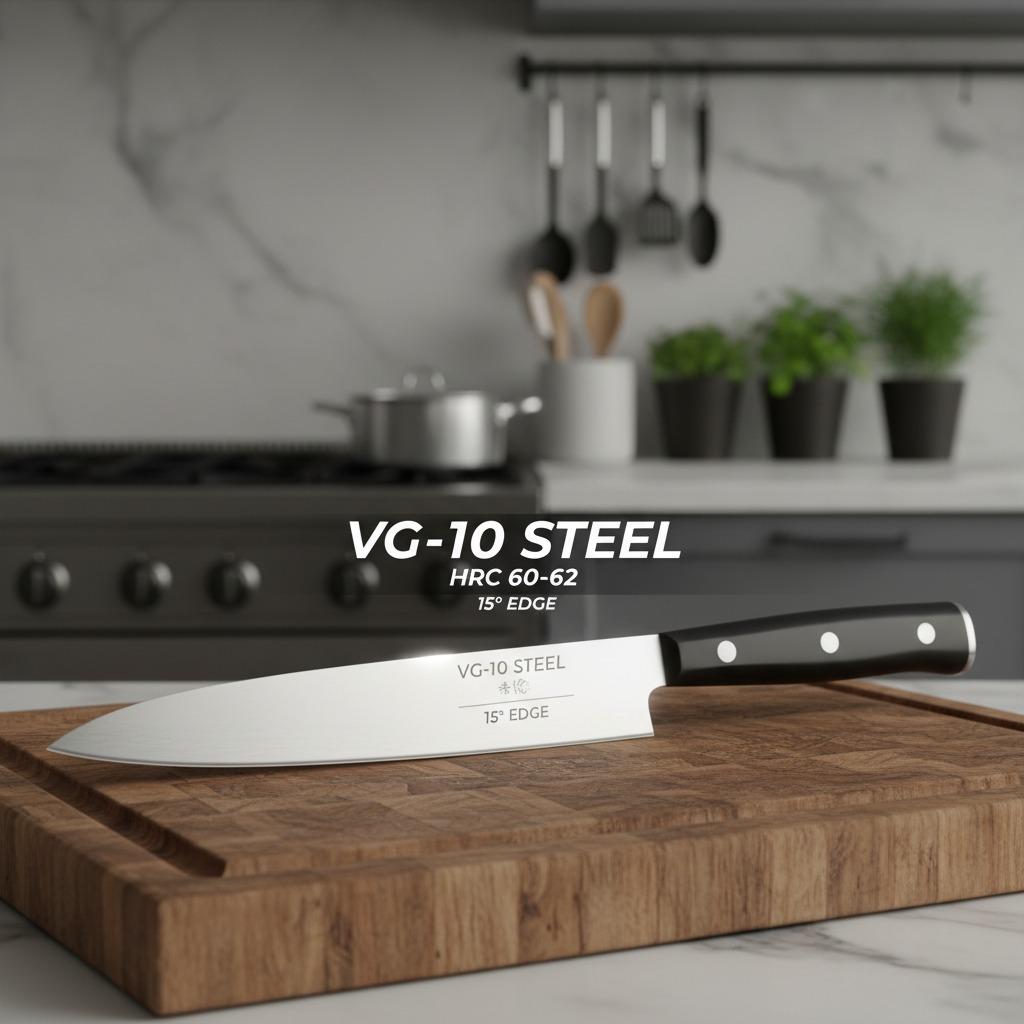

Starting with HRC: How to Read Professional Knife Specifications
If you’ve ever stared at a high-end chef’s knife listing and felt lost in the alphabet soup of “HRC 61”, “CPM-S35VN”, “15° per side”, you’re not alone. Professional knife specs are the secret language that separates a good blade from a great one. Today we break it down step by step — starting with the single most important number: HRC.
What Does HRC Actually Mean?
HRC stands for Rockwell C Hardness. It measures how resistant the steel is to permanent deformation (denting or scratching). The test uses a diamond cone pressed into the blade under a fixed load; the depth of the indentation is converted into a number.
Higher HRC = harder steel = better edge retention Lower HRC = tougher steel = more impact resistance and easier sharpening


HRC Ranges — What They Mean in Real Life
| HRC Range | Knife Style | Edge Retention | Toughness | Sharpening Ease | Best For | Typical Brands |
|---|---|---|---|---|---|---|
| 54–57 | German / Western | Good | Excellent | Very Easy | Heavy chopping, bones | Wüsthof, Zwilling, Victorinox |
| 58–60 | All-purpose | Very Good | Very Good | Easy | Everyday kitchen work | Global, Messermeister |
| 60–63 | Japanese / Premium | Excellent | Good | Moderate | Precision slicing & dicing | Shun, Miyabi, Tojiro |
| 63–66+ | Super-steel Japanese | Outstanding | Fair | Harder | Enthusiasts who love sharpening | Yoshimi Kato, Custom Aogami |

Other Must-Read Specs (Beyond HRC)
Once you understand hardness, the rest falls into place:
Steel Type
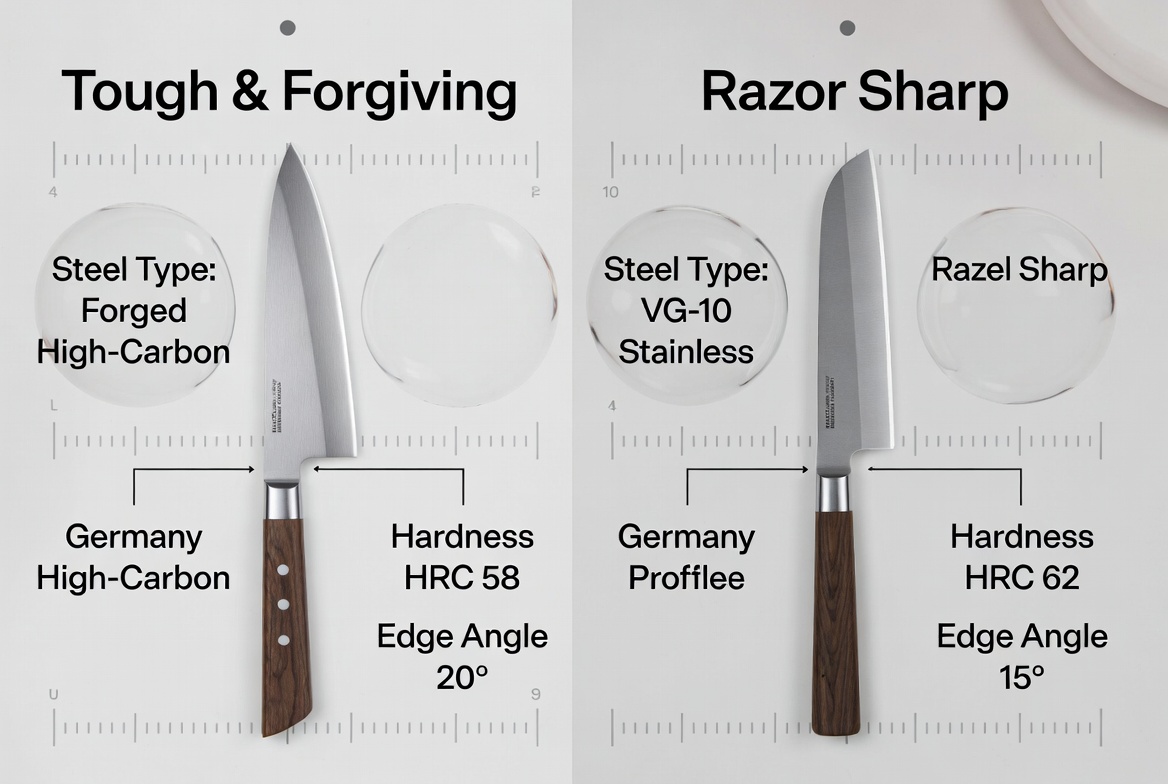
- Stainless (e.g. VG-10, X50CrMoV15): low maintenance, corrosion-resistant
- Carbon (e.g. Aogami Super, White #1): takes a screaming edge but needs care
Edge Angle
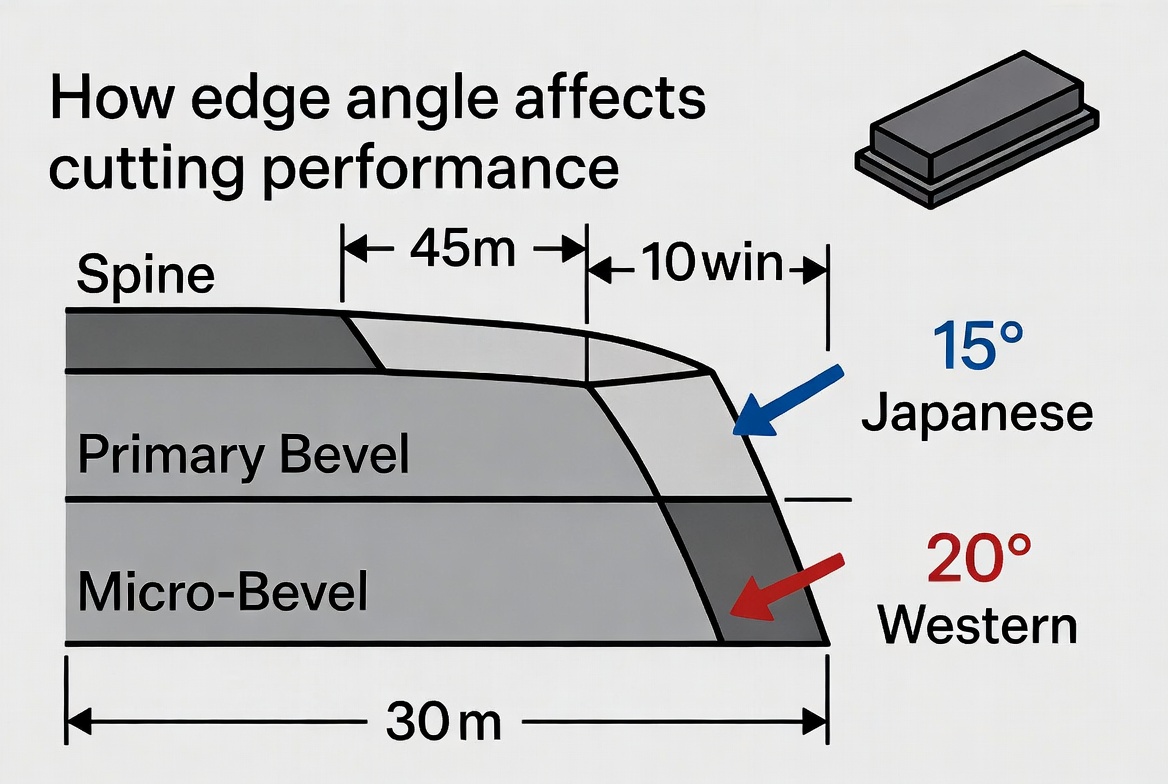
- 15° per side (30° included) → Japanese knives — laser-like slicing
- 20°–22° per side (40°–44° included) → Western knives — better for tough jobs
Grind & Geometry Flat grind, hollow grind, or convex? Thinner behind the edge = easier cutting but less tough.
Balance & Weight A 220 g knife with balance at the bolster feels nimble; same weight with forward balance feels like a chopper.

Quick Checklist When Buying
- Match HRC to your cooking style (precision vs heavy work)
- Choose steel that fits your maintenance tolerance
- Verify edge angle matches your sharpening stones
- Hold the knife — specs don’t lie, but feel never lies
Master these numbers and you’ll never buy the wrong knife again.
Happy slicing! 🔪 Drop your current knife’s HRC in the comments — let’s compare!