





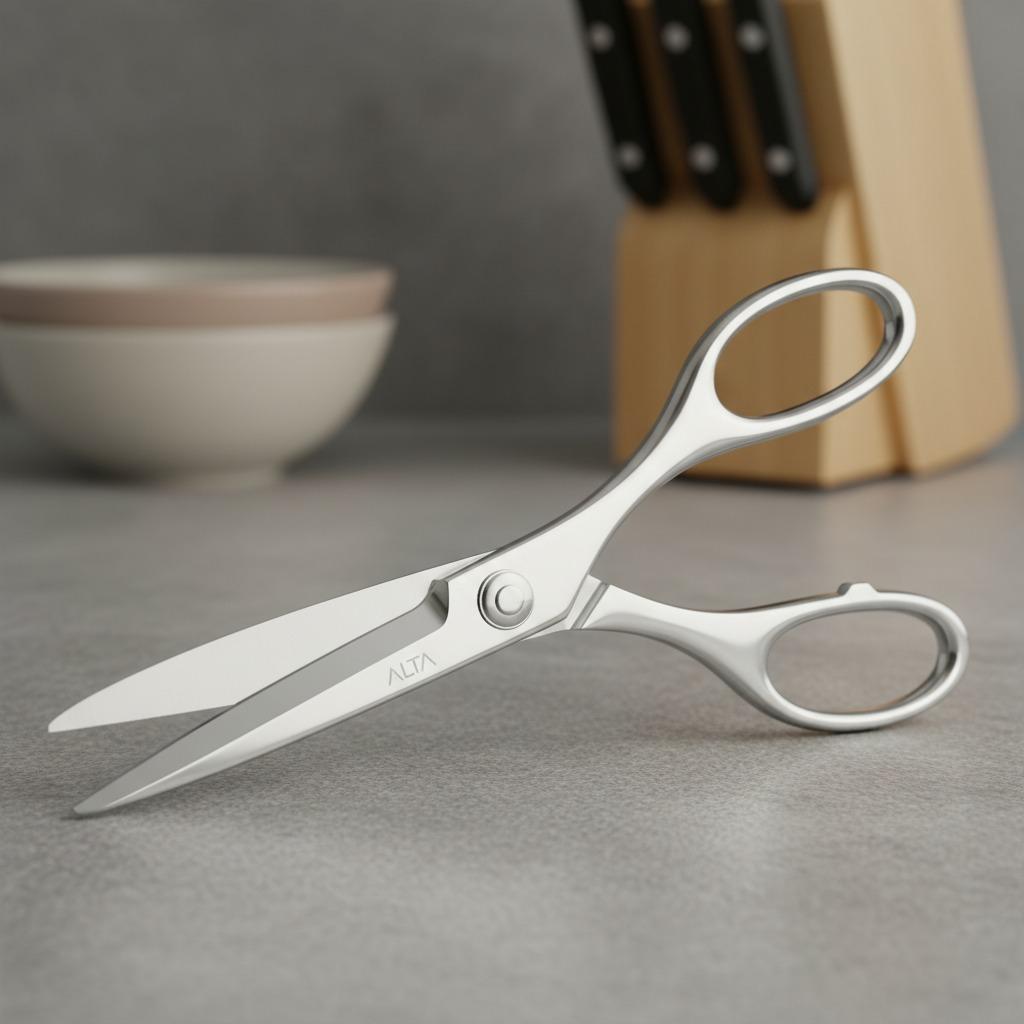
Stainless Steel vs. High-Carbon: Material Science in Domestic Tools
In the world of everyday kitchen gadgets and household essentials, the choice of material can make or break performance. From knives to can openers, one debate dominates material science discussions: stainless steel vs. high-carbon steel. These two alloys power most domestic tools, yet they behave dramatically differently under daily use. Today, we dive deep into their chemistry, microstructures, and real-world applications — with a special focus on household scissors, the unsung heroes of every kitchen drawer.
Whether you're a home cook sharpening blades or simply replacing worn-out household scissors, understanding these materials helps you choose tools that last longer and perform better.
What Is Stainless Steel?
Stainless steel is an iron-based alloy containing at least 10.5% chromium. This chromium forms a passive oxide layer on the surface, giving the material its signature corrosion resistance. In domestic tools, stainless steel (often grades like 18/8 or 18/10) is prized for its durability in humid environments.
Household scissors made from stainless steel rarely rust, even after years of cutting wet herbs or opening packaging. They’re easy to clean in the dishwasher and maintain their shine without special care.
![Amazon.com: TONMA Kitchen Scissors All Purpose [Made in Japan] Full Metal Stainless Steel Japanese Kitchen Shears Heavy Duty with Micro Serrated, Cooking Scissors for Food Ergonomic Dishwasher Safe: Home & Kitchen](https://m.media-amazon.com/images/I/616GNleAqKL._AC_UF894,1000_QL80_.jpg)
What Is High-Carbon Steel?
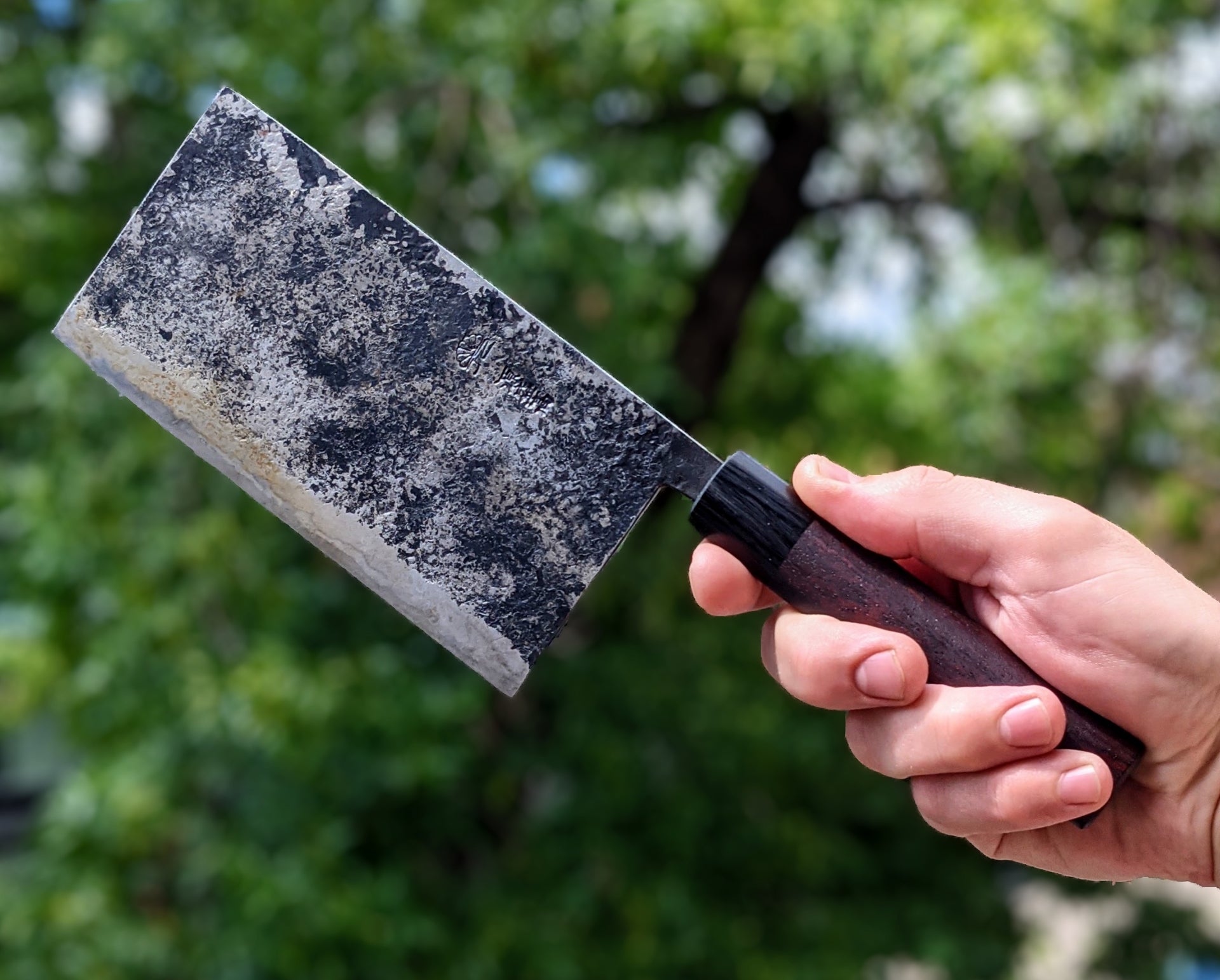
High-carbon steel, by contrast, contains 0.6–1.5% carbon and minimal chromium. This high carbon content allows the steel to be heat-treated into a much harder state (often martensitic structure), delivering razor-sharp edges that stay keen far longer than stainless alternatives.
However, the trade-off is significant: without protective chromium, high-carbon steel is prone to rust and requires diligent maintenance. Many premium Japanese kitchen knives and some specialized household scissors use high-carbon steel for superior cutting performance.
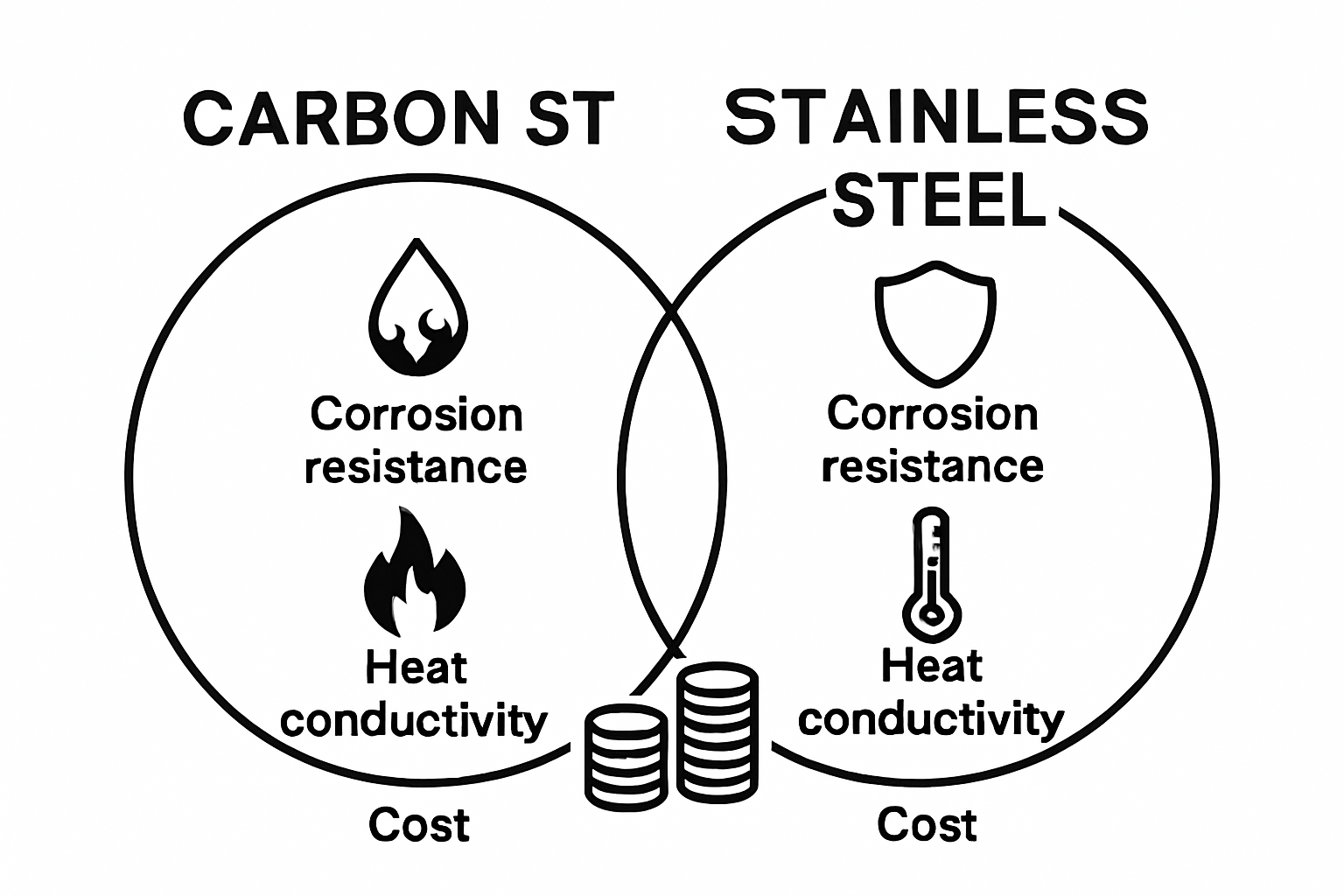
Key Material Properties: Side-by-Side Comparison
Here’s a clear breakdown of how the two materials stack up in domestic tools:
| Property | Stainless Steel | High-Carbon Steel |
|---|---|---|
| Corrosion Resistance | Excellent (chromium oxide layer) | Poor (rusts quickly if not cared for) |
| Hardness (HRC) | 55–58 (good for everyday use) | 58–65 (can achieve superior edge) |
| Edge Retention | Moderate (dulls faster) | Excellent (stays sharp longer) |
| Toughness | High (less brittle, resists chipping) | Moderate (can chip if misused) |
| Maintenance | Very low (dishwasher-safe) | High (must be hand-washed, dried, oiled) |
| Cost | Moderate | Lower for basic; premium versions higher |
| Best For | Household scissors, kitchen shears, everyday tools | Chef knives, specialized cutting tools |

As the comparison images above show, stainless steel often looks polished and modern, while high-carbon steel develops a distinctive patina over time — a visual clue to its active nature.
Microstructures: The Science Behind the Performance
At the microscopic level, the difference is striking. Stainless steel typically features an austenitic crystal structure (face-centered cubic), which contributes to its toughness and corrosion resistance.

High-carbon steel, when properly heat-treated, forms a harder martensitic or pearlitic microstructure. This explains its superior edge-holding ability but also its vulnerability to rust and brittleness.
Real-World Applications: Focus on Household Scissors
When shopping for household scissors, the material choice matters more than you might think. Most affordable household scissors are stainless steel — they handle everything from paper to poultry without rusting in the utensil drawer. Premium models, however, sometimes use high-carbon steel for cleaner cuts through tough materials like cartilage or thick cardboard.
Pro tip: If your household scissors see frequent use near water or food, stainless steel is almost always the smarter long-term choice. For pure cutting performance (and willingness to maintain them), high-carbon wins.
Other domestic tools follow similar patterns:
- Kitchen knives: High-carbon for professional chefs; stainless for busy households.
- Can openers and peelers: Almost always stainless for hygiene and longevity.
Which Should You Choose?
- Choose stainless steel for low-maintenance, rust-free performance in household scissors and daily kitchen tools.
- Choose high-carbon steel when maximum sharpness and edge retention justify the extra care.
Ultimately, material science shows there’s no universal “best” — only the best fit for your lifestyle. Next time you reach for those household scissors, you’ll know exactly why they perform the way they do!
What’s your go-to material for kitchen tools? Drop a comment below.