







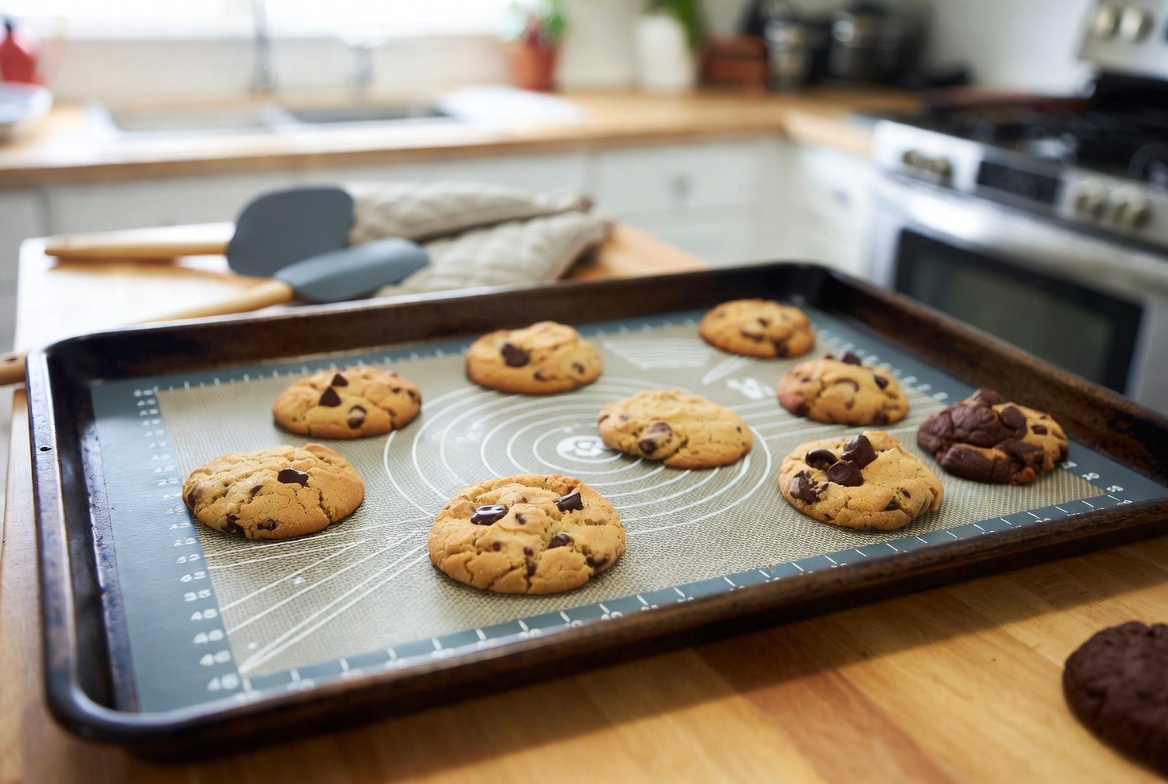
Mastering the Silicone Baking Mat: Do’s and Don’ts
Silicone baking mats have become a kitchen essential for home bakers and professional chefs alike. Made from food-grade, non-stick silicone, these flexible mats offer a reusable, eco-friendly alternative to parchment paper or aluminum foil. They distribute heat evenly, prevent sticking, and make cleanup a breeze. Whether you’re baking cookies, macarons, pastries, or even roasting vegetables, a quality kitchen silicone baking mat can elevate your results — but only if you use and care for it correctly.
To help you get the most out of your mat and make it last for hundreds of bakes, here’s your complete guide to the Do’s and Don’ts.
Quick Reference: Do’s and Don’ts
| Do’s | Don’ts |
|---|---|
| Always place the mat on a sturdy baking sheet for support and even heat distribution. | Never place the mat directly on the oven rack or expose it to open flame, stovetop, or broiler. |
| Use within the manufacturer’s temperature limit (typically up to 480–500°F / 250–260°C). | Do not exceed the recommended temperature — it can cause melting or degradation. |
| Clean after every use with warm soapy water or in the dishwasher (top rack only). | Avoid abrasive cleaners, steel wool, or harsh chemicals that can damage the surface. |
| Use only silicone, wooden, or nylon utensils to protect the non-stick coating. | Never cut food directly on the mat with a knife or sharp metal tools. |
| Store rolled loosely or flat in a drawer or cabinet to maintain its shape. | Do not crumple, fold tightly, or store under heavy objects — this creates permanent creases. |
| Preheat the oven with the mat already on the baking sheet (if your brand allows). | Do not use nonstick cooking sprays — they can build up residue over time. |

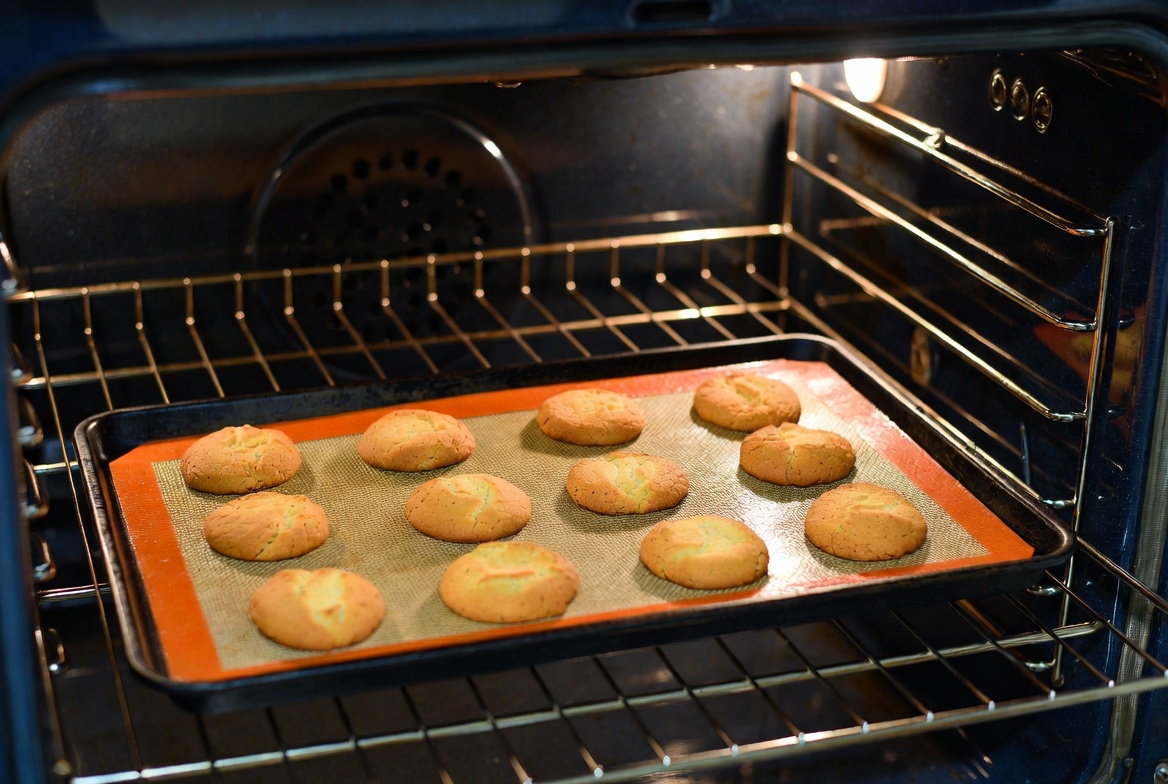
Why These Rules Matter
Placement is everything. A silicone baking mat needs the support of a baking sheet to stay flat and conduct heat properly. Without it, the mat can warp or slip, leading to uneven baking or spills.
Temperature control keeps it safe. Most kitchen silicone mats are rated for high heat, but they’re not indestructible. Staying within the recommended range ensures the mat remains flexible and non-stick for years.
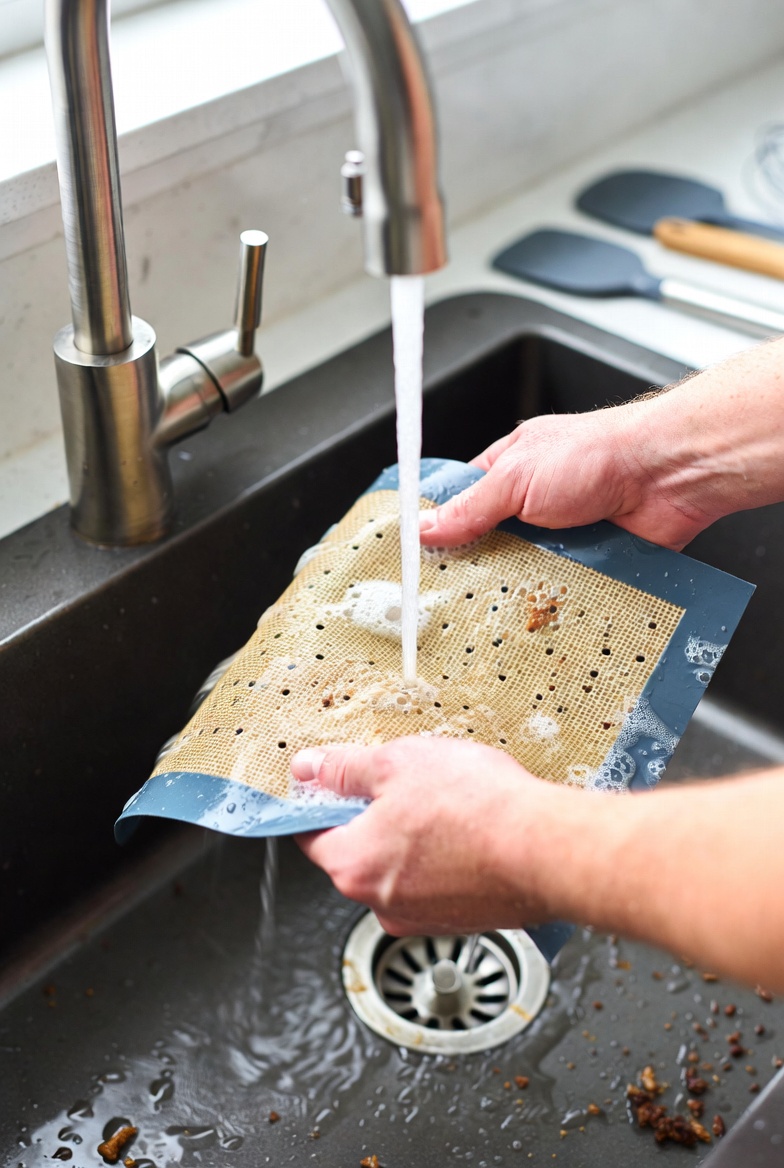
Gentle cleaning = longer life. One of the biggest perks of a silicone baking mat is how easy it is to clean — no scrubbing required! A quick rinse or top-rack dishwasher cycle is usually all it takes.
Protect the surface. The non-stick magic comes from the smooth silicone coating. Sharp tools or abrasive materials will scratch it, reducing performance over time.
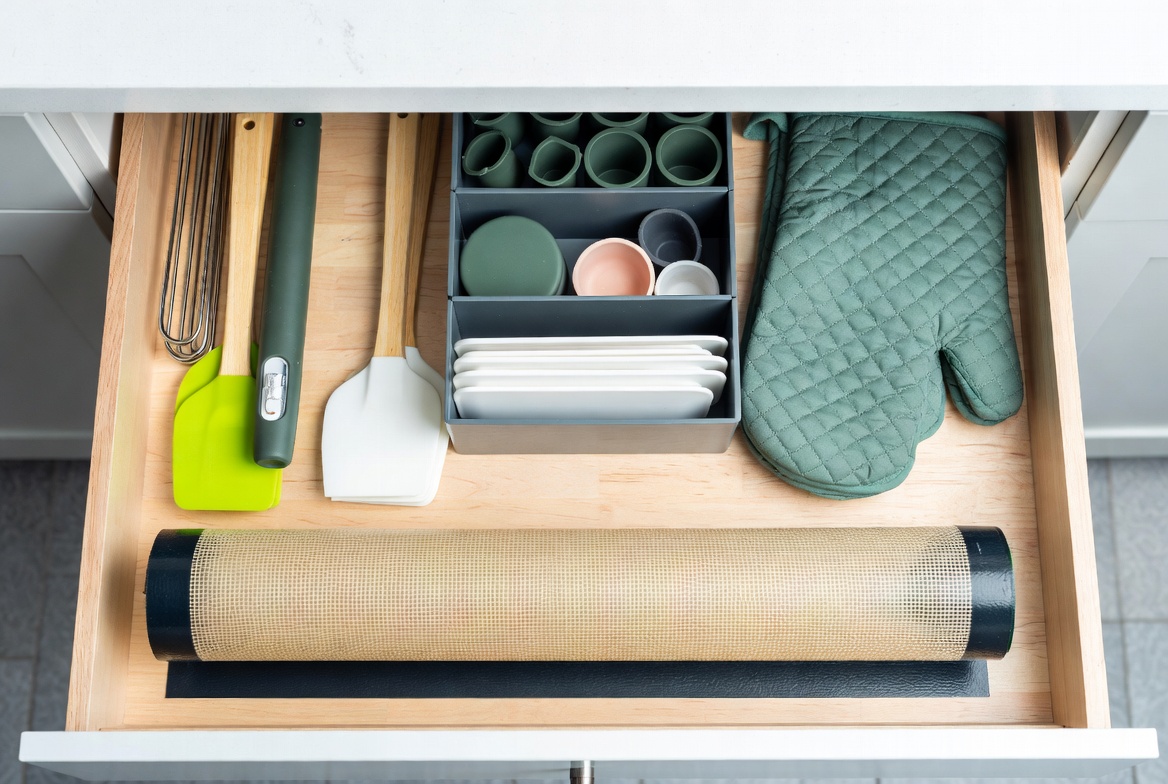
Smart storage preserves flexibility. Rolling the mat loosely or keeping it flat prevents creases that could affect how it lies on your baking sheet.

Pro Tips for Best Results
- No need for oil or spray — the mat is naturally non-stick.
- For extra-crisp bottoms, try flipping the mat over after the first 10 minutes of baking.
- If your mat has measurement guides printed on it, use them! They make portioning cookies and pastries effortless.
- Over time, mats may develop a slight discoloration from natural baking residues — this is normal and doesn’t affect performance.

Final Thoughts
Mastering your silicone baking mat is simple once you know the Do’s and Don’ts. Treat it with care, and it will reward you with perfect bakes, easy cleanups, and years of reliable service. Your kitchen silicone collection — from baking mats to spatulas and beyond — will become the secret weapon in your baking arsenal.
Ready to bake? Grab your mat, preheat the oven, and enjoy the magic of effortless, non-stick baking!
Happy baking! 🍪