





How to Tell If Your Plastic Cutting Board is High Quality
Plastic cutting boards are a kitchen staple—affordable, lightweight, non-porous, and easy to sanitize. They’re especially practical for raw meat, poultry, and staining foods like beets or turmeric. However, not all plastic Cutting Boards perform the same. Cheap ones wear out quickly, harbor bacteria in deep grooves, warp in the dishwasher, or dull your knives faster than necessary.
A high-quality Cutting Board (typically made from HDPE—High-Density Polyethylene) offers better durability, hygiene, and longevity. Here’s how to spot one, with clear signs, what to avoid, and practical tips.
1. Material: Look for HDPE (High-Density Polyethylene)
The best plastic Cutting Boards use HDPE (or sometimes high-quality polypropylene/PP). HDPE is rigid, impact-resistant, and non-porous, resisting absorption of moisture, odors, stains, and bacteria.
- How to identify: Check the label or product description for “HDPE,” “High-Density Polyethylene,” NSF-certified, FDA-approved for food contact, or USDA-compliant. Virgin (new) HDPE is preferable over recycled material.
- Why it matters: HDPE won’t warp or crack easily, handles heavy chopping better, and stays hygienic longer. Softer LDPE (Low-Density Polyethylene) is more flexible and lightweight but scratches deeper, wears faster, and may feel less stable.
Pro tip: Avoid cheap “no-name” plastics, acrylics that become brittle, or boards without any material specification.
2. Thickness and Weight
A quality plastic Cutting Board feels substantial.
- Thin boards (< ⅛ inch / 3mm) flex, slide, and develop deep gouges quickly.
- Good ones are usually ½ inch (12–13mm) or thicker for home use; commercial boards can be even sturdier.
- Heavier weight often signals denser HDPE and better stability.
Test in-store: Press down firmly—if it bends noticeably, it’s likely lower quality.
3. Surface Quality and Knife Feel
Run your fingernail or a dull knife edge lightly across the surface (or observe in photos/reviews).
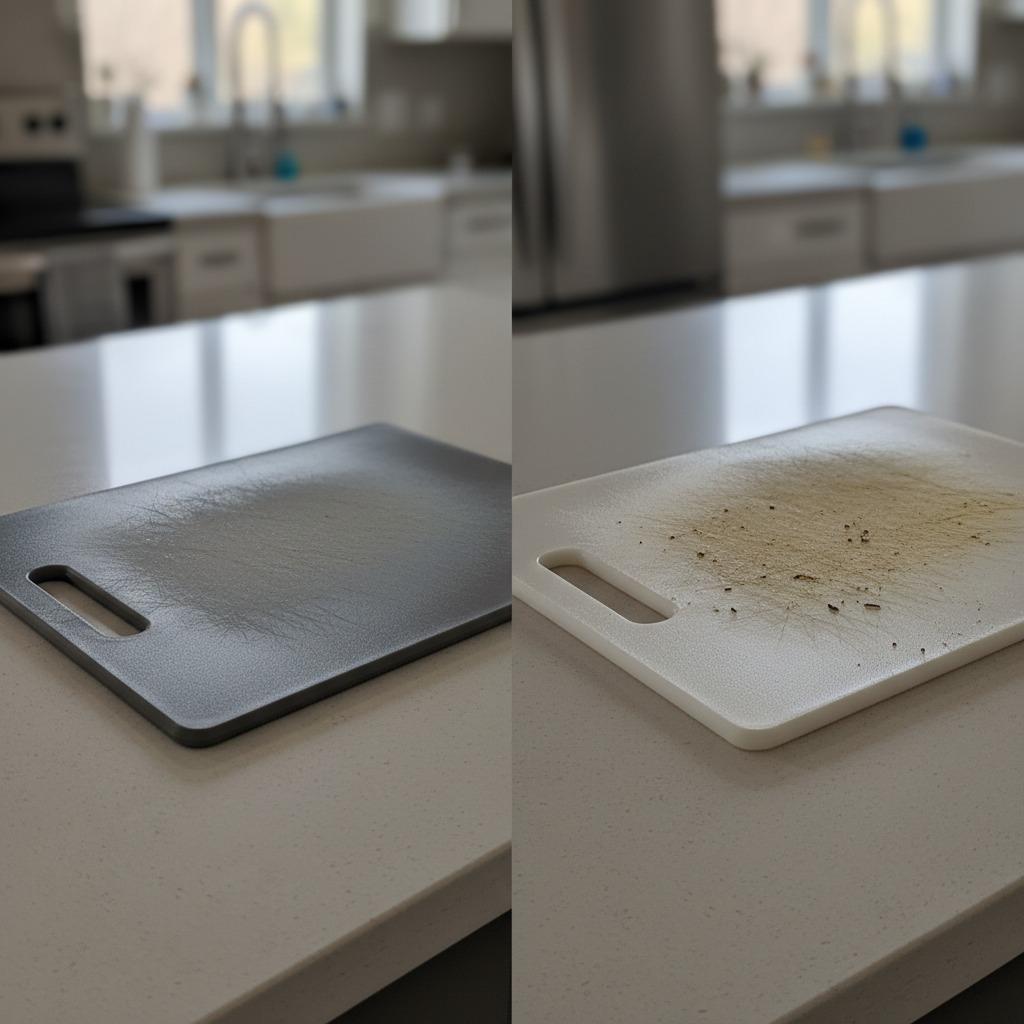
- High-quality boards have a smooth yet slightly matte or micro-textured finish that grips food without excessive slipping, while remaining relatively knife-friendly.
- They show shallow, even cut marks that don’t deepen rapidly.
- Poor boards feel overly soft or sticky, or develop deep scratches and gouges after minimal use, creating crevices where bacteria can hide.
Realistic expectation: All plastic Cutting Boards will show knife marks over time. High-quality ones resist deep scarring longer and are easier to clean.
4. Non-Slip Features and Design
A great Cutting Board stays put while you chop.
- Look for rubberized edges, feet, or textured undersides.
- Juice grooves (channels around the edge) help contain liquids from juicy foods like citrus or meat.
- Reversible designs or color-coded options (e.g., red for meat, green for vegetables) support better food safety practices.
Boards that slide around frustrate you and increase accident risk.
5. Certifications and Safety Claims
Trustworthy high-quality Cutting Boards carry:
- NSF certification (common in commercial kitchens for hygiene)
- FDA compliance for food contact
- Dishwasher-safe labeling (check max temperature—many HDPE boards handle up to ~200°F / 93°C)
Antimicrobial additives (like silver ions in some premium models) are a bonus but not essential if you clean properly.
6. Durability and Maintenance Signs
High-quality plastic Cutting Boards:
- Resist warping, cracking, or fraying even after repeated dishwasher cycles.
- Clean easily with hot soapy water; deep grooves or stains are red flags for lower quality.
- Last longer before needing replacement (replace when grooves become hard to clean or the board warps noticeably—typically 1–3+ years depending on use).
Maintenance tip (for any plastic board):
- Wash immediately after use with hot soapy water.
- Sanitize with a bleach solution (1 tbsp unscented chlorine bleach per gallon of water) or run through the dishwasher.
- Use sharp knives—dull blades cause more damage and microplastics.
- Color-code for raw vs. ready-to-eat foods to prevent cross-contamination.
Quick Comparison Table: High-Quality vs. Low-Quality Plastic Cutting Board
Bonus: Visual Indicators When Shopping
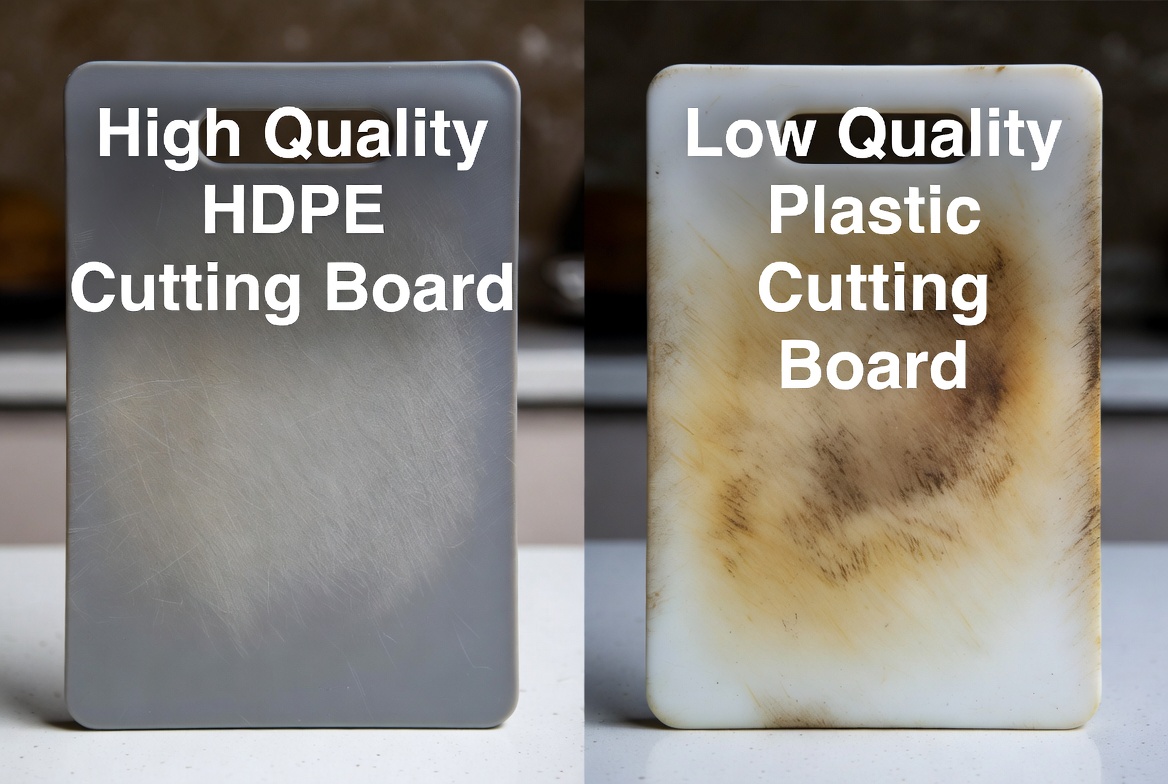
- Good example image description: A thick, white or colored HDPE board with a subtle matte surface, rubberized non-slip borders, and shallow uniform knife marks after moderate use. It lies flat and stable on the counter.
- Bad example: A thin, warped board with deep jagged grooves, visible stains, and no grip features—food would slide and cleaning would be difficult.


Final Advice
When buying a plastic Cutting Board, prioritize HDPE with good thickness, non-slip features, and certifications. Test the feel if possible— it should feel solid and stable. A high-quality board might cost more upfront but saves money and hassle over time while keeping your kitchen safer and more efficient.
Pro tip: Many home cooks use both wood (for general prep, gentler on knives) and plastic Cutting Boards (dedicated for raw proteins). Rotate and replace as needed.
By checking these points, you’ll easily identify a high-quality plastic Cutting Board that delivers years of reliable performance. Happy chopping!