





Full Tang vs. Partial Tang: Which is Stronger? A Complete Guide to Kitchen Knife Construction
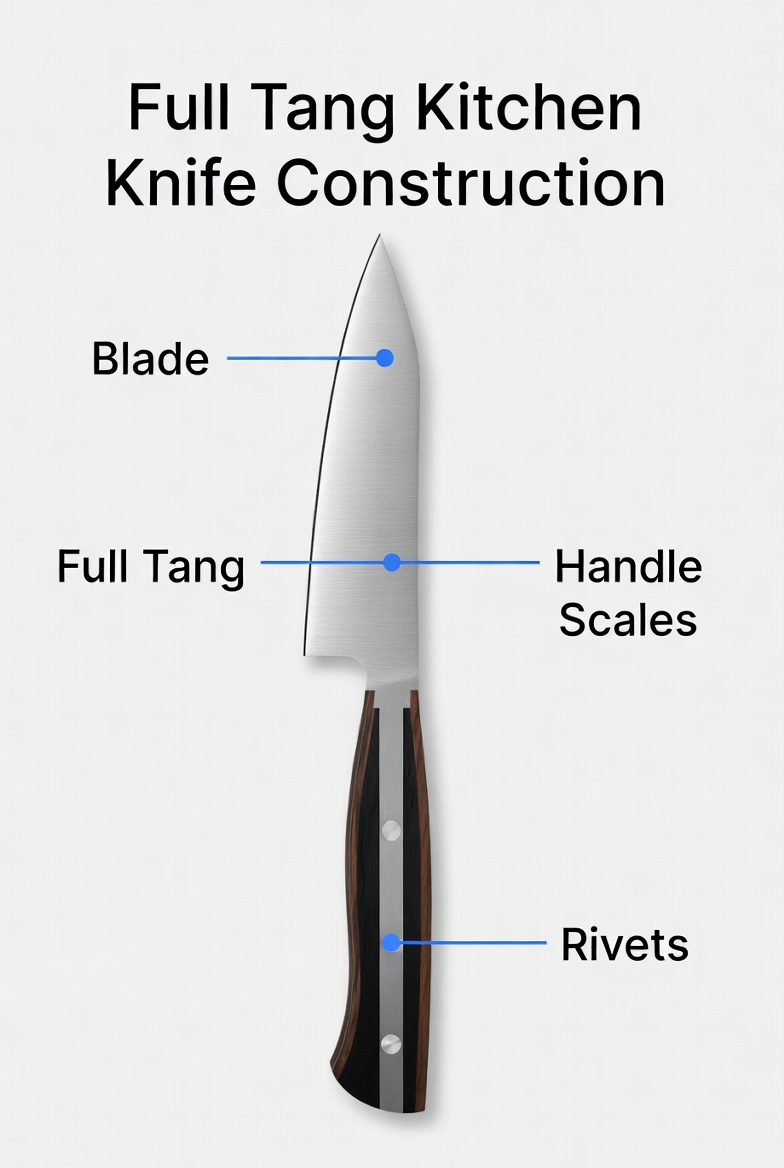
When it comes to choosing a reliable kitchen knife, one of the most important — yet often overlooked — features is the tang. The tang is the unsharpened extension of the blade that fits inside the handle. It determines how strong, balanced, and durable your knife will be over years of daily use.
Today we compare Full Tang vs. Partial Tang and answer the big question: Which is stronger for a kitchen knife?
What Is a Tang?
The tang is literally the “backbone” of the blade. It anchors the handle and transfers force from your hand to the cutting edge. There are two main types used in modern kitchen knives:
Full Tang Construction
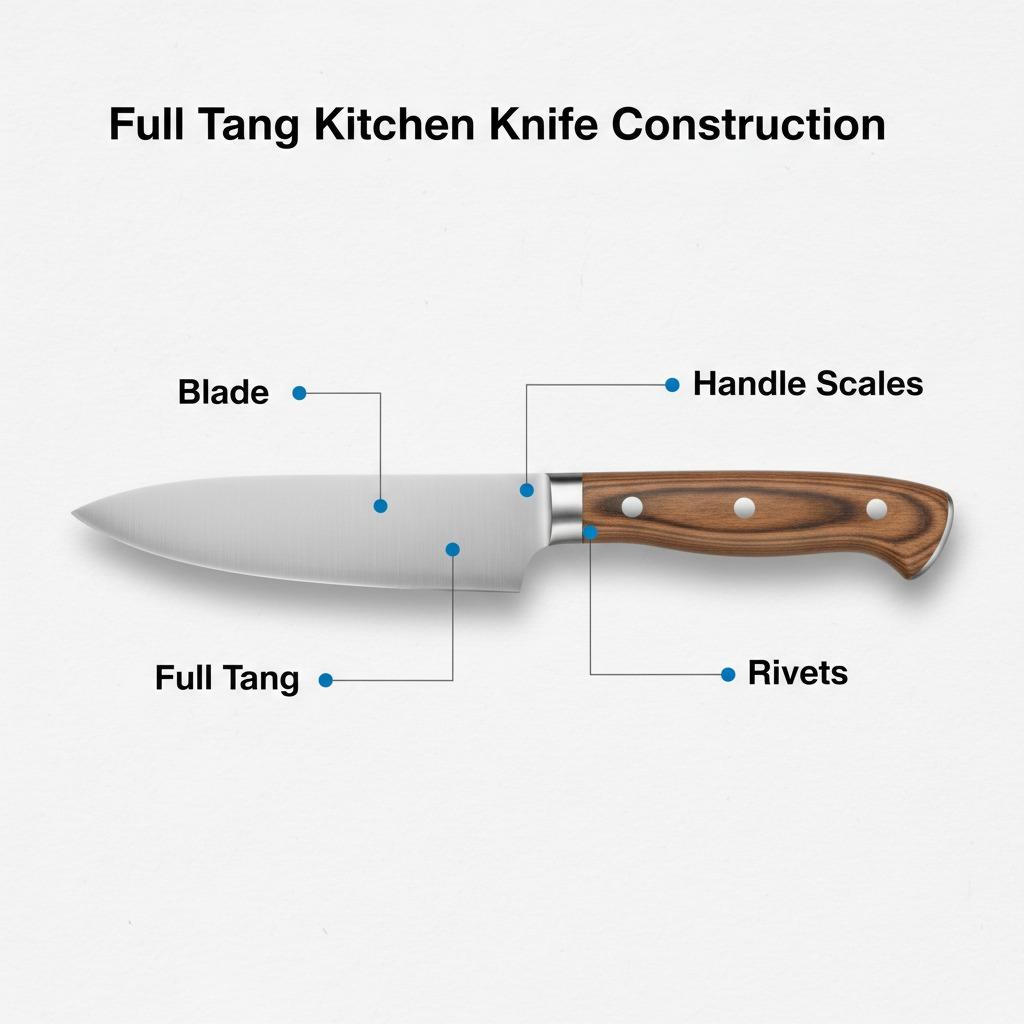
In a full tang kitchen knife, the metal from the blade extends all the way through the handle to the very end. The handle scales (the two pieces that sandwich the tang) are usually riveted or bolted on both sides. This creates one solid piece of steel from tip to butt.
Partial Tang Construction
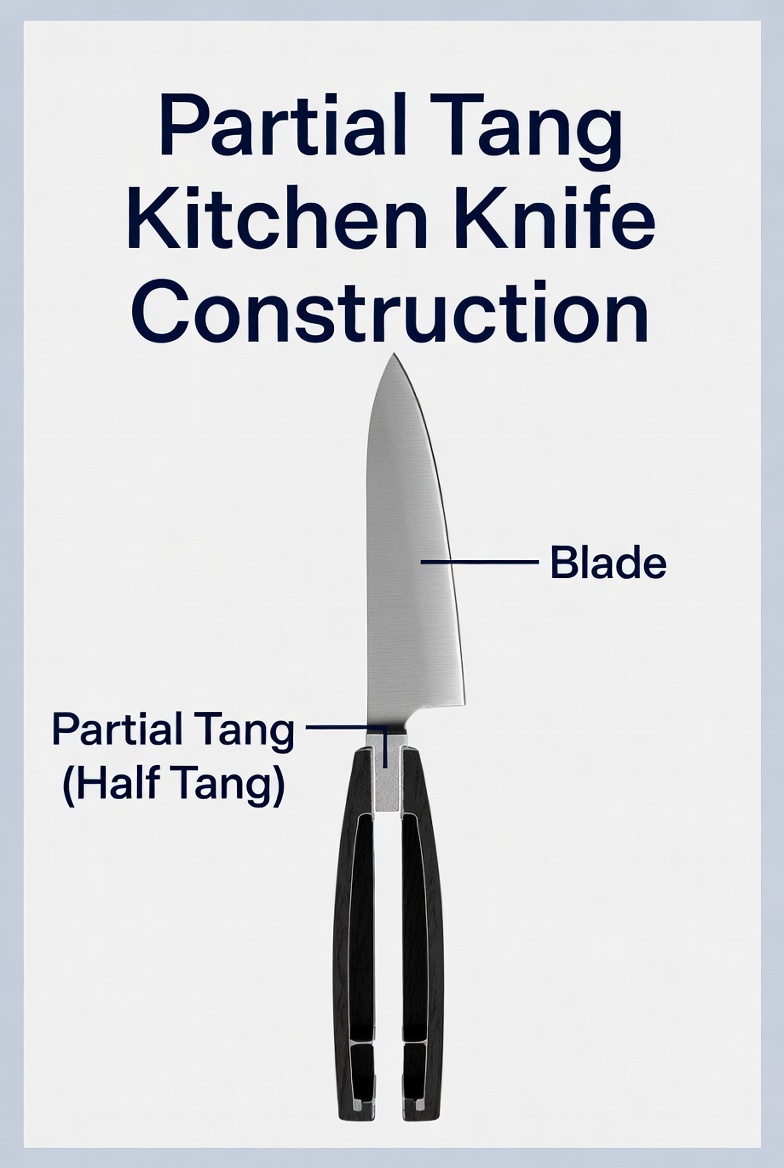
A partial tang (also called half tang or rat-tail tang) only extends partway into the handle — often just 1/3 to 2/3 of the handle length. The rest of the handle is made of molded plastic, wood, or filler material. This design is common in budget-friendly kitchen knives.
Which Is Stronger?
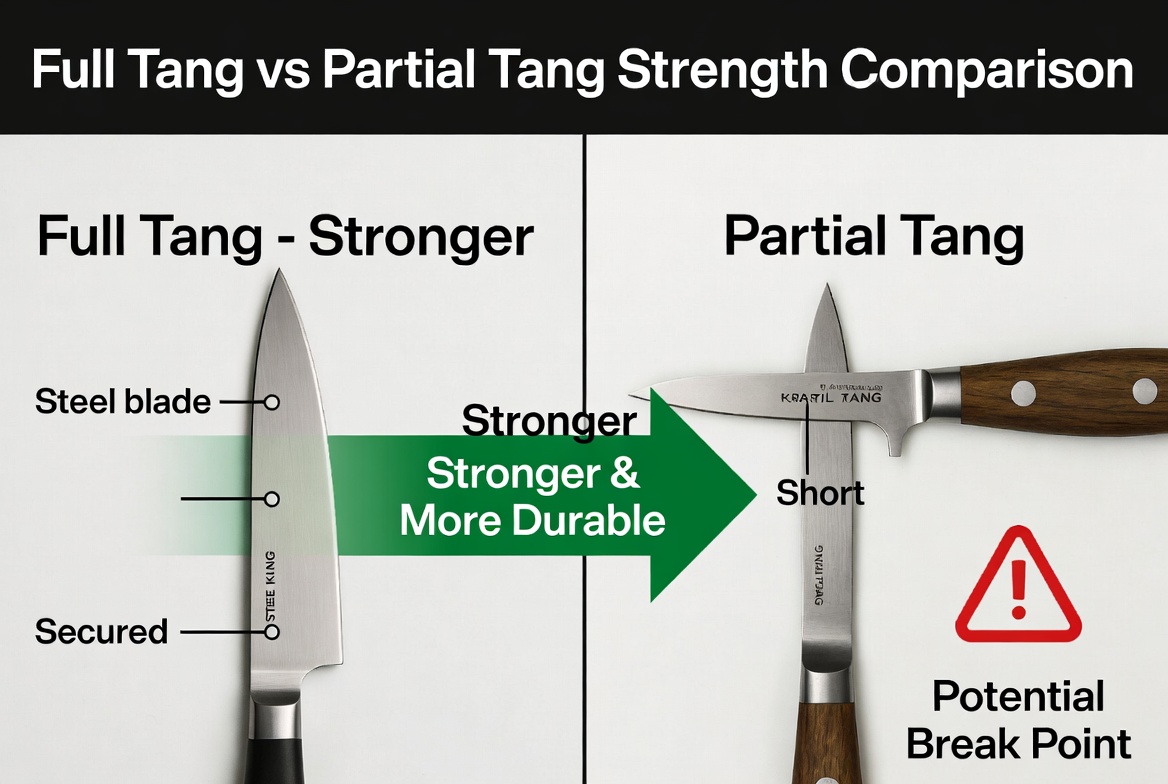
Full tang is significantly stronger.
Because the steel runs continuously through the entire handle, force is distributed evenly and there is no weak “joint” where the blade meets the handle. Partial tang knives have a natural stress point where the short tang ends inside the handle — this is where breakage or loosening most often occurs after heavy use.
Professional chefs and serious home cooks almost always prefer full tang kitchen knives for chopping, slicing, and tough tasks like breaking down poultry or cutting through dense vegetables.
Side-by-Side Comparison Table
Feature Full Tang Kitchen Knife Partial Tang Kitchen Knife
Strength Excellent – continuous steel spine Good for light use – has a weak point
Durability Very high – resists breaking & loosening Moderate – can loosen or snap over time
Balance & Feel Superior balance, solid in the hand Lighter but can feel “top-heavy”
Weight Slightly heavier Lighter and more agile
Heat Resistance Better (metal dissipates heat) Handle can get warmer
Price Higher (premium materials & labor) Lower (budget-friendly)
Best For Daily professional or heavy home use Occasional cooking, beginners
Longevity Many years with proper care 1–3 years with regular heavy use
Verdict from the table: If strength and longevity matter to you, full tang wins every time for a kitchen knife.
Pros & Cons Summary
Full Tang Pros
Maximum strength and durability
Excellent balance for precise control
Feels premium and professional
Full Tang Cons
Usually more expensive
Slightly heavier
Partial Tang Pros
Lightweight and easy to maneuver
Much more affordable
Partial Tang Cons
Weaker under heavy pressure
Handle can loosen over time
Final Recommendation
For anyone who cooks regularly, a full tang kitchen knife is the clear winner when it comes to strength. It simply lasts longer, performs better, and gives you confidence when tackling tough cutting jobs.
Next time you’re shopping for a new kitchen knife, check the product description or look through the handle rivets — if you can see the steel running all the way through, you’ve found a full tang blade. Your future self (and your cutting board) will thank you!
Have you switched to full tang knives yet? Drop your favorite kitchen knife brand in the comments! 🔪