





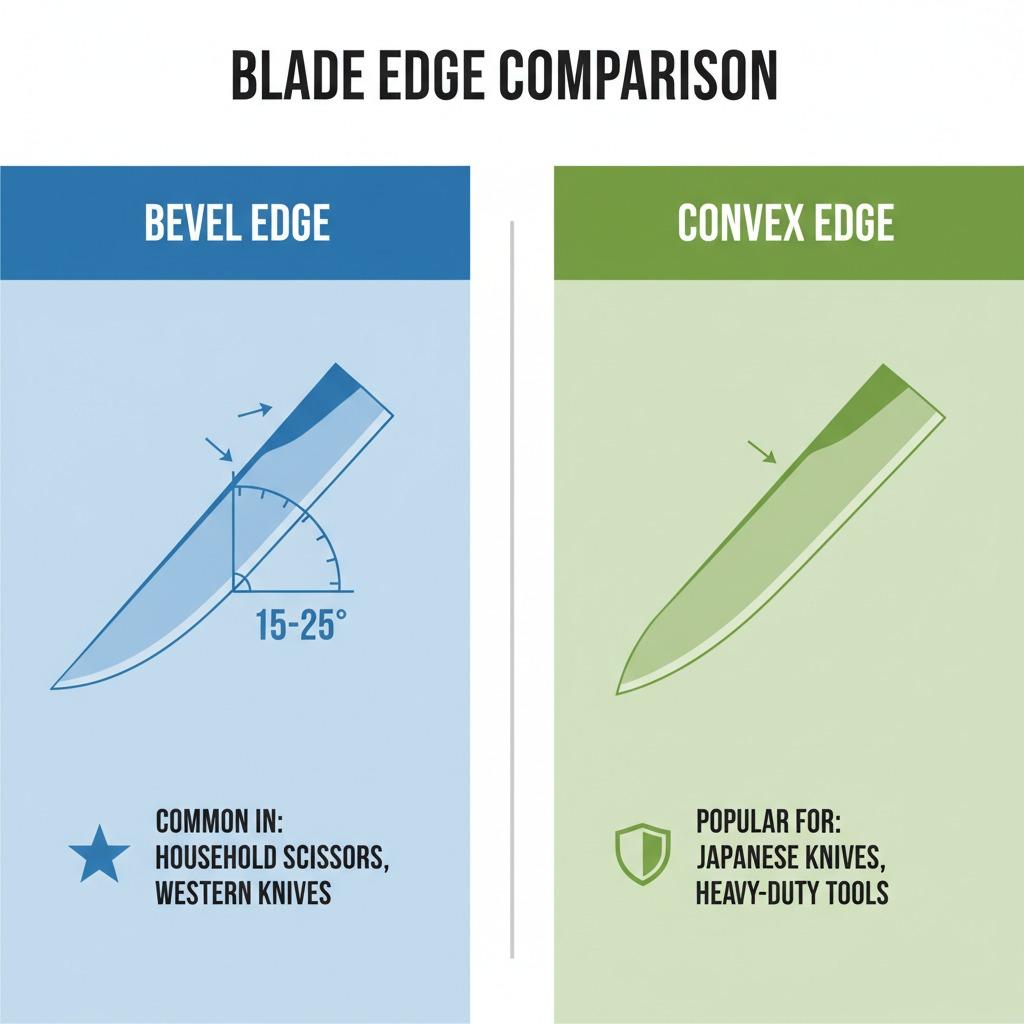

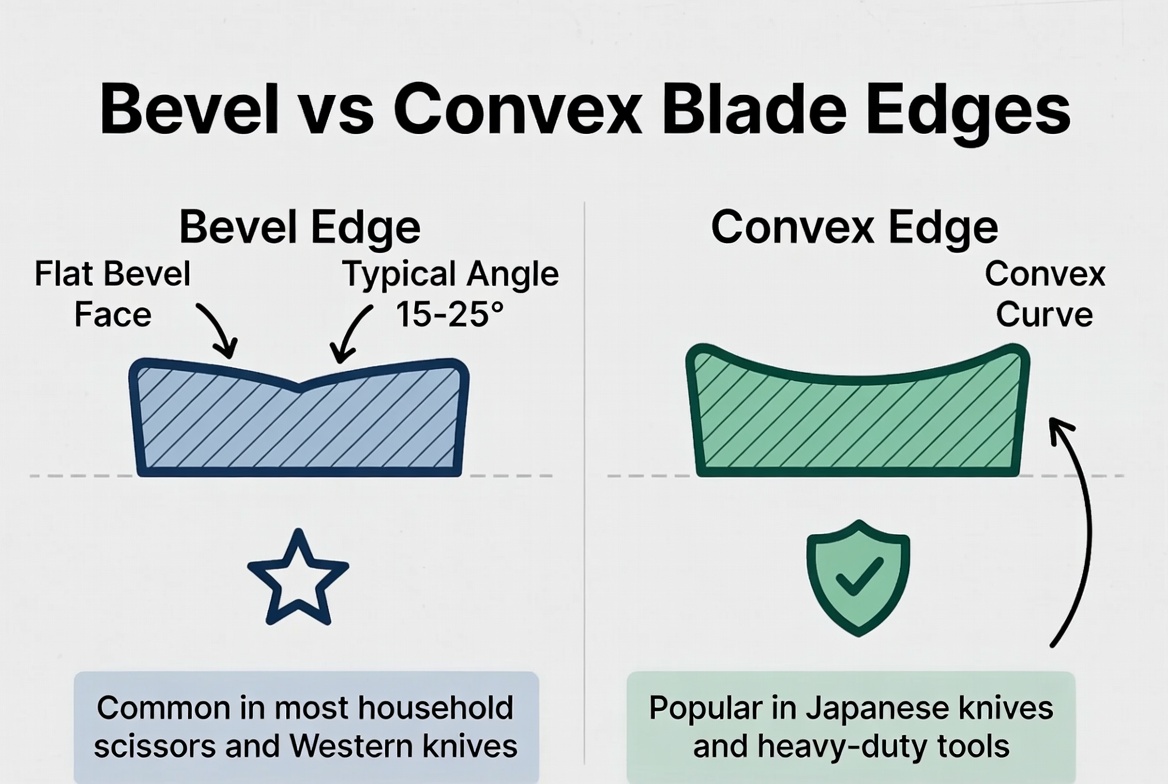
Bevel vs. Convex Edges: Which Blade Geometry Suits Your Needs?
In the world of cutting tools, blade geometry is everything. The shape of the edge determines how sharp your tool feels, how long it stays sharp, and whether it’s right for slicing tomatoes or tackling tough cardboard. Two of the most common edge designs are bevel edges and convex edges. Understanding the difference helps you pick (or sharpen) the perfect blade — whether you’re a home cook, a crafter, or simply reaching for a pair of household scissors.
What Is a Bevel Edge?
A bevel edge features flat, angled surfaces that meet at the cutting edge, creating a classic V-shape (or sometimes a single-sided chisel). This straightforward geometry is the standard choice for most everyday tools.

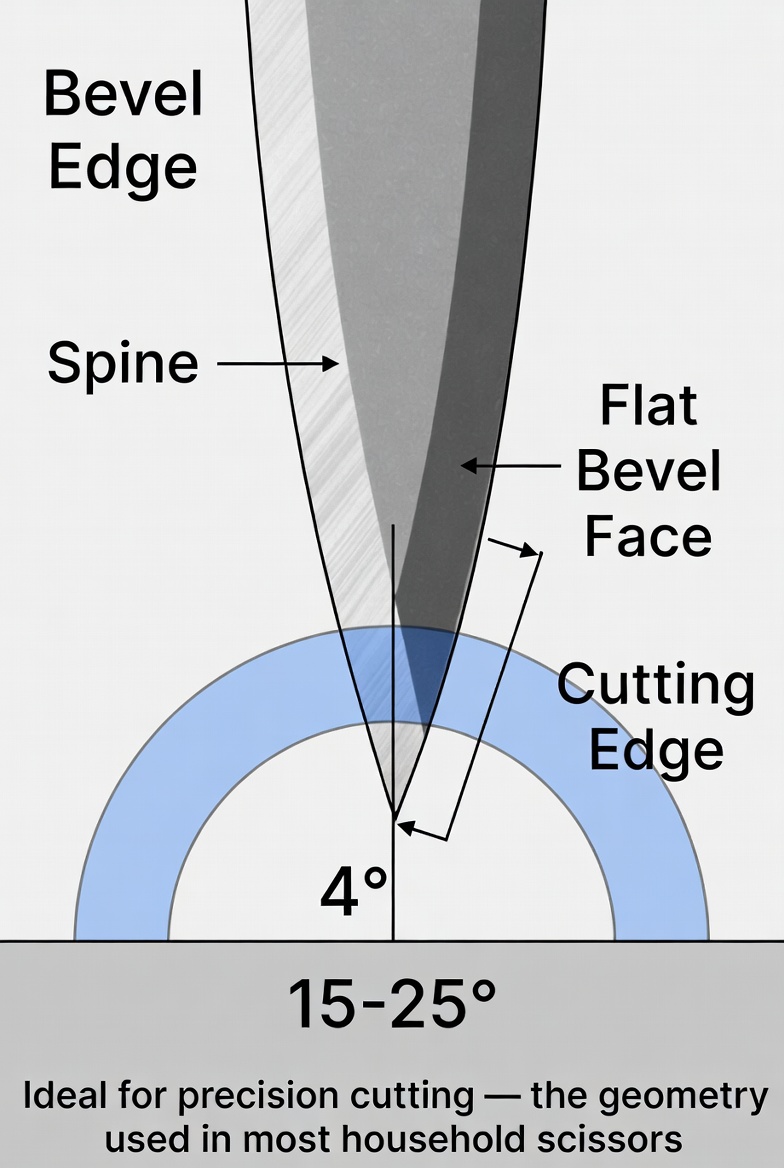
Advantages of bevel edges
- Razor-sharp right out of the box
- Very easy to sharpen on standard whetstones or honing rods
- Excellent for clean, precise cuts
Disadvantages
- Can roll or dull faster under heavy abuse
- Slightly more fragile on very hard materials
What Is a Convex Edge?
A convex edge curves gently outward from the blade spine to the cutting edge, like a smooth rounded hill instead of a flat ramp. This geometry is favored in many high-performance Japanese knives and some specialized tools.

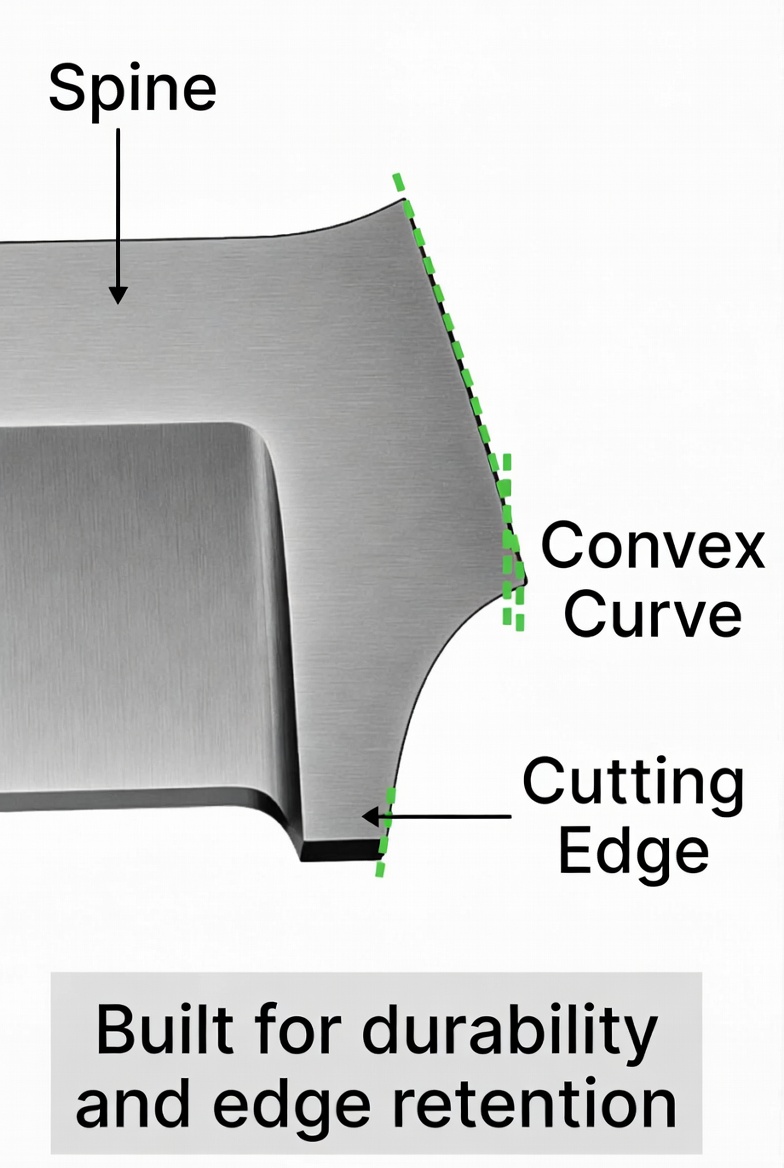
Advantages of convex edges
- Extremely durable and chip-resistant
- Holds an edge much longer during tough work
- Slices through dense materials with less effort
Disadvantages
- Requires special stropping or convex sharpening jigs
- Slightly harder to achieve hair-splitting sharpness
Quick Comparison Table
| Aspect | Bevel Edge | Convex Edge |
|---|---|---|
| Edge Profile | Flat angled V-shape | Smooth outward curve |
| Initial Sharpness | Excellent | Very good (slightly less acute) |
| Durability | Moderate | Excellent — resists rolling & chipping |
| Sharpening Ease | Easy (whetstones, rods) | Moderate (needs strops or guided convex systems) |
| Best For | Precision tasks, household scissors, slicing | Heavy chopping, tough materials, professional use |
| Common Tools | Western knives, most household scissors, shears | Japanese gyuto, some axes & machetes |
Which Blade Geometry Suits Your Needs?
If you’re like most people and grab household scissors for opening packages, cutting fabric, or trimming herbs, a bevel edge is almost always the winner. It delivers the crisp, effortless cut you expect and is simple to touch up at home.
Love chopping vegetables like a pro or need a blade that survives daily abuse in the kitchen? A convex edge might be your new best friend — just be ready to invest a little more time in maintenance.
Pro tip: Many premium household scissors now offer hybrid edges — a primary bevel with a light convex micro-bevel for the best of both worlds!
Final Thoughts
Whether you prefer the classic reliability of a bevel edge or the rugged toughness of a convex edge, the right geometry makes every cut more satisfying. Next time you pick up your household scissors or favorite kitchen knife, take a quick look at the edge — you’ll know exactly why it performs the way it does.
Have you ever noticed the difference in your own tools? Drop a comment below and let us know whether you’re Team Bevel or Team Convex!