







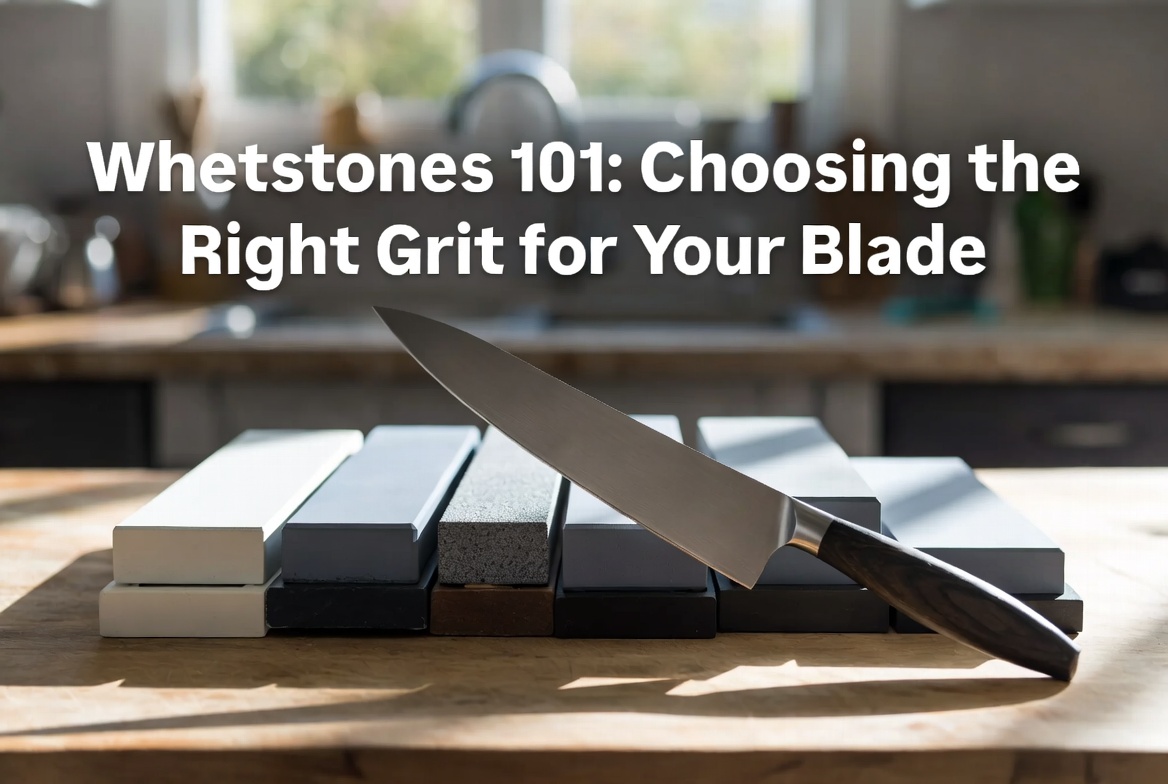
Whetstones 101: Choosing the Right Grit for Your Blade
In the world of culinary arts, a sharp kitchen knife is your best friend. Whether you’re chopping vegetables, slicing meat, or preparing delicate herbs, a dull blade turns precision into frustration and safety into a hazard. Whetstones — also known as sharpening stones or water stones — remain the gold standard for restoring and maintaining a razor-sharp edge on your kitchen knife.
This beginner-friendly guide, Whetstones 101, walks you through everything you need to know about grit selection so you can confidently choose the right whetstone for your kitchen knife and achieve professional results at home.
What Are Whetstones and Why Does Grit Matter?
Whetstones are solid blocks of abrasive material designed to grind away microscopic amounts of metal from your blade’s edge. Most modern whetstones are water stones that you soak before use; they cut faster and cleaner than old-school oil stones.
The secret to their power lies in one number: grit. Grit measures how coarse or fine the stone’s surface is. Lower numbers = larger abrasive particles that remove metal quickly (great for repairs). Higher numbers = smaller particles that polish and refine (perfect for a mirror finish).
Understanding grit lets you match the stone to your kitchen knife’s exact needs instead of guessing.

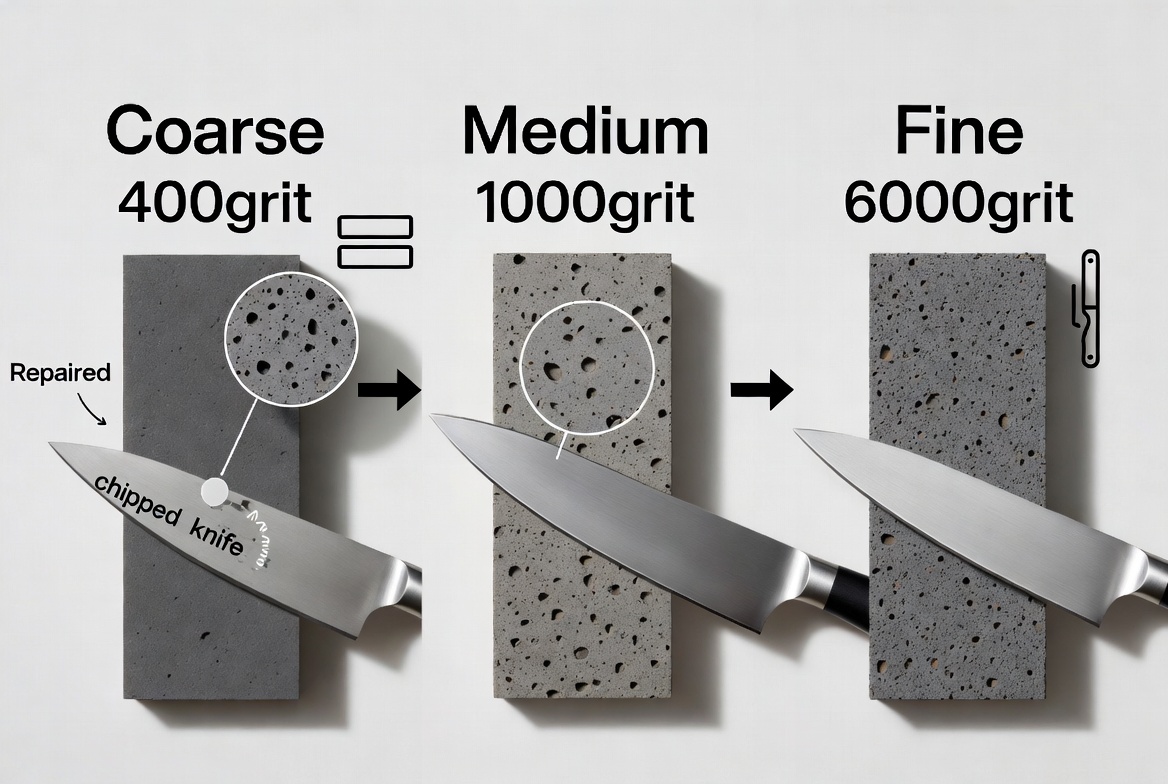
Grit Levels at a Glance – Quick Reference Table
Use this table to instantly pick the perfect grit for your kitchen knife:
| Grit Range | Stone Type | Primary Purpose | Best For Your Kitchen Knife |
|---|---|---|---|
| 200–600 | Coarse | Repairing chips & reshaping | Heavily damaged or extremely dull kitchen knives |
| 800–2000 | Medium | Initial sharpening & edge setting | Regular maintenance of everyday kitchen knives |
| 3000–5000 | Fine | Refining the edge | Keeping high-quality kitchen knives consistently sharp |
| 6000–10,000 | Ultra-Fine | Polishing & mirror finish | Professional chefs wanting a razor-sharp kitchen knife |
Pro recommendation for most home cooks: Start with a 1000-grit stone for sharpening your kitchen knife, then finish on a 6000-grit stone for a long-lasting, butter-smooth edge.
How to Choose the Right Grit for Your Kitchen Knife
- Your kitchen knife is badly dulled or chipped? → Begin with coarse grit (400–1000). It removes material fast and restores the bevel.
- Your kitchen knife just needs a touch-up? → Medium grit (1000–3000) is perfect — efficient without wasting steel.
- Your kitchen knife is already decent but you want chef-level sharpness? → Finish with fine/ultra-fine grit (5000+) for that hair-splitting edge.
Japanese-style kitchen knives (harder steel) love higher grits, while softer Western blades often perform beautifully with medium grits. Always consider your kitchen knife’s current condition and steel type.

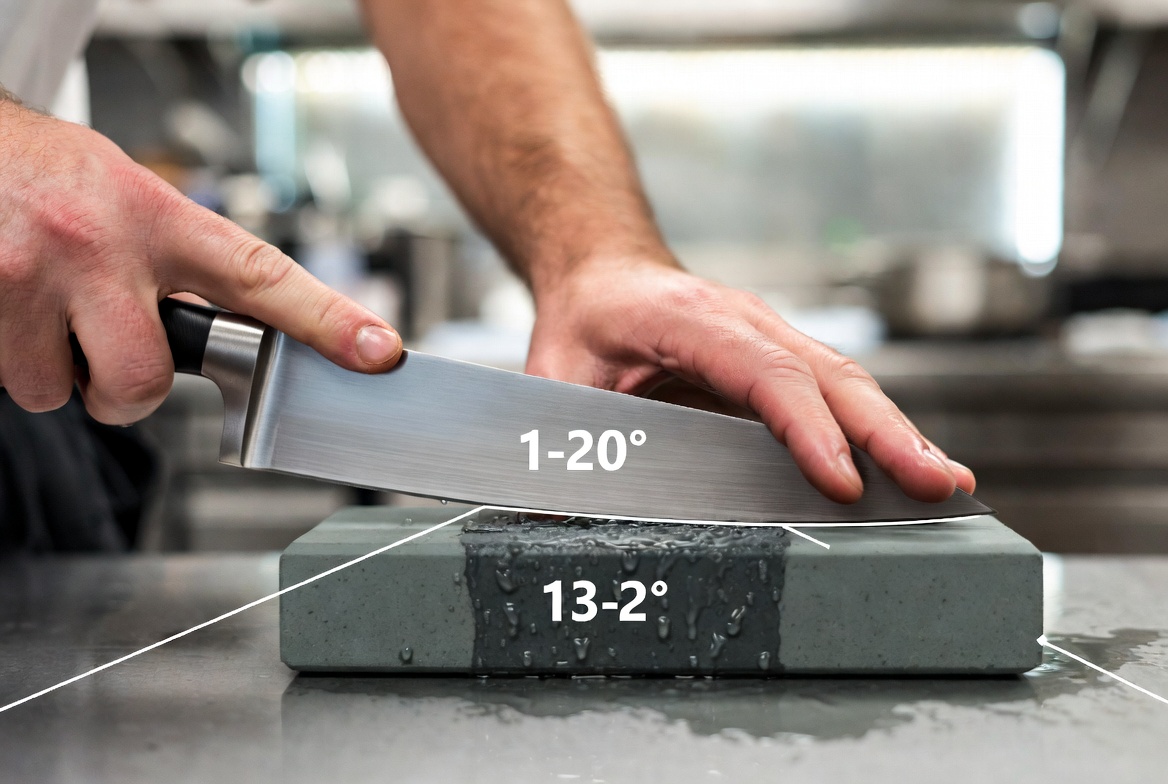
Quick Start: Sharpening Your Kitchen Knife Step-by-Step
- Soak the whetstone in water for 5–10 minutes (until bubbles stop).
- Hold your kitchen knife at a consistent 15–20° angle (use a guide if needed).
- Push the blade forward across the stone with light pressure, then pull back on the return stroke.
- Repeat 10–15 times per side, then move to the next finer grit.
- Finish by stropping on leather or newspaper for extra polish.
Test sharpness on a tomato — it should slice cleanly with almost no pressure.

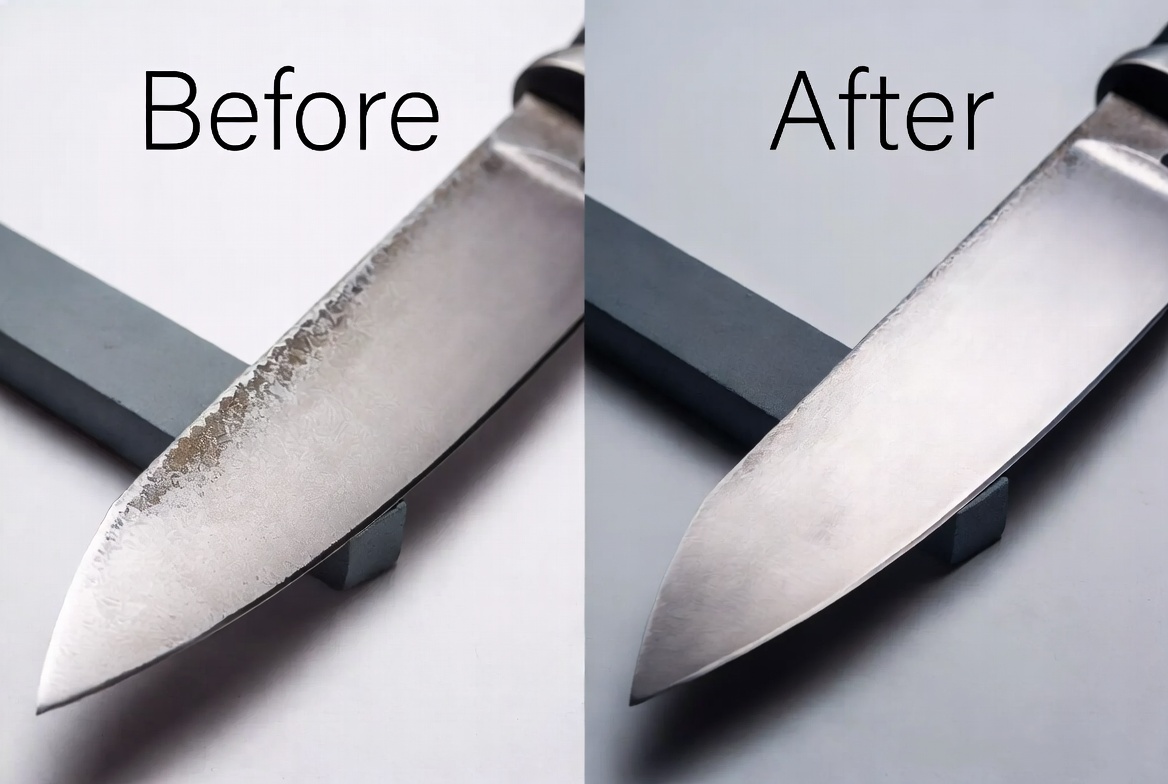
Final Thoughts: Elevate Your Kitchen Knife Game
Choosing the right grit transforms your whetstone from a simple tool into a precision instrument. Once you master the basics, your kitchen knife will stay sharper longer, making every cut safer, faster, and more enjoyable.
Ready to get started? A simple two-stone combo (1000 + 6000 grit) is all most home cooks need for lifelong razor-sharp kitchen knife performance.
What grit do you currently use on your kitchen knife? Drop a comment below — we’d love to hear your sharpening stories!
Happy sharpening! 🔪