





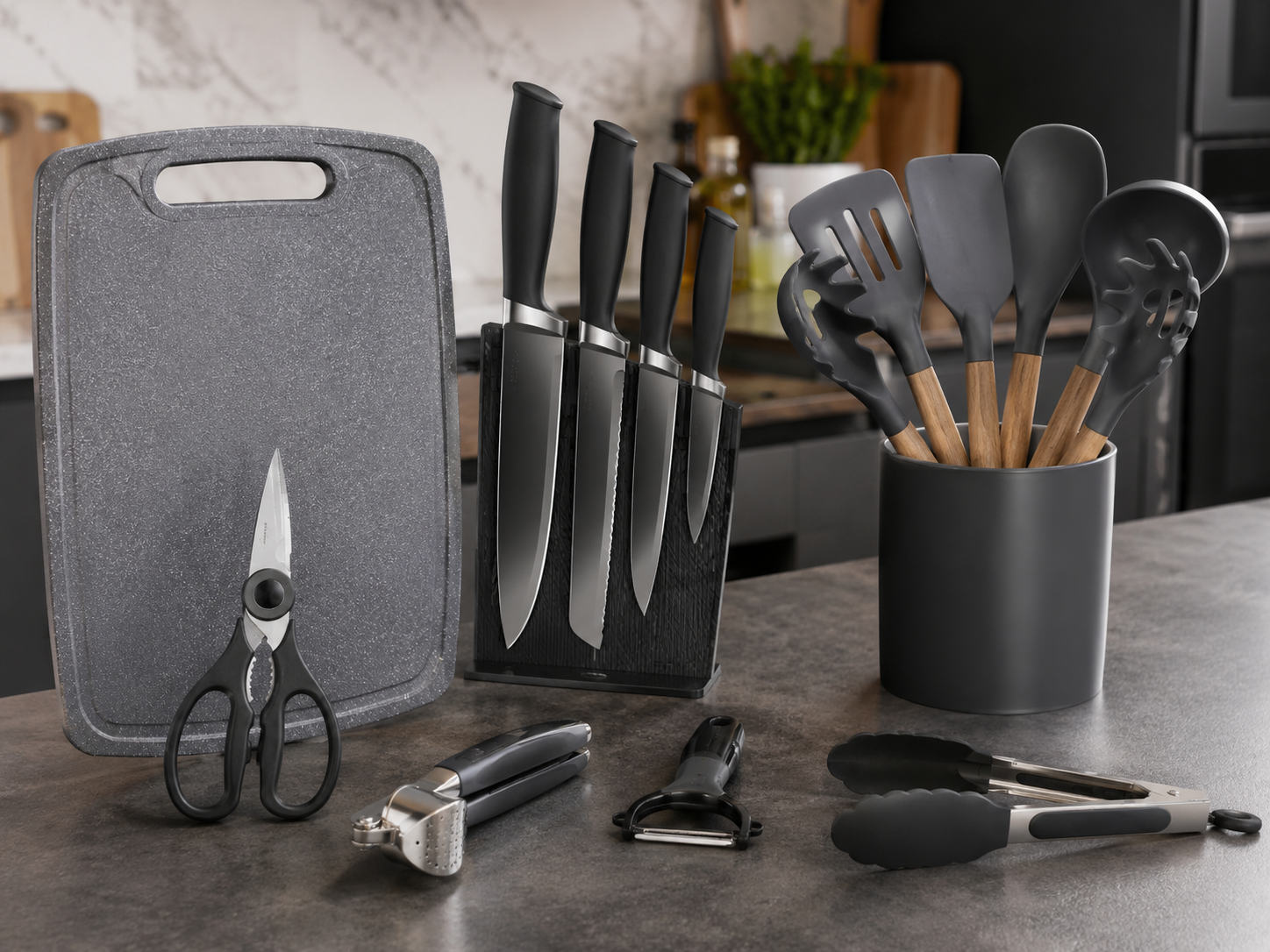
At the beginning, most kitchen utensils look easy to source. Samples arrive clean, colors look consistent, silicone feels soft, and packaging seems acceptable. But once the product enters real kitchens and retail channels, problems begin to appear. Spatulas bend too much near heat. Spoon edges feel rough. Tongs lose grip tension. Peelers twist under pressure. Some utensils look good online but fail to explain their value on a supermarket shelf. This is where the difference between a general trading source and a true kitchen utensil supplier becomes clear. BONET HOUSEWARE CO.,LTD presents its product range around kitchenware, scissors, kitchen knives, kitchen utensils, chopping boards, and multi-functional tools, giving buyers a wider foundation for building coordinated kitchenware programs.
Material and Tool-Head Design Decide Daily Cooking Performance
A reliable utensil is not defined by appearance alone. It is defined by how the material behaves during real cooking.
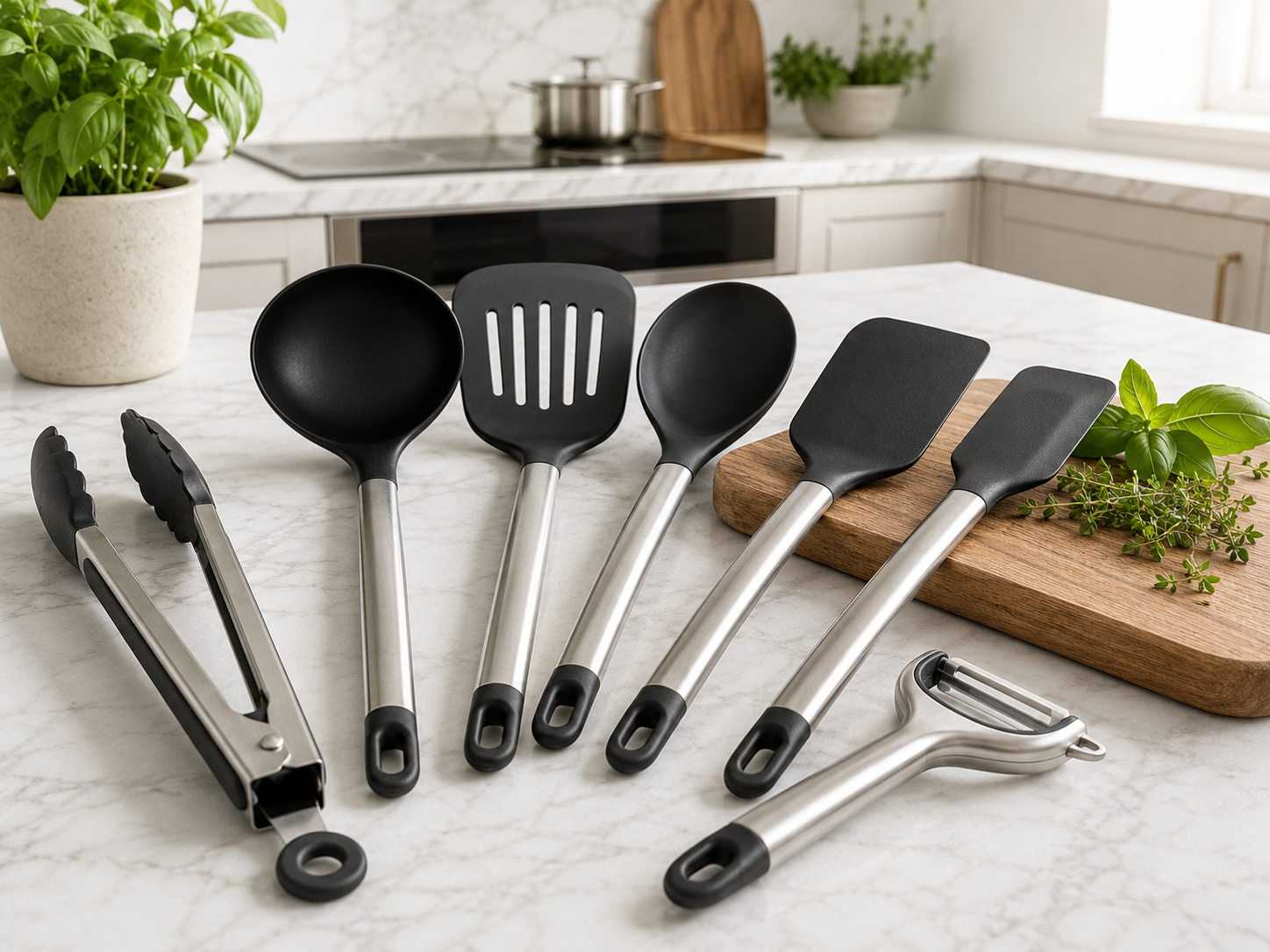
Typical kitchen utensil materials include:
- Silicone tool heads for non-stick cookware protection
- Stainless steel handles for strength and clean appearance
- PP, TPR, or soft-touch handle materials for grip comfort
- Nylon or plastic components for lightweight daily-use tools
For kitchen utensils for nonstick cookware, silicone flexibility is especially important. The tool head must be soft enough to avoid scratching pan surfaces, but firm enough to lift eggs, stir sauces, scrape bowls, or serve heavier food. If the silicone neck is too weak, the utensil feels cheap. If the edge is too hard or poorly finished, it may damage cookware or feel uncomfortable during use.
Material review also matters because kitchen utensils often contact food, cookware, and food-preparation surfaces. The U.S. FDA explains that food-contact substances may include cookware, processing equipment, food preparation surfaces, and packaging components. That makes material selection a serious sourcing issue, not just a design preference.
Why Supplier Capability Matters More Than a Low Unit Price
When sourcing from a kitchen utensil supplier, many buyers first compare price. Price matters, but long-term product performance depends on technical and supply capability.
A stronger supplier should evaluate:
- Cooking scenario: frying, stirring, serving, scraping, peeling, or grilling
- Cookware compatibility: non-stick pans, stainless steel cookware, ceramic cookware
- Handle comfort: grip shape, hanging hole, balance, and anti-slip feeling
- Cleaning behavior: surface smoothness, joint design, and dishwasher-use expectations
- Retail channel: supermarket shelf, online store, wholesale program, or private label
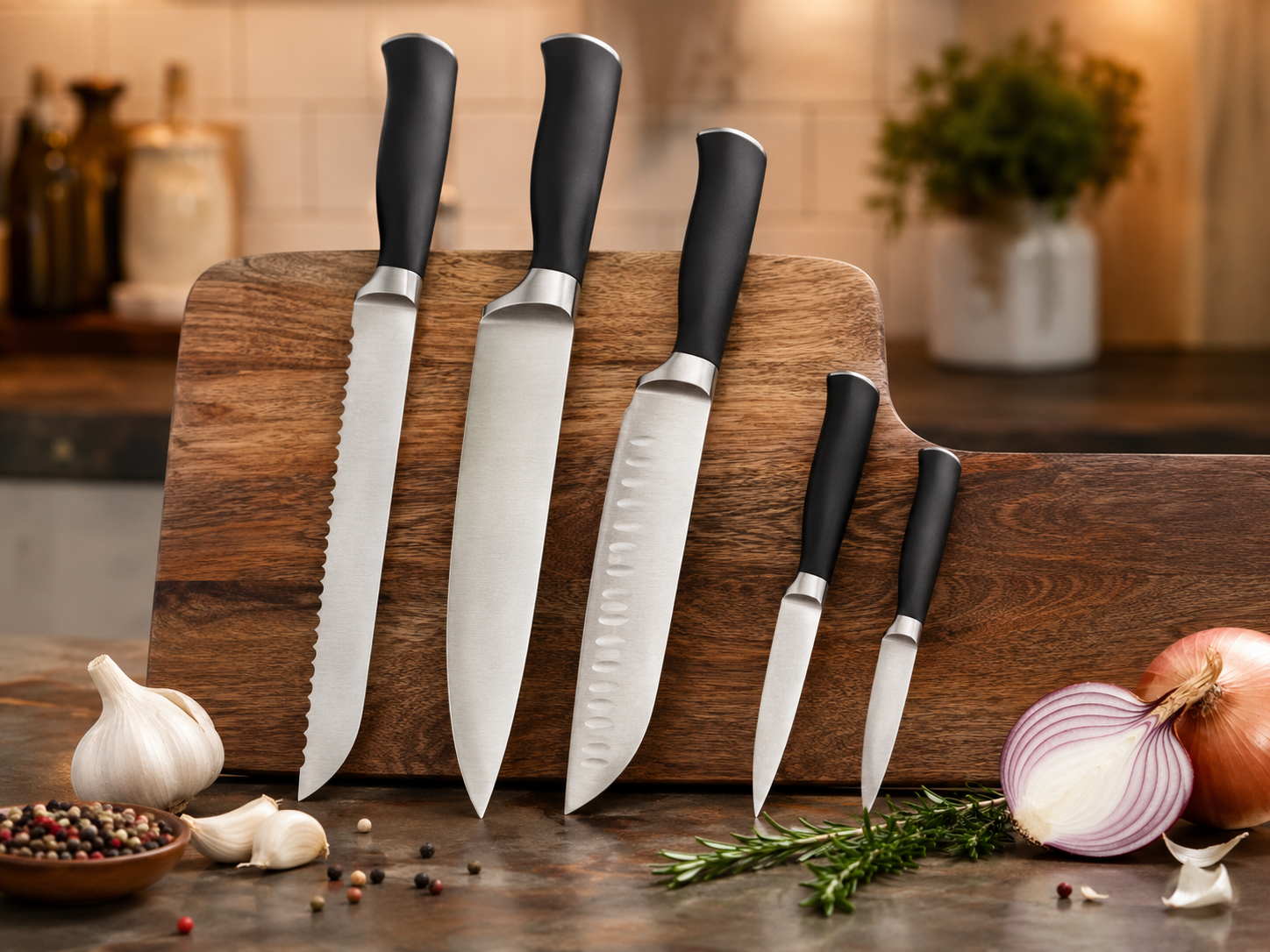
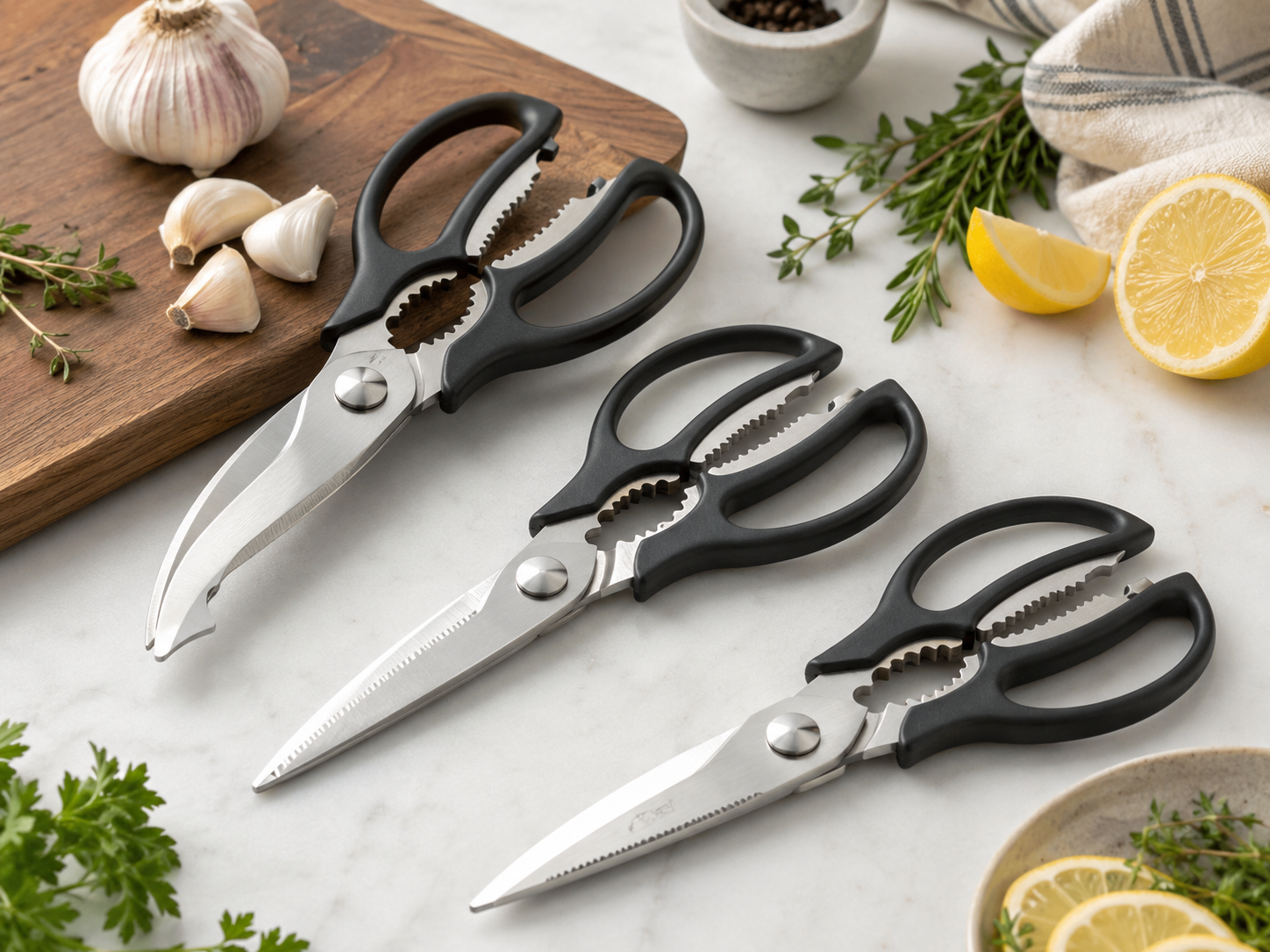
BONET’s website positions the company in Yangjiang and describes its business around kitchenware and precision cutting tools, including kitchen tools and kitchen utensils. The site also highlights Yangjiang’s knife-and-scissors manufacturing background, which is useful for buyers sourcing both utensils and cutting tools from one product system.
Comparing Supplier Types: Where Utensil Problems Usually Start
| Factor | Low-Cost Supplier | Professional Supplier |
|---|---|---|
| Material selection | Generic silicone or plastic | Material matched to cooking task |
| Tool-head design | Looks similar across products | Shape designed for stirring, scraping, serving, or turning |
| Handle comfort | Basic grip, weak balance | Better weight, anti-slip feel, and hanging structure |
| Non-stick use | Claim-focused | Surface and edge designed to protect cookware |
| Sample vs bulk | Sample acceptable, bulk unstable | Defined inspection points before production |
| Packaging | Added at the end | Built for display, protection, and channel fit |
| Product planning | Random SKU selection | Structured line by use case and buyer channel |
Choosing the right kitchen utensil supplier helps buyers avoid a common mistake: buying products that look acceptable in photos but feel weak in the user’s hand.
Case Insight: When a Utensil Line Looked Good but Sold Slowly
A homeware importer preparing a kitchen utensil line for online retail selected several low-cost spatulas, spoons, tongs, and peelers from different suppliers. The samples looked acceptable, but after launch, customer feedback showed three recurring problems.
The spatulas were too soft for heavier cooking. The peeler handle felt unstable. The product images looked clean, but the set had no clear selling story. Customers could not easily understand whether it was for non-stick cookware, family cooking, compact kitchens, or gift use.
A more practical solution would be to rebuild the line around use scenarios:
- Silicone spatulas and spoons for non-stick cookware
- Tongs and ladles for daily cooking
- Peelers and small gadgets for food preparation
- Matching packaging with clear function icons
- Consistent color and handle design for private-label presentation
This is how a utensil line becomes easier to sell: not by adding more random tools, but by giving each product a clear purpose.
Quality Control Should Cover More Than Surface Appearance
A utensil may look simple, but several quality points affect buyer risk. Silicone tools need odor control, surface smoothness, flexibility consistency, and secure connection between head and handle. Stainless steel handles need clean finishing, stable wall thickness, and smooth edges. Peelers need blade firmness and controlled assembly. Tongs need spring force and tip alignment.
ISO describes ISO 9001 as a globally recognized quality management standard that helps organizations improve performance, meet customer expectations, and demonstrate commitment to quality. For B2B kitchenware sourcing, that principle is practical: repeatable production matters more than a perfect first sample.
What Buyers Should Evaluate Before Choosing a Supplier
Before confirming a bulk order, buyers should review:
- Whether each utensil solves a clear cooking task
- Whether silicone parts are firm, smooth, and suitable for cookware protection
- Whether handles feel stable during repeated hand movement
- Whether edges, joints, and hanging holes are properly finished
- Whether packaging explains the product function quickly
- Whether the supplier can support color, logo, packaging, and set combinations
- Whether product information and common questions are available for buyer reference
For product selection and category planning, buyers can review the BONET product page. For usage content and common product questions, the BONET blog page can support further research.
Frequently Asked Questions
Q: What products are usually included in a kitchen utensil sourcing program?
A: Common products include silicone spatulas, spoons, ladles, tongs, peelers, brushes, scrapers, pasta servers, turners, and compact multi-functional kitchen tools.
Q: What is the most common failure in low-cost kitchen utensils?
A: The most common problem is mismatch between material and real cooking use. A spatula may be too soft, a handle may feel unstable, or a peeler may bend under pressure.
Q: Are kitchen utensils suitable for private-label programs?
A: Yes. Private-label kitchen utensils are suitable for color customization, logo placement, packaging design, and product set planning for supermarkets, homeware stores, online sellers, and gift channels.
A More Reliable Way to Work With a Kitchen Utensil Supplier
Choosing a kitchen utensil supplier is not only about buying spatulas, spoons, peelers, or tongs. It is about building a product line that feels reliable in the kitchen, clear on the shelf, and stable in repeat orders. BONET’s product range covers kitchen utensils, scissors, knives, chopping boards, and multi-functional tools, making it suitable for importers, distributors, supermarkets, online sellers, and private-label buyers.
For buyers comparing product categories and retail-ready options, start with the BONET product page. For company background, Yangjiang manufacturing positioning, and long-term cooperation information, visit the BONET About Us page.