





At first, kitchen scissors look easy to source. A sample cuts paper cleanly, the handle feels comfortable, and the product photo looks suitable for retail. But after bulk delivery, real problems may appear: blades do not align evenly, scissors feel loose at the pivot, handles become uncomfortable during repeated use, or food residue gets trapped near the joint. For importers, supermarkets, and private-label buyers, choosing a kitchen scissors manufacturer is not only about finding a sharp pair of scissors. It is about controlling blade material, pivot stability, cleaning structure, grip comfort, packaging, and repeat-order consistency. BONET’s public product direction includes multi-purpose kitchen scissors, professional scissors, kitchen knives, utensils, chopping boards, and broader kitchenware lines, which supports buyers building coordinated kitchenware programs.
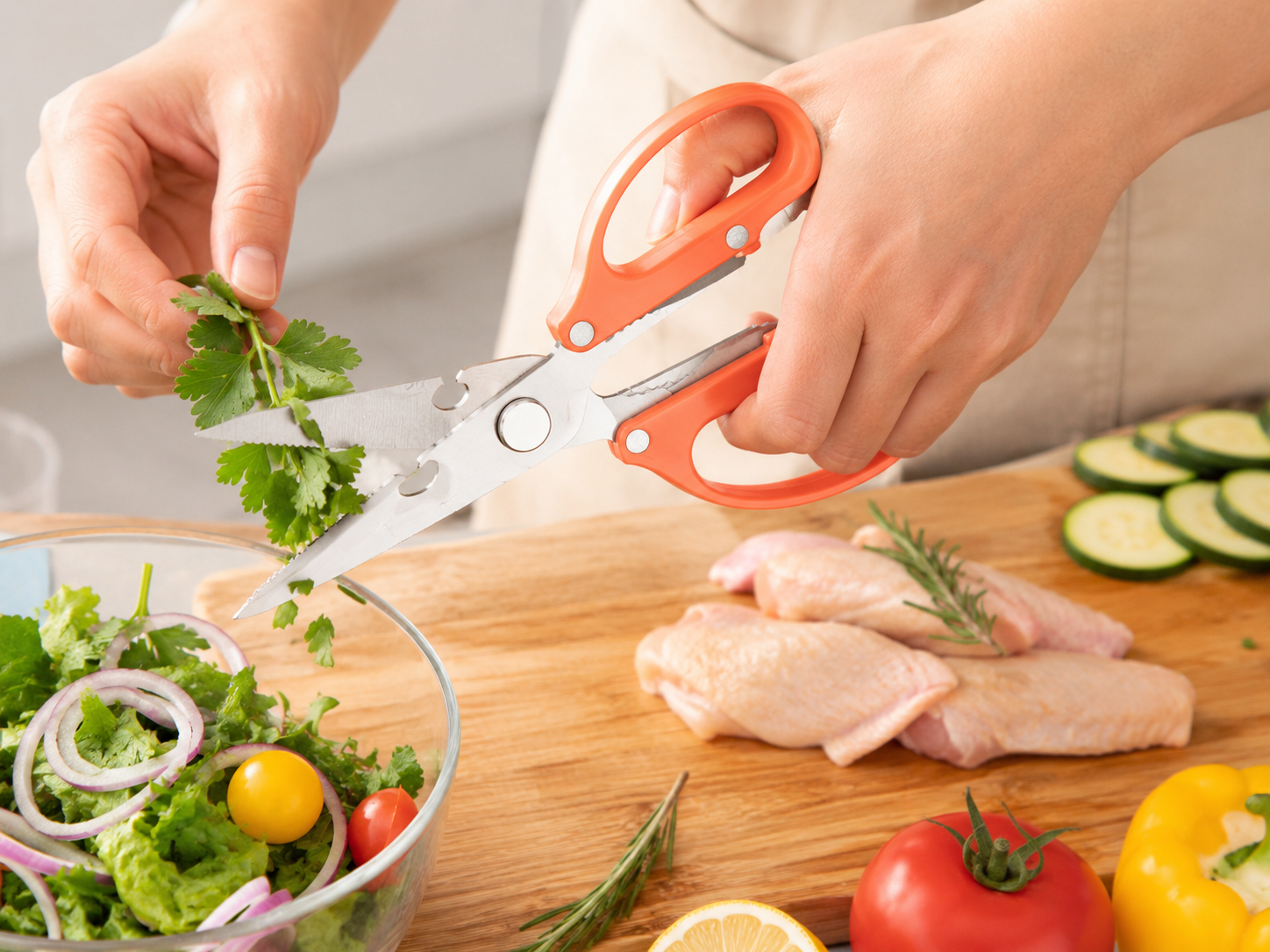
Blade Material and Edge Geometry Decide Cutting Performance
A kitchen shear does more than cut paper. It may cut herbs, poultry, cooked meat, food packaging, fish fins, vegetables, and light household materials. That means the blade must balance sharpness, corrosion resistance, edge retention, and cleaning performance.
For stainless steel kitchen scissors, buyers should check:
- Blade thickness and rigidity
- Edge grinding consistency
- Serrated or micro-serrated cutting sections
- Rust-resistance expectations
- Surface polishing and burr control
- Blade alignment after repeated opening and closing
Food-contact use also matters. The U.S. FDA explains that food-contact substances can include cookware, food preparation surfaces, processing equipment, and packaging components. For kitchen scissors used around food, material review should be part of sourcing, not a secondary detail.
What a Kitchen Scissors Manufacturer Must Control Before Bulk Production
A reliable kitchen scissors manufacturer should not rely only on a good-looking sample. The real test is whether the same cutting feel, pivot stability, and surface finish can be repeated in bulk.
The most important structural points include:
- Blade alignment: both blades must meet cleanly without rubbing too tightly.
- Pivot control: the screw or rivet area must hold tension without feeling loose.
- Handle molding: PP, TPR, or soft-touch grips should feel stable and comfortable.
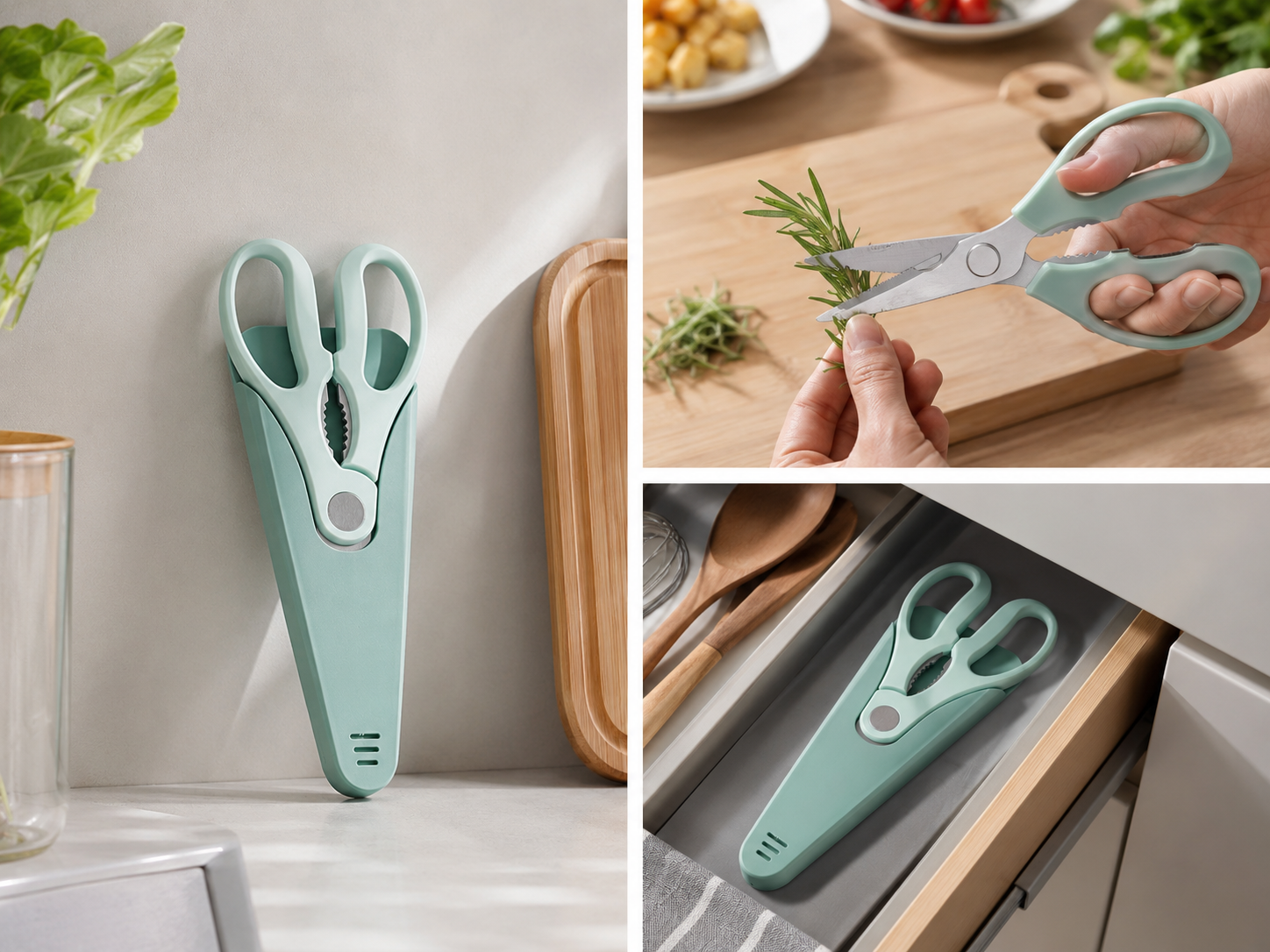
- Detachable structure: if the scissors separate for cleaning, the joint must lock securely.
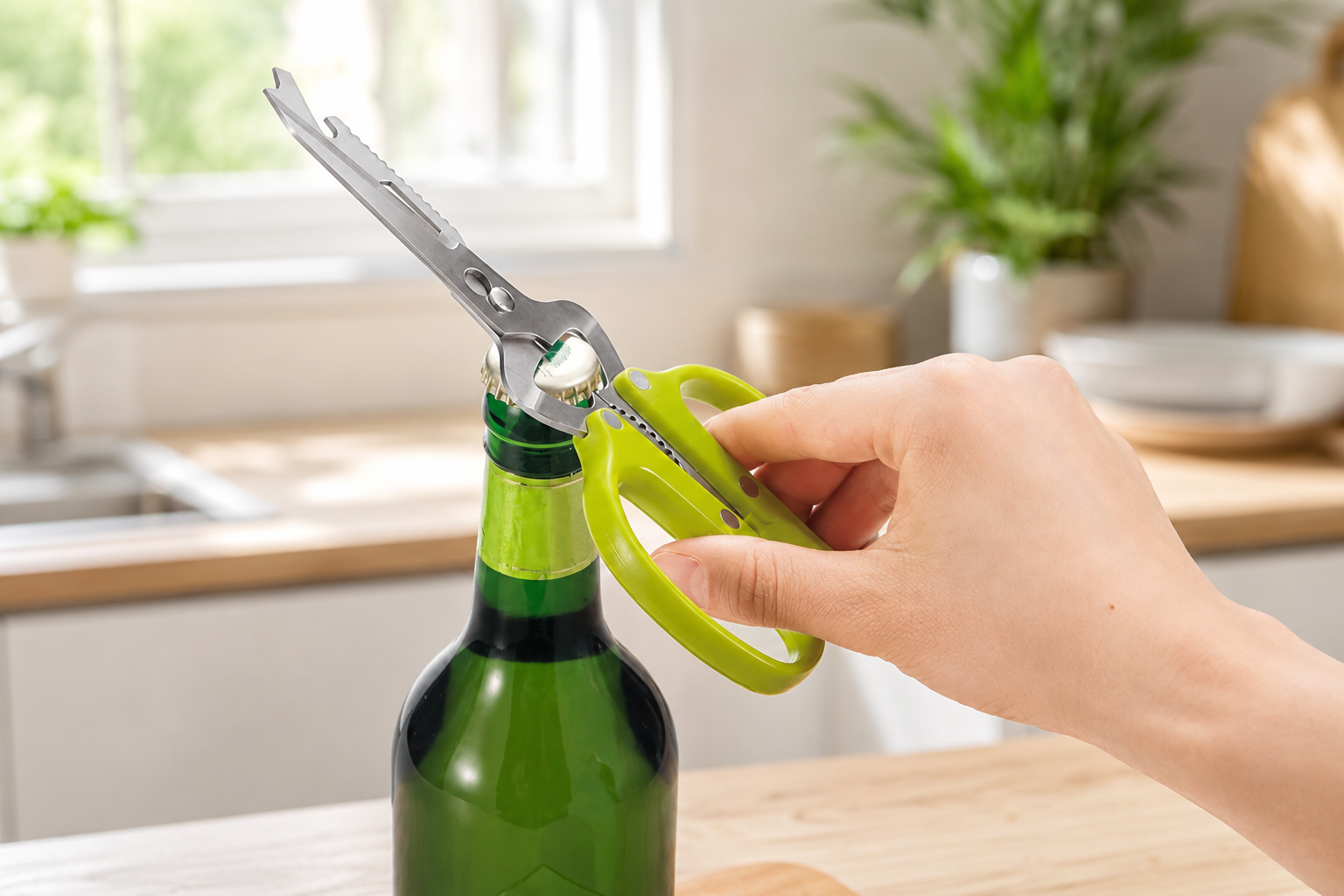
- Multi-function details: bottle opener, nutcracker, fish scaler, or serrated section must be usable, not decorative.
BONET’s product information for multipurpose scissors highlights features such as stainless steel blades, serrated cutting edges, bottle opener, fish scaler, and nutcracker-style functionality, which are useful selling points for retail kitchen shears when properly designed.
Low-Cost Kitchen Scissors vs Professional Retail-Ready Shears
| Factor | Low-Cost Scissors Supplier | Professional Manufacturer |
|---|---|---|
| Blade quality | Sharp in sample, unstable in bulk | Controlled edge grinding and blade alignment |
| Pivot structure | Loose or overly tight after use | Stable tension and smoother opening action |
| Handle comfort | Basic grip shape | Ergonomic handle with better hand control |
| Cleaning design | Food residue may remain near joint | Detachable or easier-clean structure |
| Multi-function parts | Added for appearance | Designed for real cutting, opening, scaling, or cracking |
| Packaging | Simple packaging after production | Planned for safety, shelf display, and export shipping |
This comparison matters because kitchen scissors are judged by touch. A buyer may approve a product photo, but end users decide by how the scissors cut, open, clean, and feel in the hand.
Building a Stronger Kitchen Scissors Line for Retail Buyers
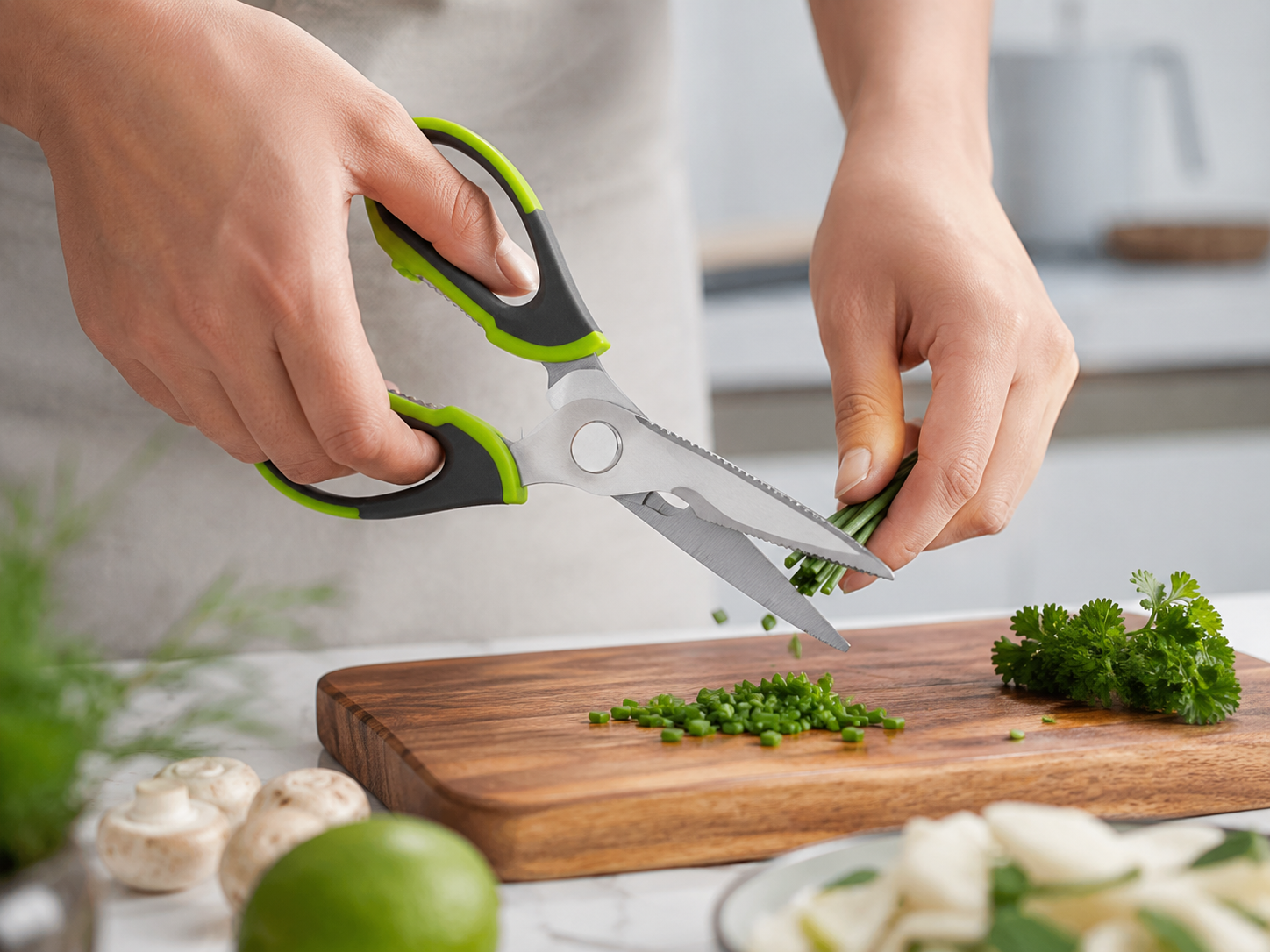
A professional sourcing plan should not treat all scissors as the same product. A retailer can build a clearer product line with three levels:
- Basic kitchen scissors for daily cutting and packaging tasks
- Detachable cooking shears for hygiene-focused kitchens
- Multi-purpose kitchen shears with opener, scaler, nutcracker, or serrated blade details
This structure helps supermarkets, online sellers, and distributors explain product value more easily. Entry-level models compete on practicality. Mid-range models emphasize cleaning and comfort. Premium models highlight multi-function performance and gift-ready presentation.
For buyers comparing product directions, BONET’s scissors product page can be used as the main product reference.
Case Insight: When “Sharp Enough” Was Not Enough
A homeware importer once builds a small kitchen scissors program for online retail. The first sample looks acceptable: sharp blades, black handles, and simple packaging. But after user testing, three issues appear. The blades cut herbs well but struggle with thicker packaging. The pivot feels loose after repeated use. The packaging does not explain the built-in opener and serrated section, so customers do not understand the added value.
A better development plan would adjust the blade grinding for stronger bite, improve pivot tension control, add a clearer function diagram on the package, and separate the product line into standard and multi-function versions. This is how a kitchen scissors project becomes more than a low-price SKU—it becomes a repeatable retail product.
Quality Control and Responsible Sourcing Matter for Repeat Orders
For B2B buyers, quality control should include more than visual inspection. Kitchen scissors should be checked for blade alignment, opening smoothness, cutting consistency, handle strength, pivot stability, surface defects, rust prevention, and package safety.
ISO describes ISO 9001 as a globally recognized quality management standard that helps organizations improve quality management and customer satisfaction. In kitchenware sourcing, the principle is practical: repeatable processes reduce shipment variation and help buyers maintain stable product quality across orders.
Responsible sourcing is also becoming more important for retail buyers. amfori BSCI focuses on responsible business practices across supply chains, which is relevant when buyers evaluate long-term suppliers for retail or private-label programs.
Buyer Checklist Before Choosing a Kitchen Scissors Manufacturer
Before confirming bulk production, buyers should evaluate:
- Does the blade material match the target cutting tasks?
- Is the pivot stable after repeated opening and closing?
- Are the handles comfortable for both light and heavier cutting?
- Is the product easy to clean, especially near the joint?
- Do multi-function parts serve real tasks or just decoration?
- Can packaging explain features quickly for shelf or online sales?
- Can the supplier support OEM color, logo, packaging, and product-line planning?
For product knowledge and common sourcing topics, buyers can also review the BONET blog page.
Frequently Asked Questions
Q: What makes kitchen scissors different from regular scissors?
A: Kitchen scissors are usually designed for food preparation and heavier daily tasks. They often require stronger blades, safer handles, washable structures, and sometimes additional functions such as bottle opening, fish scaling, or nut cracking.
Q: Are detachable kitchen scissors better for retail buyers?
A: Detachable kitchen scissors are useful when hygiene and easy cleaning are key selling points. They are especially suitable for cooking shears used around meat, herbs, seafood, and other food-preparation tasks.
Q: Can kitchen scissors be customized for private-label programs?
A: Yes. A professional kitchen scissors manufacturer can usually support handle color, packaging style, logo placement, function combinations, and retail-ready product positioning.
A Better Way to Source Kitchen Scissors for Retail Programs
Choosing a kitchen scissors manufacturer is not only about finding sharp blades. It is about building a product that cuts cleanly, cleans easily, feels stable, explains its value on the shelf, and remains consistent across repeat orders. BONET’s scissors and kitchenware range makes it suitable for importers, distributors, supermarkets, online sellers, and private-label buyers building practical kitchen tool programs.
For product selection and category planning, start with the BONET scissors product page. For company background, Yangjiang manufacturing positioning, and cooperation information, visit the BONET About Us page.