





The Science of Fulcrums: Why Leverage Matters in Cutting Power
Scissors are one of the most common tools in our daily lives, yet few people appreciate the elegant physics hidden within their simple design. At the heart of every pair of scissors lies a fulcrum — the pivot point that makes cutting possible through the principles of leverage. Understanding this science helps explain why some scissors cut effortlessly through thick materials while others struggle, especially with everyday household scissors.
What Is a Fulcrum and How Does Leverage Work?
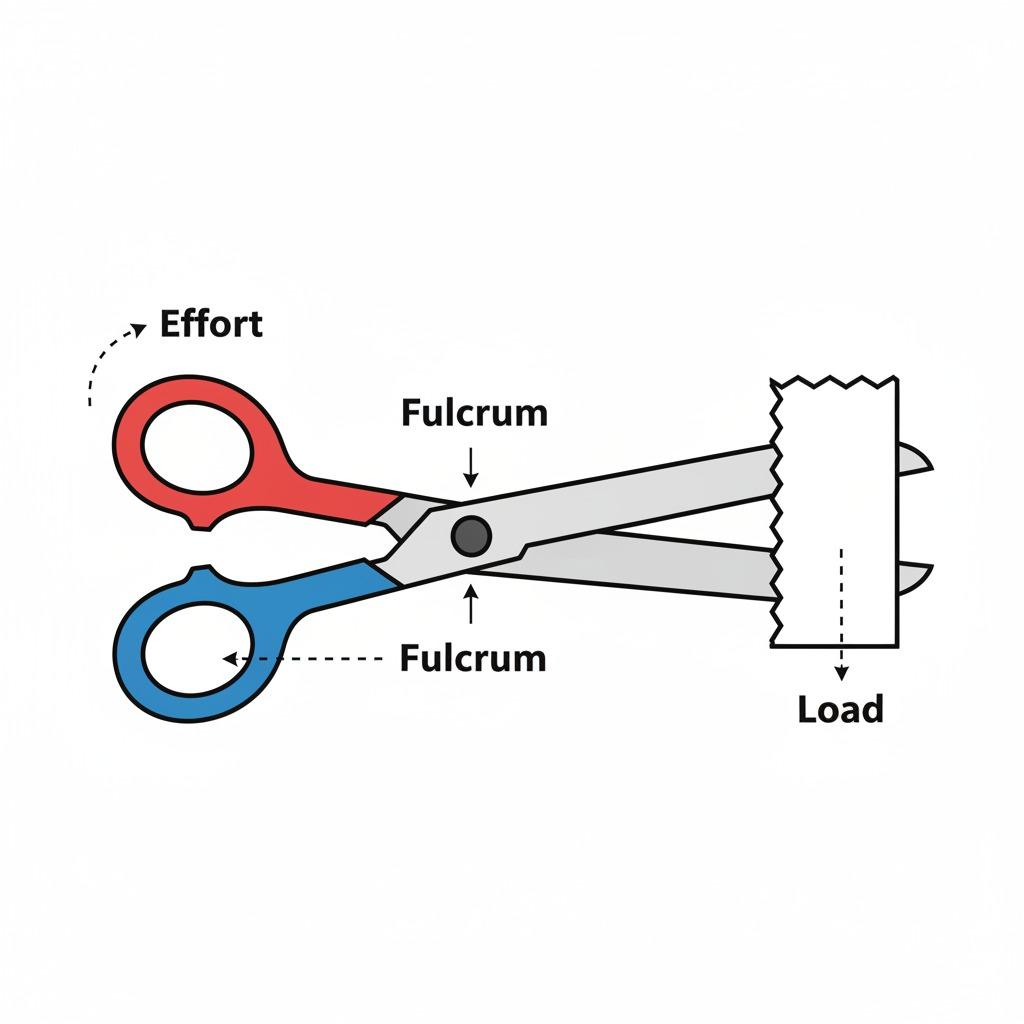
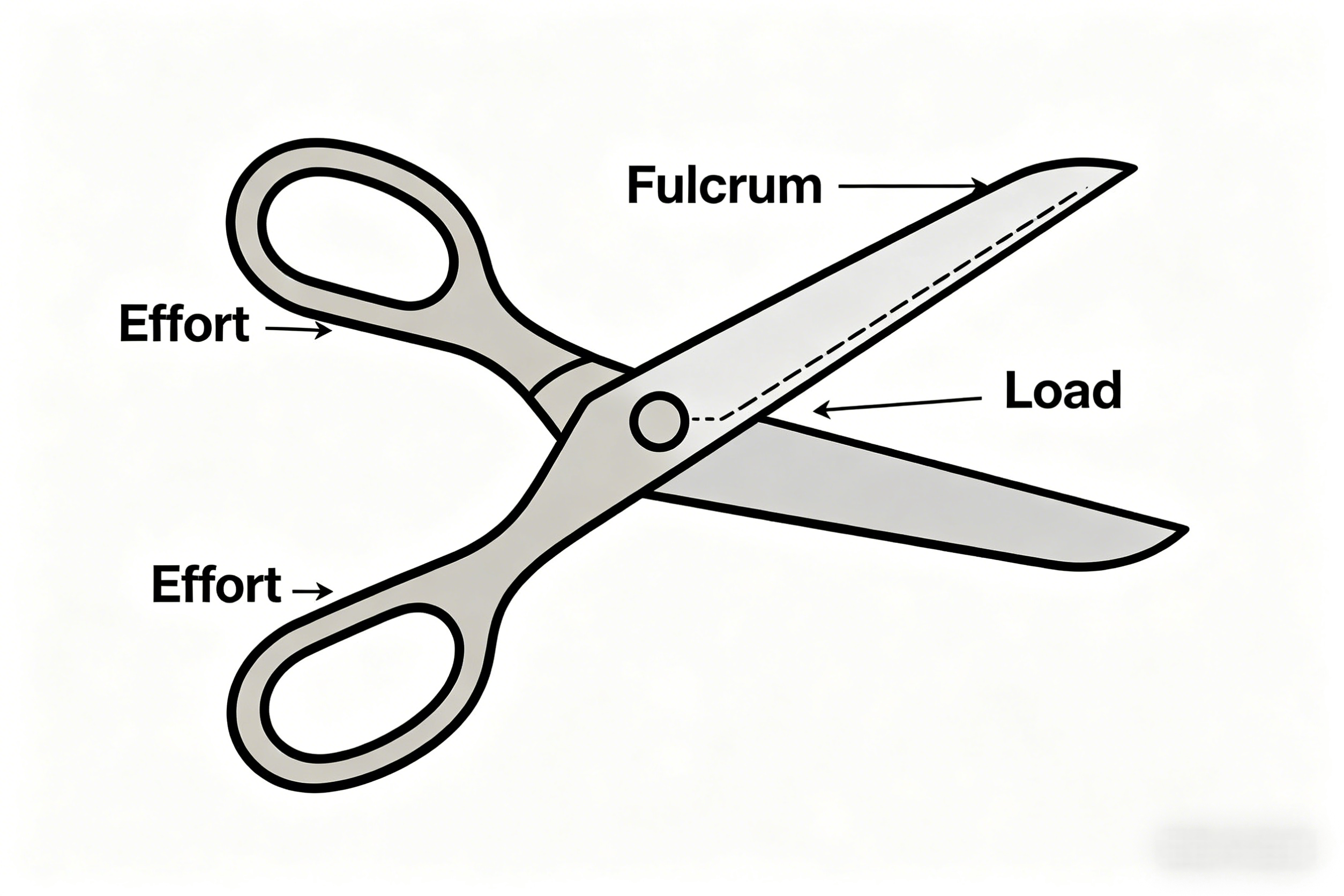
A lever is a simple machine that amplifies force. It consists of three key elements:
- Fulcrum: The pivot point
- Effort: The force you apply
- Load: The resistance you overcome (the material being cut)
Levers are classified into three types based on the relative positions of these elements. Scissors are a classic Class 1 lever, where the fulcrum sits between the effort and the load.
The Leverage Advantage in Household Scissors
The longer the effort arm (the distance from the fulcrum to where you apply force on the handles) relative to the load arm (distance from fulcrum to the cutting point), the greater the mechanical advantage. This is why larger scissors or those with longer handles often feel more powerful.
Mechanical Advantage (MA) formula for a lever:
A higher MA means less effort is required for the same cutting force.
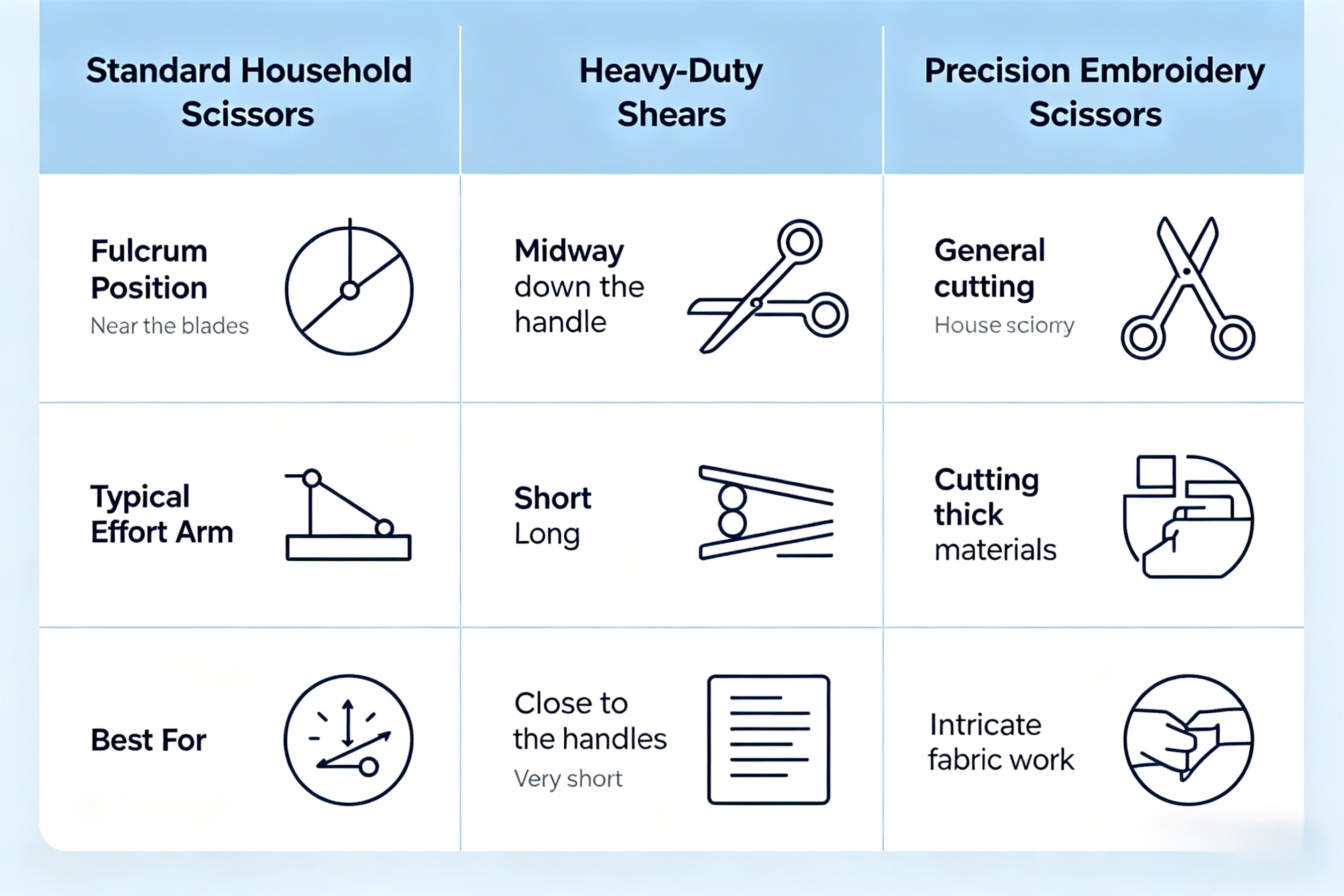
Comparison Table: Different Scissor Designs
Why Blade Angle and Fulcrum Placement Matter
The position of the fulcrum directly affects cutting power. In household scissors, manufacturers balance versatility and ease of use. Moving the fulcrum closer to the blades increases force but reduces the cutting stroke length. This is perfect for tough materials but can make precise cuts harder.
Friction at the fulcrum also plays a role. A smooth, well-lubricated pivot reduces energy loss, allowing more of your input force to reach the cutting edges.
Real-World Applications and Tips
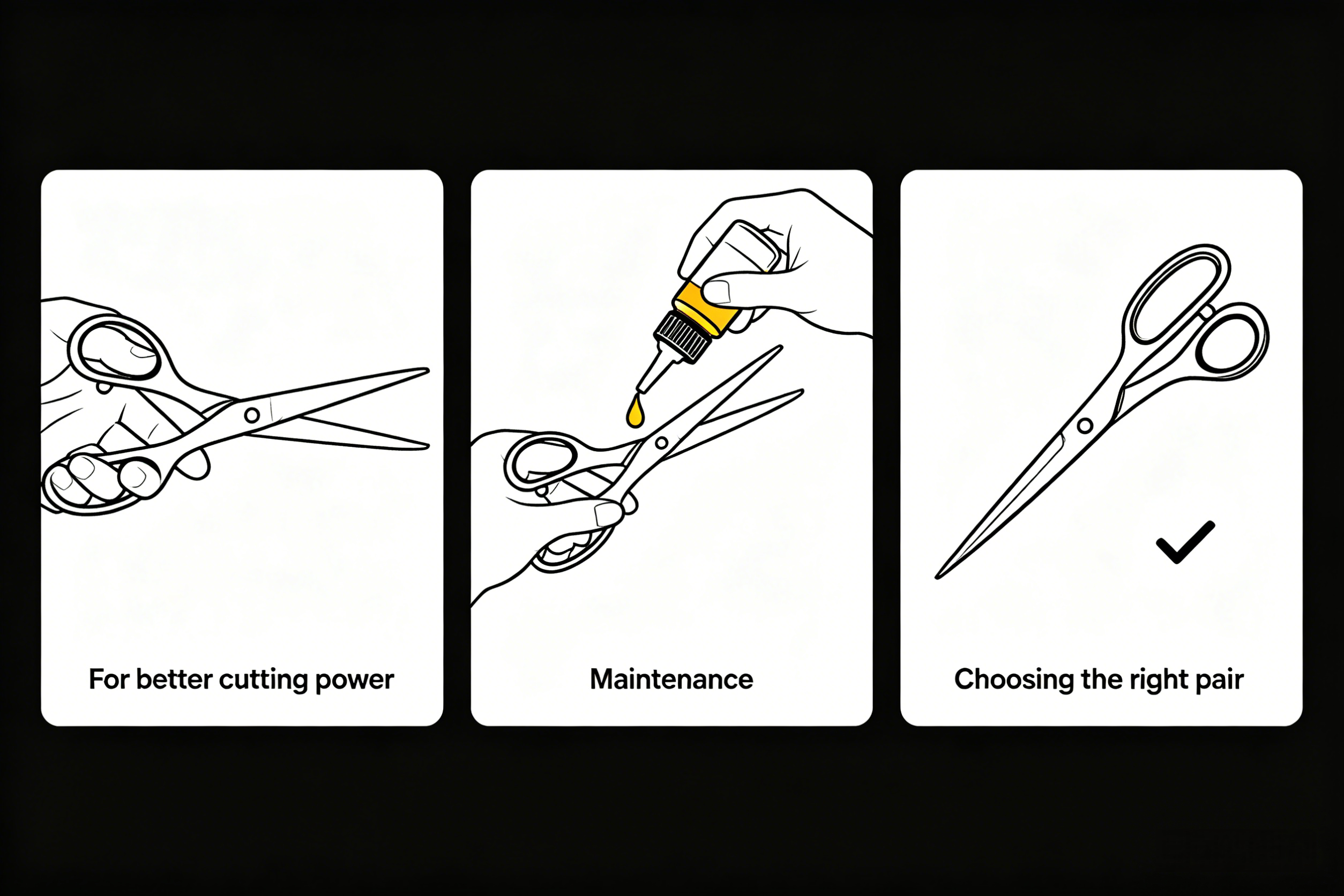
- For better cutting power: Grip the handles as far from the fulcrum as possible.
- Maintenance: Keep the fulcrum screw tight but not overly so, and oil it occasionally.
- Choosing the right pair: Longer household scissors generally offer better leverage for general tasks around the home.
Understanding the science of fulcrums transforms how you view and use even the most basic household scissors. Next time you reach for a pair, remember you're wielding a sophisticated lever system perfected over centuries of engineering.
The principles of leverage extend far beyond scissors — into tools, machines, and even our own bodies. Appreciating this "invisible" science makes everyday tasks more fascinating and helps you choose and use tools more effectively.
What’s your favorite pair of scissors and why? Share in the comments!