





The Anatomy of a Professional Hair Cutting Shear
In the hands of a skilled hairstylist, professional hair cutting shears are precision instruments that can transform a client’s look with every snip. But beyond sharpness, the true magic lies in their anatomy—the carefully engineered parts that work together for smooth cuts, ergonomic comfort, and long-lasting performance. Understanding each component helps stylists choose the right shears, maintain them properly, and avoid strain or inconsistent results.
Whether you’re using Japanese-style convex blades or classic beveled edges, every professional shear follows a similar structure: two blades joined at a central pivot, with handles designed for hours of repetitive motion. Let’s dissect this essential tool step by step.
The Big Picture: How a Professional Shear Works
A high-quality shear is forged from premium steel (often Japanese stainless, cobalt alloys, or titanium-coated) and balanced so the blades glide effortlessly. The static blade stays steady while the dynamic blade moves, creating clean cuts without folding or pulling hair.


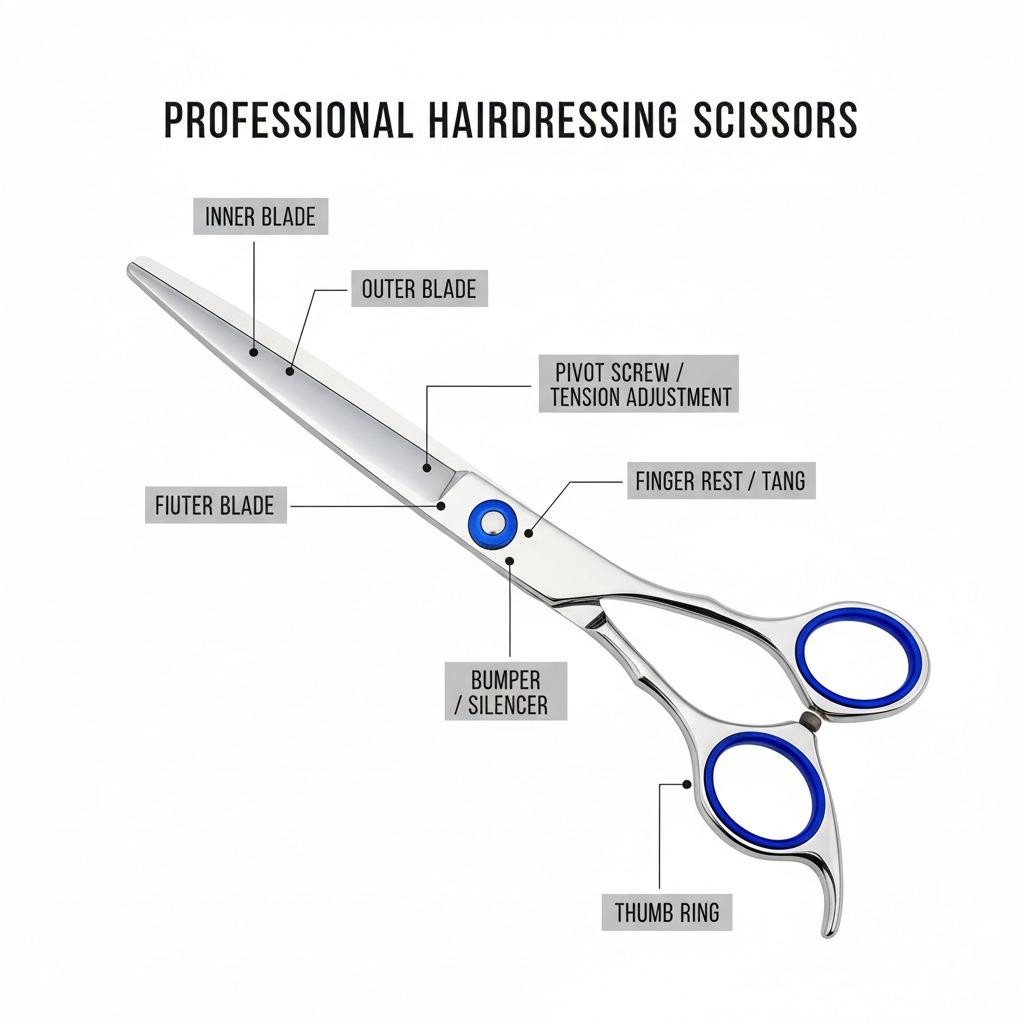
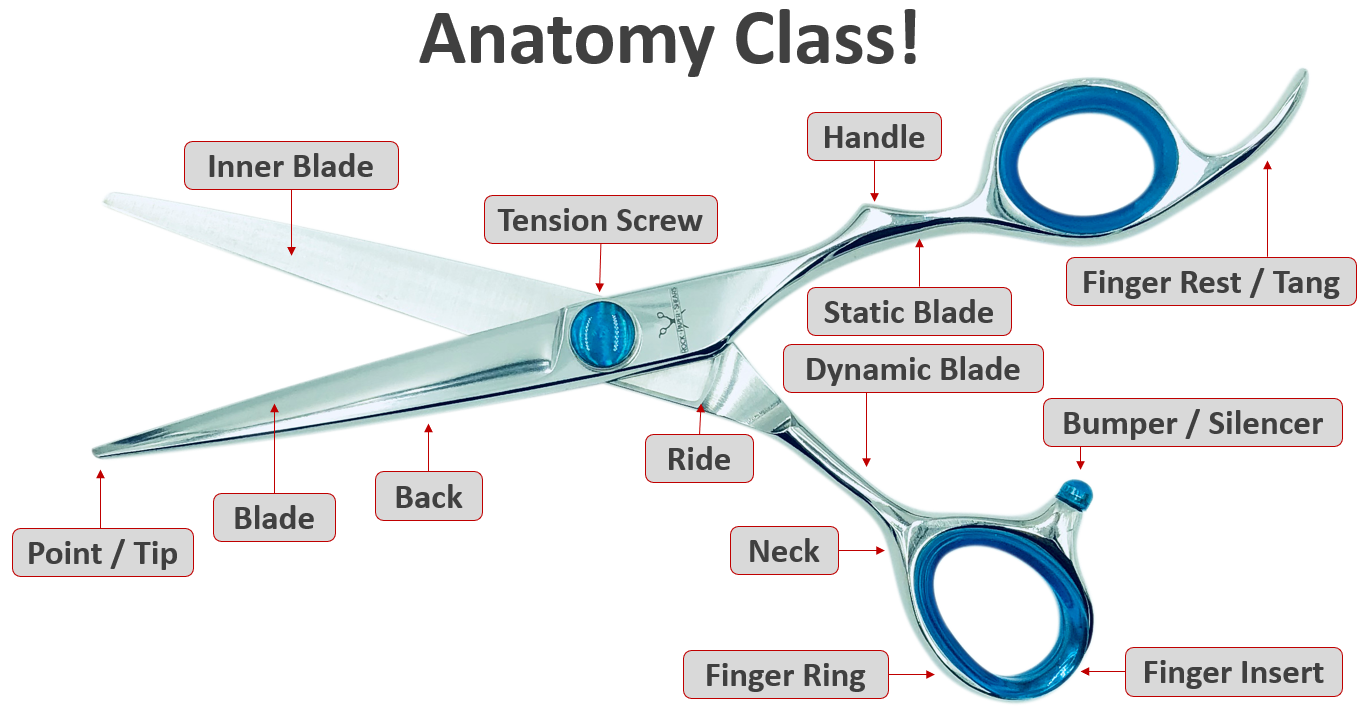
Key Parts of a Professional Hair Cutting Shear – Illustrated & Explained
Here’s a comprehensive breakdown of every major component:
| Part | Location | Function |
|---|---|---|
| Tip / Point | End of the blades | Precision detailing, point cutting, and texturizing; controls initial contact with hair |
| Blade | The full cutting arm | Delivers the actual cut; includes static (stationary) and dynamic (moving) blades |
| Inner / Cutting Edge | Inside edge of each blade | The sharpened surface that slices hair cleanly |
| Back / Outside Blade | Dull outer side of the blade | Provides structural support and stability during cutting |
| Ride Area | Flat overlapping section near pivot | Where blades glide against each other; keeps cuts smooth and prevents edge wear |
| Pivot Screw / Tension Knob | Center connection point | Joins the blades and controls resistance; proper tension prevents hair folding or blade damage |
| Neck | Narrow section between blade and handle | Connects the working end to the grip for balance |
| Handle / Shank | Section leading to finger rings | Provides leverage and connects to ergonomic bows |
| Finger Ring & Thumb Hole | The two loops at the end | Allow control; thumb operates dynamic blade, fingers steady the static one |
| Finger Inserts | Removable rubber/plastic liners inside rings | Customize fit, reduce slippage, and absorb vibration (replace when worn) |
| Finger Rest / Tang / Pinkie Rest | Small extension on one handle | Supports the pinky for better control and reduced hand fatigue |
| Bumper / Silencer / Stopper | Small rubber piece between handles | Cushions closing impact, reduces noise and wrist strain |

Blade Edge Types: Convex vs. Beveled
The cutting edge dramatically affects performance:
- Convex Edge (most common in premium Japanese shears): Ultra-sharp, curved outward for effortless slide cutting, slicing, and point cutting. Ideal for precision and minimal hair damage.
- Beveled Edge: More durable and forgiving; great for bulk cutting, layering, and beginners. Slightly less sharp but holds up longer between sharpenings.

Handles & Ergonomics: Reducing Strain All Day
Modern professional shears come in three main handle styles:
- Straight (Classic): Traditional symmetrical design.
- Offset: Thumb ring sits lower for a more natural hand position.
- Crane: Most ergonomic—dramatically reduces wrist, shoulder, and thumb fatigue during long salon days.
Many also feature swivel thumb rings for ultimate flexibility.
The Critical Role of Tension
The tension screw is the “heart” of the shear. Too loose → blades push hair instead of cutting. Too tight → excessive wear and hand strain. Pro tip: Hold shears at 90° and let go—if they slowly close halfway, tension is perfect. Check and oil the pivot daily.
Maintenance Tips for Longevity
- Wipe blades clean after every client.
- Oil the pivot point daily.
- Adjust tension regularly.
- Replace bumpers and inserts when worn.
- Have blades professionally sharpened 2–4 times per year (never use household sharpeners!).
- Store in a protective case.
Proper care can make a $300+ shear last 5–10 years or more.
Why Mastering Shear Anatomy Matters
When you understand every part—from the ride area that protects your edges to the tang that saves your pinky—you cut with more confidence, less effort, and fewer mistakes. Your shears become a true partner in creating flawless hairstyles.
Next time you pick up your shears, take a moment to appreciate their elegant anatomy. The right pair, properly maintained, doesn’t just cut hair—it elevates your entire craft.
Ready to upgrade? Look for shears with adjustable tension, ergonomic crane handles, and convex Japanese steel. Your hands (and clients) will thank you!
What’s your favorite shear style or must-have feature? Share in the comments!