





Stainless Steel vs. Carbon Steel: Which is Better for Fabric? (Tailor Scissors Edition)
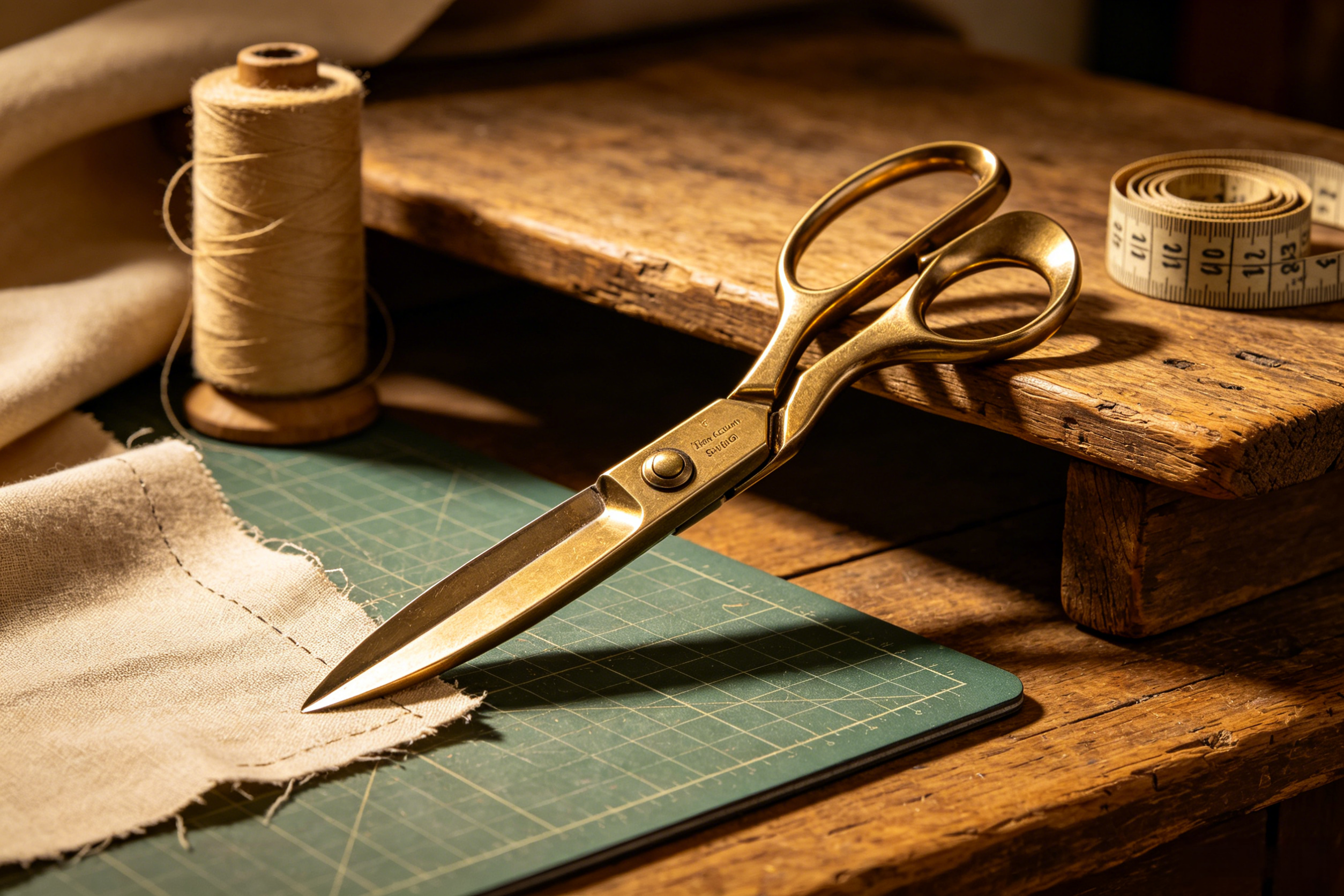
Tailor scissors, also known as dressmaker shears or fabric shears, are essential tools for anyone working with textiles. Whether you're a professional tailor, fashion designer, quilter, or enthusiastic home sewist, the performance of your scissors directly impacts the quality of your cuts, the longevity of the tool, and your overall workflow.
The two most common blade materials are high carbon steel and stainless steel. Here's a detailed, illustrated comparison to help you decide which is better for fabric cutting.
Understanding the Materials
High Carbon Steel (often simply called carbon steel in scissors) contains a higher percentage of carbon, which allows for exceptional hardness and edge retention when properly forged and tempered. Many premium professional tailor shears use Japanese or high-quality forged high carbon steel.
Stainless Steel is an alloy with chromium that provides excellent corrosion resistance. Modern high-quality stainless versions for scissors often incorporate carbon for better performance, but they prioritize rust-proofing and ease of maintenance.
Side-by-Side Comparison
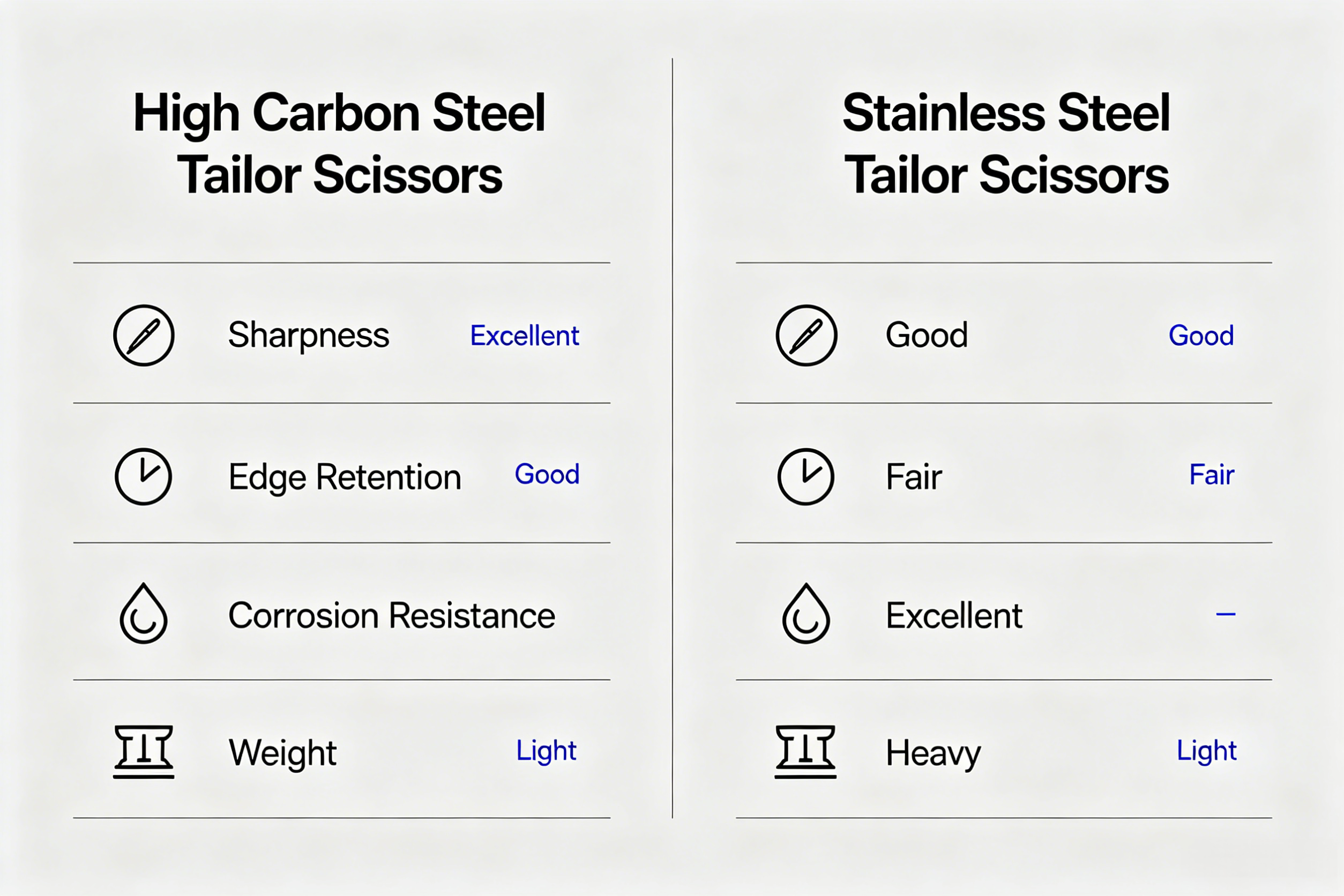
| Feature | High Carbon Steel | Stainless Steel | Winner for Fabric Work |
|---|---|---|---|
| Sharpness | Excellent – can be sharpened to a finer, razor-like edge | Good – sharp but generally not as keen initially | Carbon Steel |
| Edge Retention | Superior – stays sharp longer with regular use | Very good, especially modern alloys | Carbon Steel |
| Ease of Sharpening | Easier to hone and restore edge | Harder due to toughness | Carbon Steel |
| Rust/Corrosion Resistance | Prone to rust if not oiled/maintained | Excellent – low maintenance, humidity resistant | Stainless Steel |
| Weight | Often lighter | Can feel heavier | Carbon (for comfort) |
| Durability | Very tough, less prone to chipping in proper use | Highly durable, more brittle in some cases | Tie (depends on care) |
| Best For | Professional tailors, frequent precise fabric cuts (cotton, denim, leather) | Hobbyists, occasional use, humid environments | Carbon for pros |
| Price | Often higher for premium forged versions | Generally more affordable | Stainless |
Sources synthesized from tailoring and scissor manufacturing expertise.
Pros and Cons for Fabric Cutting
High Carbon Steel Advantages for Tailors:
- Delivers cleaner, more effortless cuts through multiple layers of fabric.
- Ideal for precision work where every snip counts (e.g., pattern cutting, notches, curves).
- Many professionals swear by them for "lifetime" sharpness with proper care.
Drawbacks:
- Requires occasional oiling and dry storage to prevent rust.
- Not ideal if you live in very humid climates or forget maintenance.
Stainless Steel Advantages:
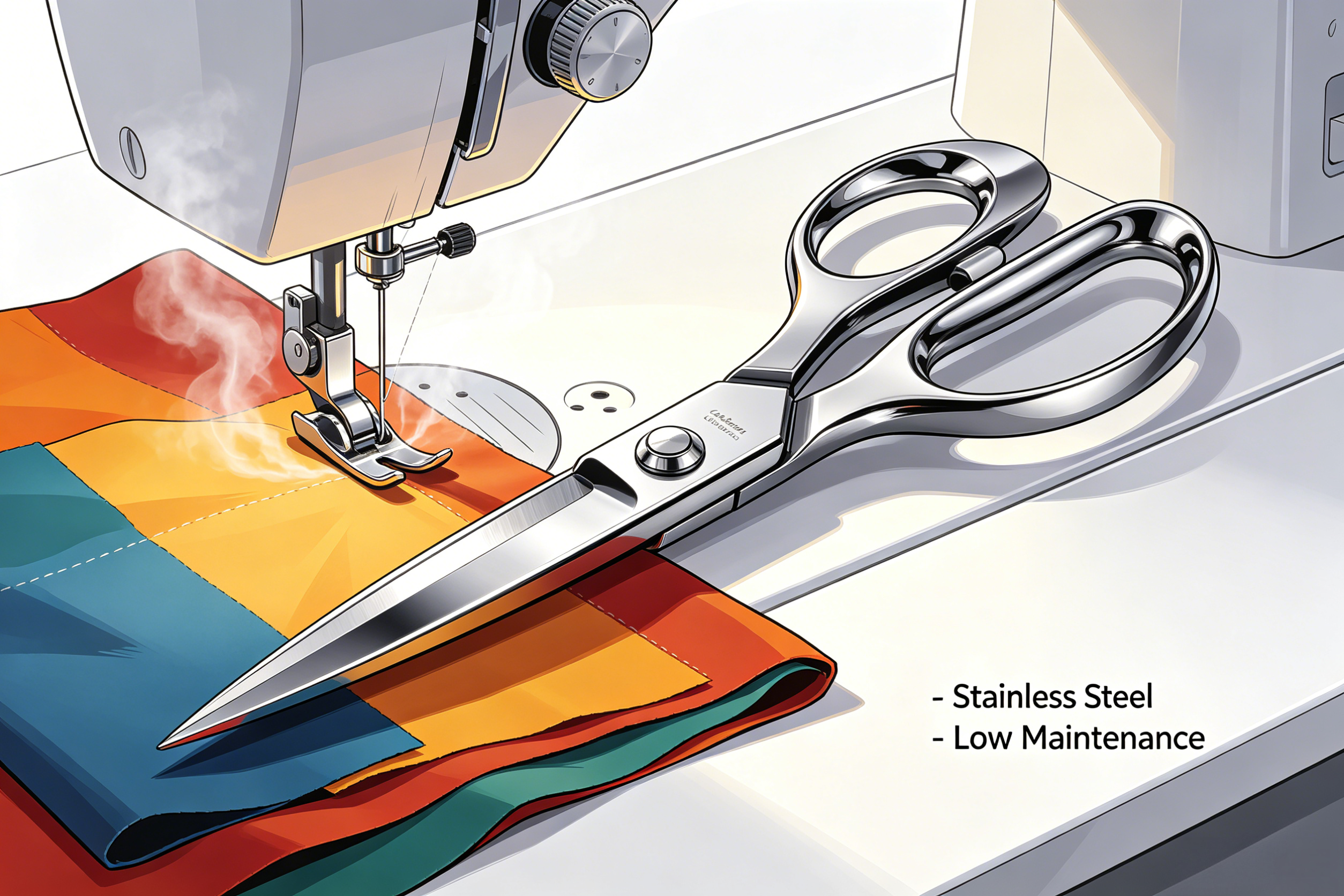
- Virtually maintenance-free – great if you don't want to baby your tools.
- Resistant to sweat, fabric moisture, or workshop humidity.
- Versatile and forgiving for general use.
Drawbacks:
- May not achieve or hold the absolute sharpest edge as well as top-tier carbon steel.
- Can feel slightly different in hand during long cutting sessions.
Which One Should You Choose?
For serious fabric work and professional tailoring: High Carbon Steel is generally considered better. It excels in sharpness and cutting performance, which is why many classic and premium tailor shears (like certain Japanese or Sheffield-made models) use it.
For beginners, occasional sewers, or low-maintenance needs: Stainless Steel is an excellent, practical choice. It performs very well and removes the worry of rust.
Pro Tip: Look for forged (not stamped) blades, comfortable bent/offset handles for fabric shears, and lengths of 8–10 inches or more for tailor work. Test the action – good scissors should cut cleanly all the way to the tip, even through paper or thin fabric.
Maintenance Tips (Regardless of Material)
- Never cut paper with your good fabric scissors.
- Clean blades after use and wipe dry.
- Oil the pivot screw occasionally.
- Store in a dry place.
- Sharpen professionally when needed (or learn proper honing).
Both materials can produce outstanding tailor scissors when made well. The "best" depends on your workflow, environment, and how much you value that buttery-smooth, razor-sharp cut versus convenience.
What type of scissors are in your sewing kit? Share in the comments! Happy sewing and tailoring. ✂️
This post is for informational purposes. Always choose tools from reputable brands for best results.