





At first, choosing a kitchen scissors supplier looks simple. The product is small, the function is easy to understand, and most samples can cut well enough during a quick test. But retail sourcing becomes more complicated after bulk orders begin. Some scissors cut herbs but struggle with poultry. Some handles feel comfortable in photos but become awkward during repeated use. Some multi-function parts look useful, yet customers do not understand them because the packaging does not explain the value. For importers, wholesalers, supermarkets, and private-label brands, kitchen scissors are not just a cutting tool. They are a retail product that must combine blade performance, hand comfort, safe packaging, clear positioning, and repeat-order stability. BONET’s scissors range includes multi-purpose kitchen scissors and cooking shears designed around food preparation and household use.
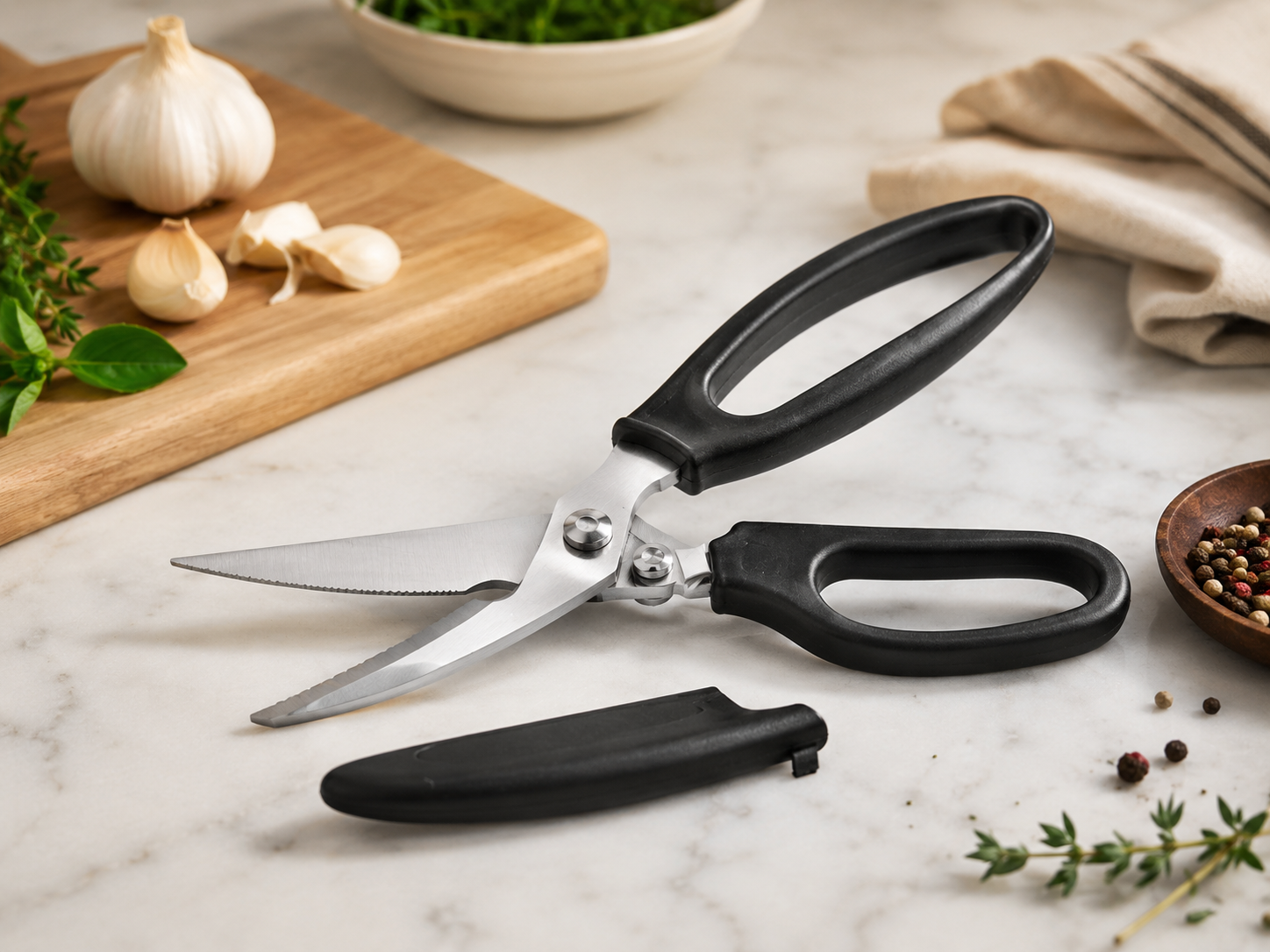
Why Kitchen Scissors Fail in Retail Programs
Most sourcing problems do not start with one obvious defect. They start with small mismatches between the product and the sales channel.
A supermarket buyer may need safe hanging packaging and a simple feature message. An online seller may need stronger visual details, clear product images, and easy-to-explain functions. A distributor may care more about carton stability, reorder consistency, and price-level planning. A private-label buyer may need handle color, logo, packaging, and SKU differentiation.
Common failure points include:
- Blades that are sharp in samples but inconsistent in bulk
- Pivot areas that feel loose after repeated use
- Handles that are too hard, slippery, or narrow
- Multi-function features that are decorative rather than useful
- Packaging that does not explain bottle opener, nutcracker, or fish scaler functions
- Product lines that contain random SKUs with no clear retail hierarchy
This is where a professional kitchen scissors supplier matters. The supplier should help buyers build products that fit the channel, not just provide a catalog.
Blade, Pivot, and Handle Structure Still Decide Product Value
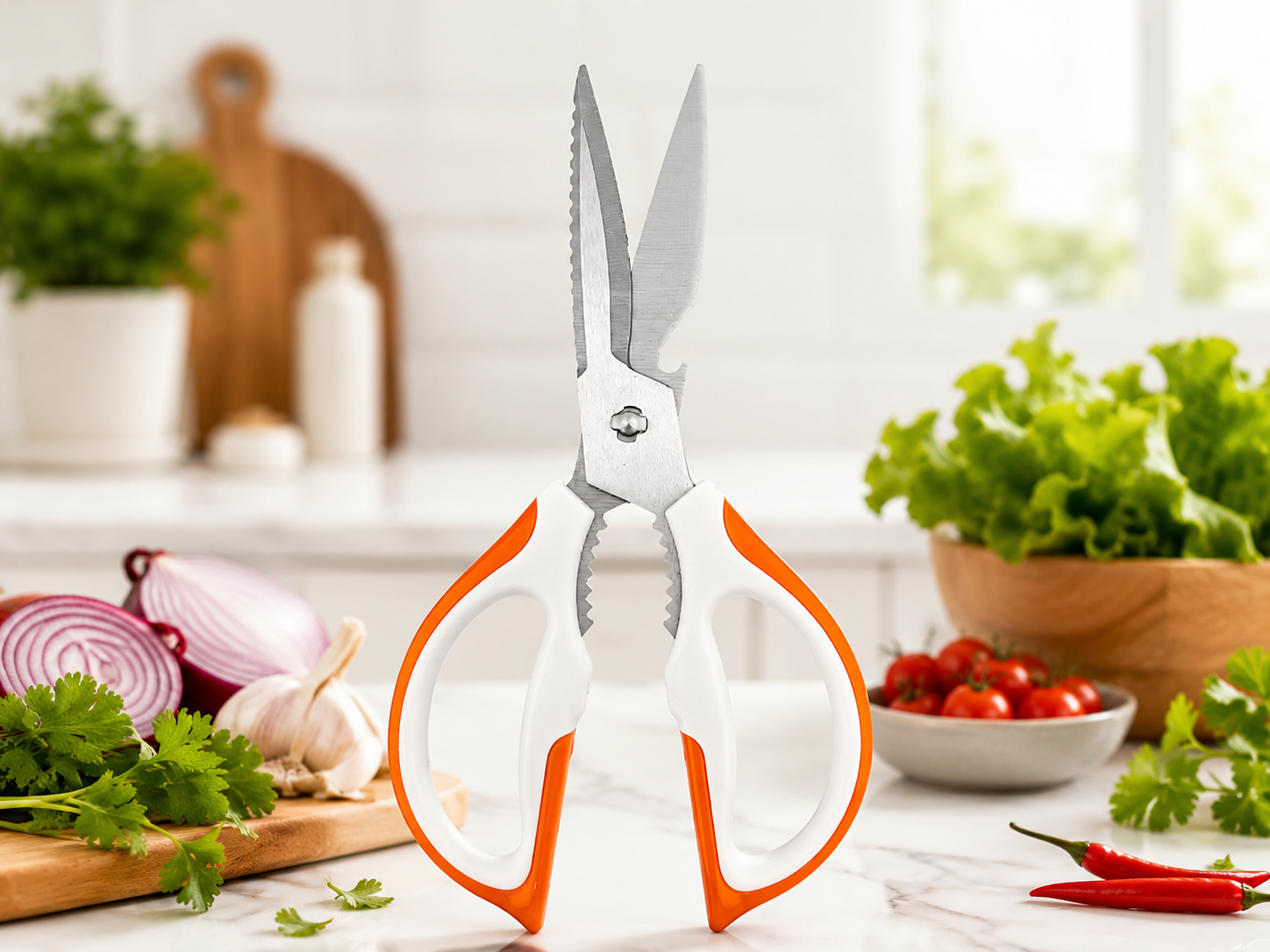
Even though this is a supplier-selection article, product structure cannot be ignored. A kitchen shear may cut herbs, meat, fish, packaging, vegetables, or light household materials. The blade needs enough rigidity, corrosion resistance, and edge stability to support repeated use.
BONET’s multipurpose scissors product content highlights stainless steel blades, serrated edges, a bottle opener, and fish scaler functions, while another kitchen scissors product page mentions serrated and straight blades, a built-in bottle opener, nutcracker, and protective blade cover. These are the types of features buyers can use for retail differentiation when the structure is reliable and the packaging explains them clearly.
Food-contact relevance also matters because kitchen scissors are often used near food. The U.S. FDA states that food-contact substances may include cookware, food preparation surfaces, processing equipment, and packaging components. For kitchen scissors used in cooking environments, buyers should pay attention to material suitability, cleaning, and surface finishing.
Low-Cost Supplier vs Retail-Ready Kitchen Scissors Supplier
| Factor | Low-Cost Supplier | Retail-Ready Supplier |
|---|---|---|
| Product planning | Offers random scissors models | Builds entry, mid-range, and premium SKU levels |
| Blade performance | Sharp sample, uncertain bulk quality | Checks blade alignment, serration, and cutting consistency |
| Multi-function design | Features added for appearance | Functions matched to real use: opening, scaling, cracking, cutting |
| Packaging | Added after product selection | Designed for shelf display, online selling, and shipping protection |
| Private label support | Limited color or logo options | Supports handle color, logo, packaging, and product positioning |
| Channel fit | Same product for every buyer | Adjusts product line for supermarkets, online sellers, distributors, or brands |
This comparison shows why choosing a kitchen scissors supplier only by unit price can create hidden cost later. The cheapest product may look acceptable in the sample stage, but weak channel fit can reduce sales speed, increase complaints, and make repeat orders harder.
How to Build a Kitchen Scissors Line for Different Buyers
A stronger sourcing plan divides kitchen scissors into clear product levels.
For supermarkets, a basic stainless steel kitchen shear with safe packaging and visible function icons may be enough. For online retail, multi-purpose kitchen shears with opener, nutcracker, serrated blade, or detachable cleaning design can create stronger product-page value. For outdoor cooking and BBQ channels, stronger handles, compact design, and multi-use functions become more important. For private-label programs, handle color, blade finish, logo area, and packaging consistency help build a recognizable product family.
A practical product line can include:
- Basic kitchen scissors for everyday food prep
- Detachable kitchen scissors for easy cleaning
- Multi-purpose kitchen shears with opener and nutcracker
- Premium cooking shears with protective cover or gift packaging
- OEM kitchen scissors with customized handle color and packaging
Buyers can review BONET’s scissors category through the scissors product page, which is the most relevant internal product page for this topic.
Case Insight: When a Good Sample Did Not Become a Good Retail Product
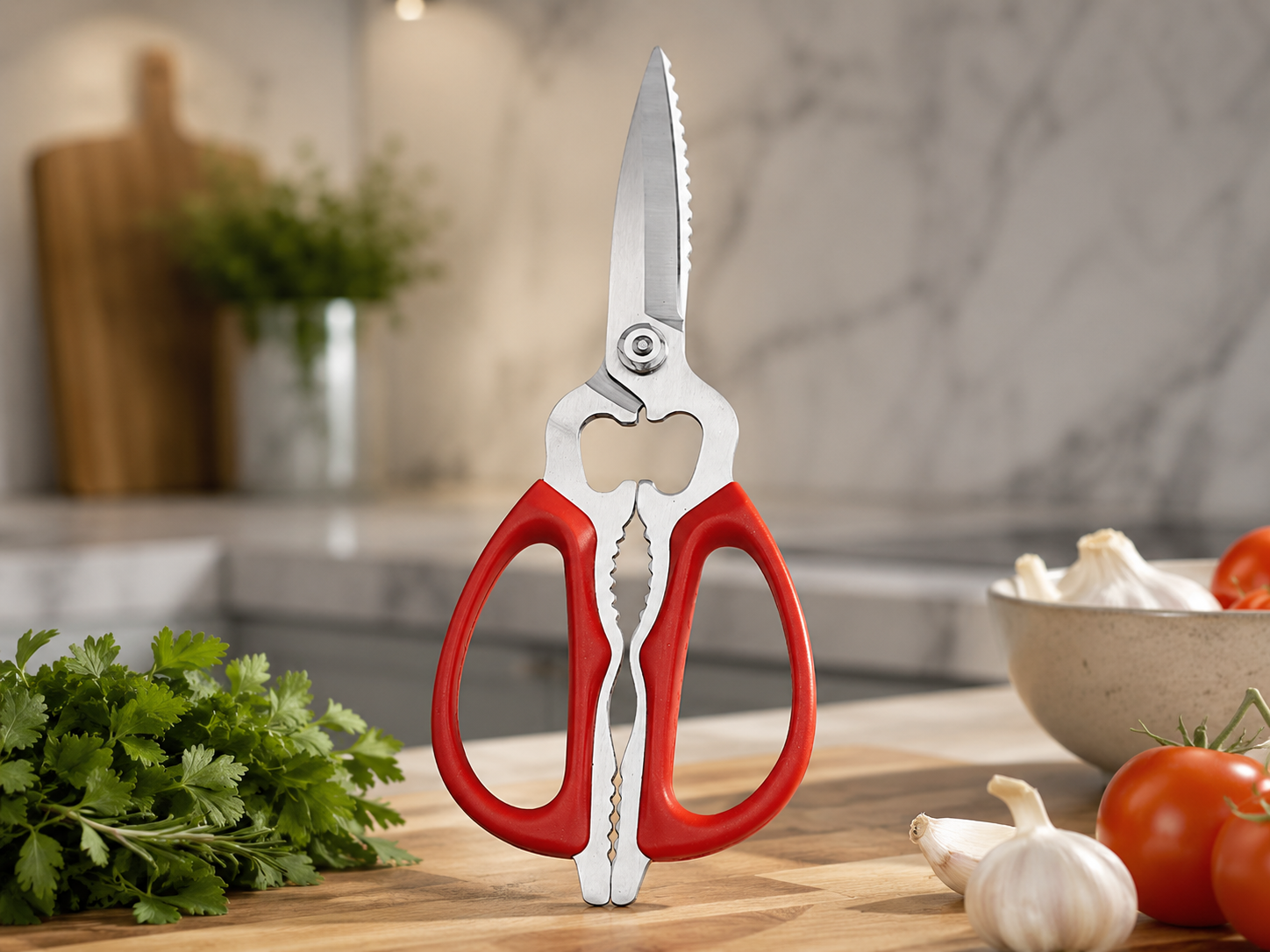
A homeware distributor prepared a small kitchen scissors line for both supermarkets and online stores. The first sample looked good: stainless steel blades, black handle, and a built-in opener. But after internal review, the buyer noticed three issues.
First, the packaging did not explain the opener and serrated cutting section. Second, the same SKU was expected to serve supermarkets, online sellers, and gift channels, even though each channel needed a different selling message. Third, the product line had no price-level structure, so buyers could not clearly choose between basic and premium options.
A better solution was to separate the program into two models: one basic kitchen shear for mass retail and one multi-purpose model for online and private-label sales. The packaging was adjusted with simple function icons, and the premium model used clearer feature positioning. This kind of adjustment is exactly where a professional supplier adds value beyond price.
What Buyers Should Check Before Confirming Bulk Orders
Before selecting a kitchen scissors supplier, buyers should evaluate:
- Does the supplier offer enough models for different sales channels?
- Are the blades suitable for real kitchen cutting tasks, not only paper tests?
- Is the pivot smooth, stable, and consistent across samples?
- Does the handle fit the target user group and retail price level?
- Are detachable or multi-function designs easy to understand and use?
- Can packaging support shelf display, online images, and shipping protection?
- Can the supplier support OEM color, logo, carton, and packaging design?
- Does the supplier provide product information or FAQ content for buyer education?
For additional product knowledge and buyer-facing content, the BONET blog page can support further research.
Quality Control, Supply Stability, and Buyer Trust
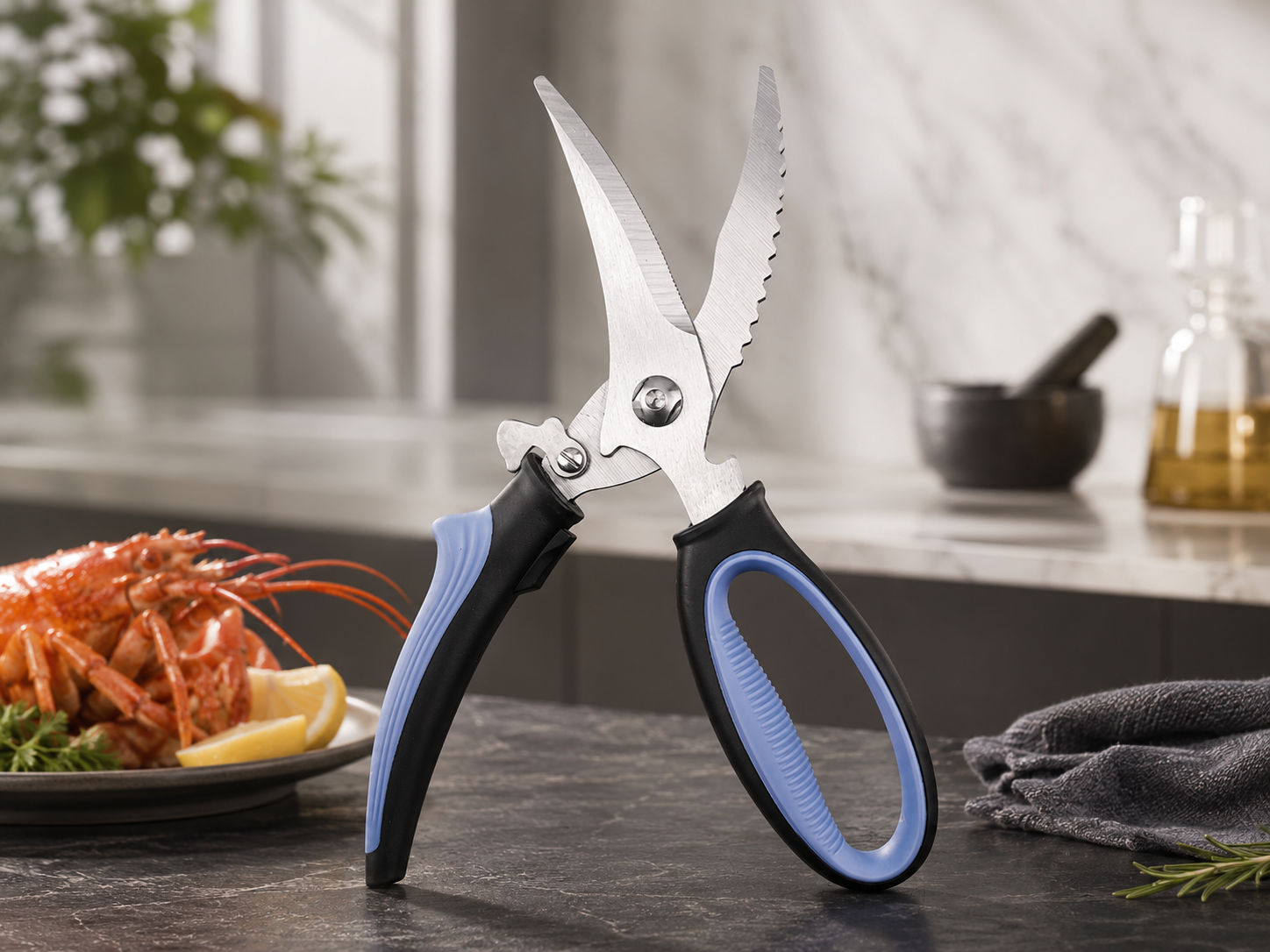
A supplier relationship becomes valuable when quality is repeatable. ISO describes ISO 9001 as a quality management standard connected with improving performance and meeting customer expectations. For kitchen scissors sourcing, that principle is practical: buyers need defined inspection points, consistent production, and stable communication across repeat orders.
Inspection should cover blade alignment, pivot movement, handle strength, surface finish, rust prevention, packaging fit, and carton protection. A supplier that understands these points can help buyers reduce after-sales risk before products enter the market.
Frequently Asked Questions
Q: What is the difference between a kitchen scissors manufacturer and a kitchen scissors supplier?
A: A manufacturer focuses more on production capability, materials, and process control. A supplier should also help buyers with product selection, packaging, channel fit, private-label options, and bulk order planning.
Q: What kitchen scissors are best for retail buyers?
A: Retail buyers usually need scissors with stainless steel blades, comfortable handles, clear function points, safe packaging, and a product position that matches the sales channel.
Q: Can kitchen scissors be customized for OEM or private-label programs?
A: Yes. Common customization options include handle color, logo placement, packaging style, blade cover, product set combination, and retail display design.
A More Practical Way to Work With a Kitchen Scissors Supplier
Choosing a kitchen scissors supplier is not only about finding a product that cuts well. It is about building a kitchen scissors line that fits retail shelves, online listings, wholesale catalogs, and private-label programs. BONET’s scissors range gives buyers a practical starting point for cooking shears, multi-purpose kitchen shears, and retail-ready kitchen cutting tools.
For product selection and category planning, start with the BONET scissors product page. For company background, Yangjiang manufacturing positioning, and long-term cooperation information, visit the BONET About Us page.