





Assessing the Structural Integrity of Plastic vs. Metal Handles in Household Scissors

Introduction
Household scissors are essential everyday tools found in almost every home, kitchen, office, and craft room. While we often focus on blade sharpness, the handles play a critical role in overall performance, comfort, and longevity. This blog post examines the structural integrity of plastic versus metal handles in household scissors, comparing their strength, durability, fatigue resistance, and real-world suitability.

Understanding the Materials
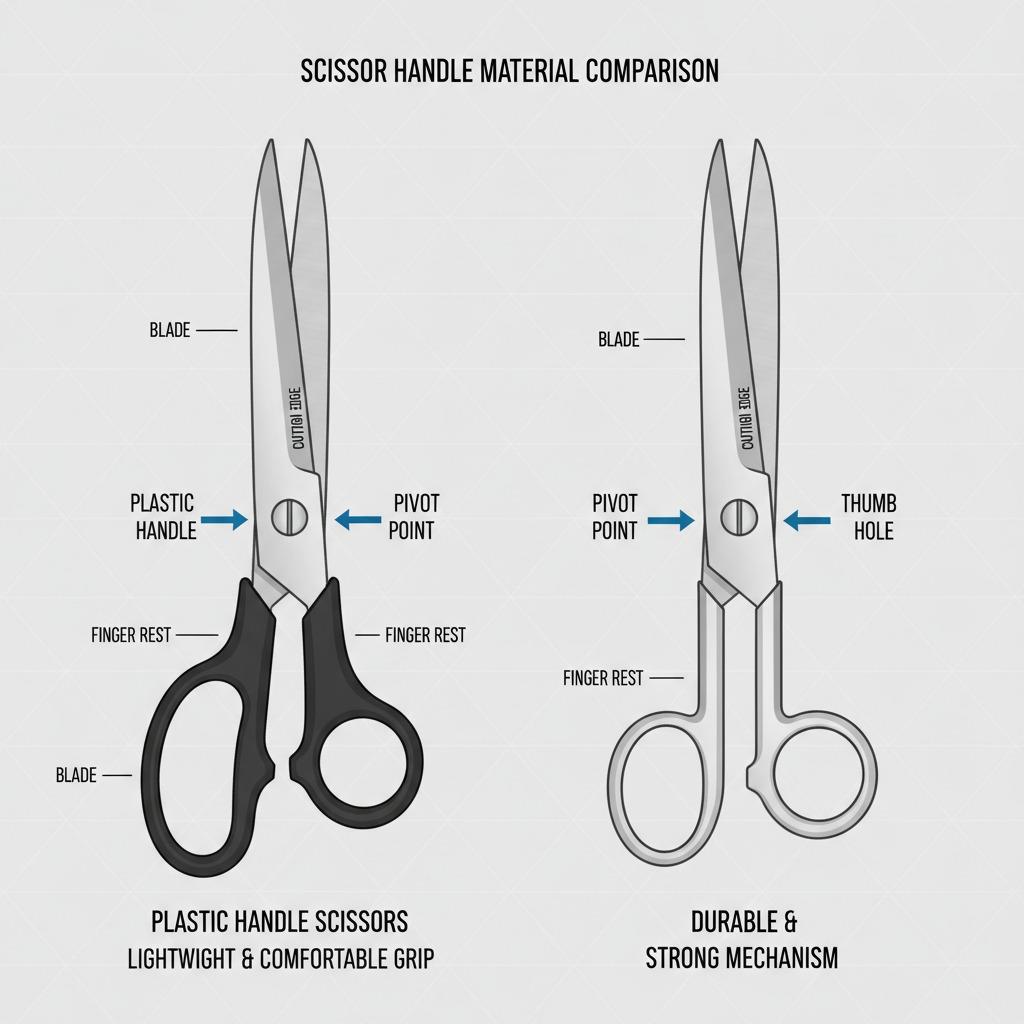
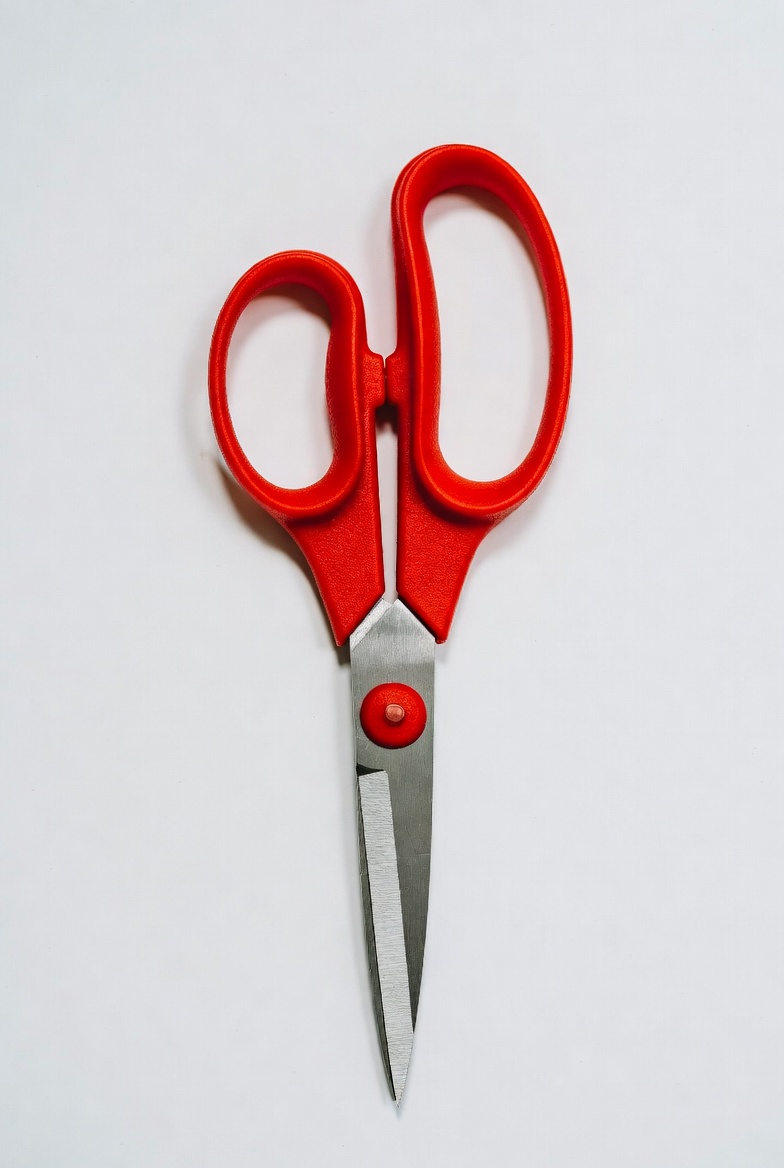
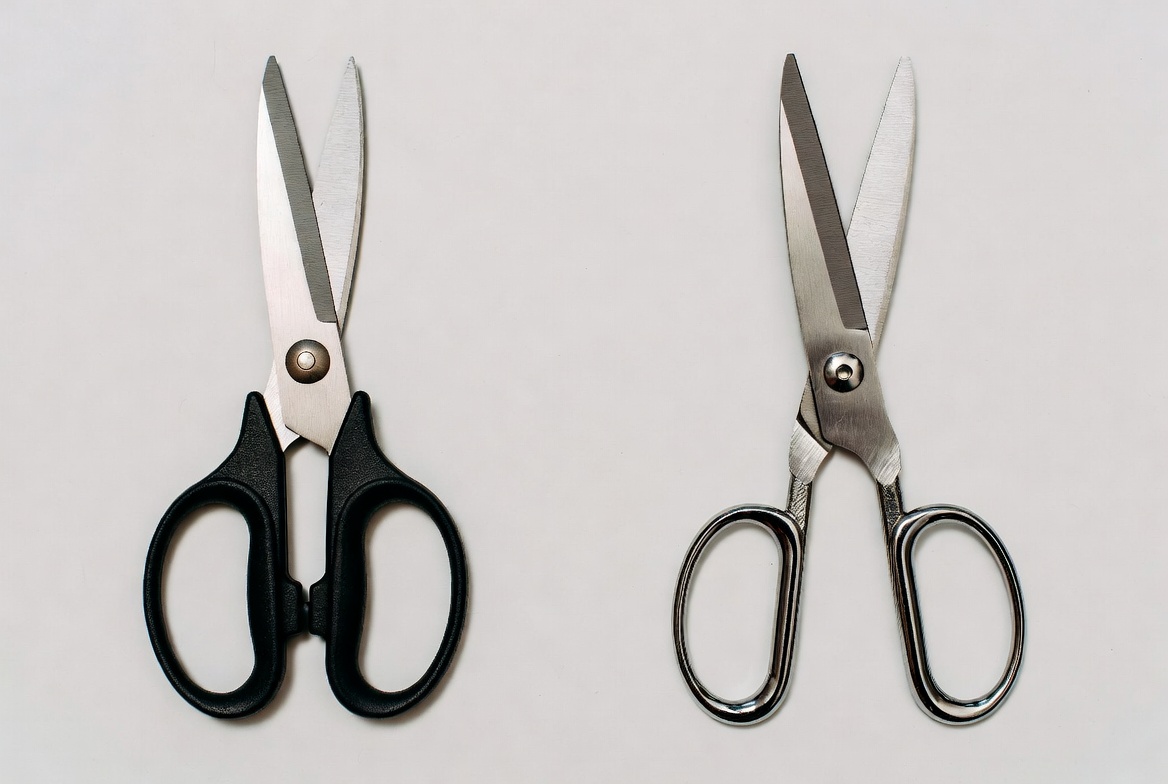
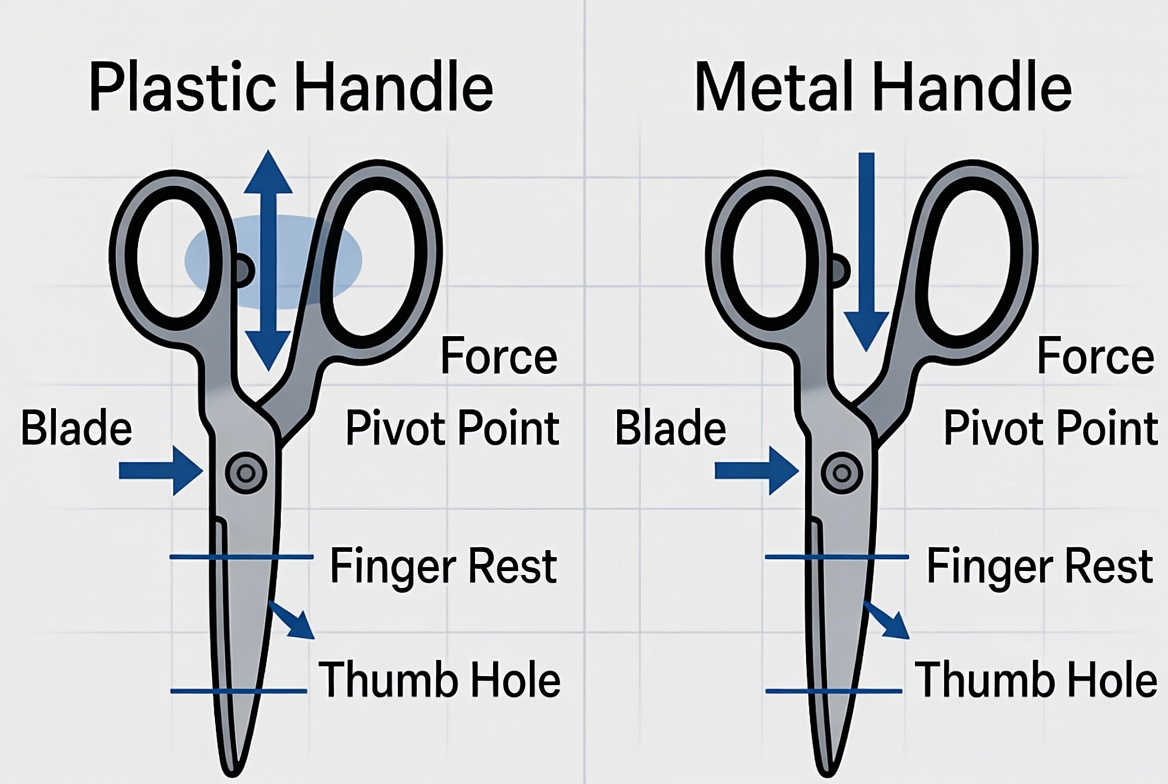
Plastic Handles (typically polypropylene, ABS, or nylon-reinforced polymers): Lightweight, ergonomic, and cost-effective. Manufacturers mold them to fit comfortably in the hand, often with soft-touch grips. However, they are attached to metal blade tangs via adhesives or mechanical fits, creating potential weak points.
Metal Handles (usually stainless steel, aluminum, or zinc alloys): Formed as a single piece with the blade or as robust extensions. They offer superior rigidity and are less prone to separation or deformation over time.
Key Factors in Assessing Structural Integrity
- Tensile and Impact Strength — Metal handles generally outperform plastic in load-bearing and drop tests. Plastic can crack under repeated high-force use or impacts.
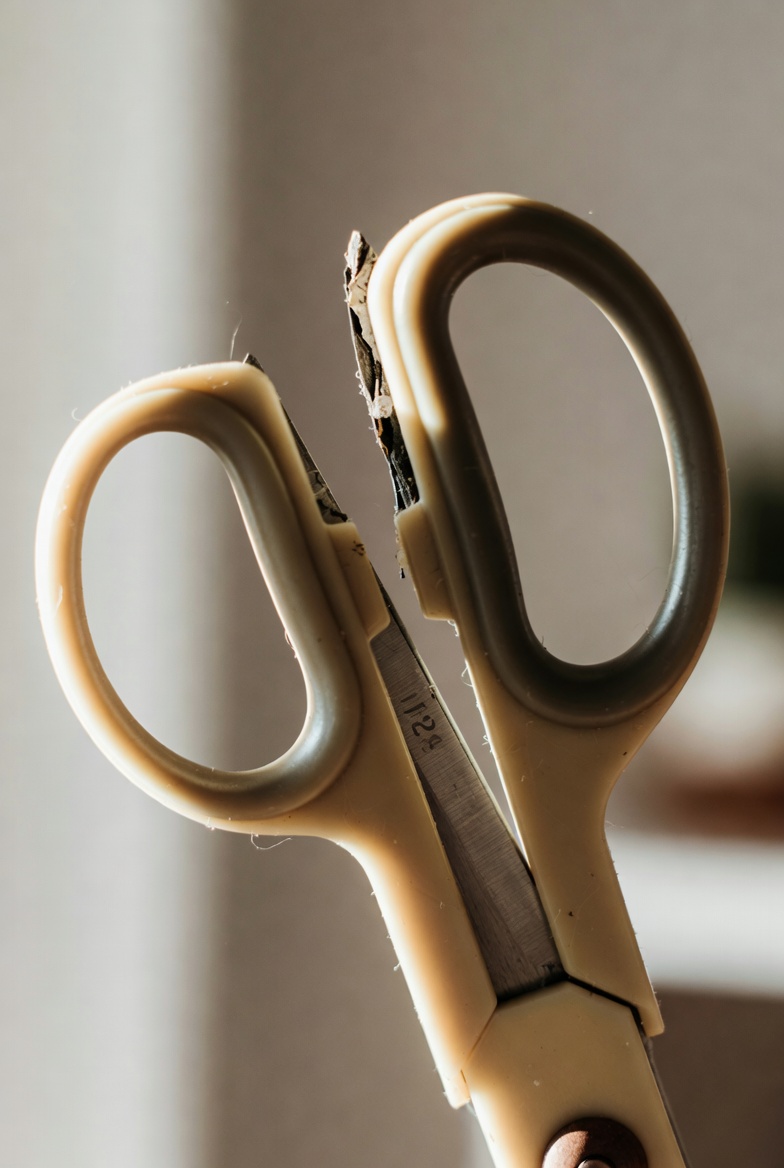
- Fatigue Resistance — Plastic handles may develop micro-cracks after thousands of open-close cycles, especially in cheaper models. Metal maintains integrity longer.
- Environmental Durability — Plastic can become brittle with UV exposure, heat, or age. Metal resists better but may corrode without proper stainless grades or coatings.
- Ergonomics and Grip — Plastic wins for comfort during prolonged use. Metal can feel cold or slippery unless textured or coated.
- Failure Modes — Common plastic issues include handle detachment from the blade tang or cracking at stress points. Metal failures are rarer, usually involving pivot wear instead.

Comparison Table: Plastic vs. Metal Handles
| Aspect | Plastic Handles | Metal Handles | Winner |
|---|---|---|---|
| Weight | Lightweight (easier for extended use) | Heavier | Plastic |
| Initial Cost | Lower | Higher | Plastic |
| Tensile/Impact Strength | Moderate (can crack under stress) | High (resists bending and breaking) | Metal |
| Fatigue Life (cycles) | Good for light use; degrades over time | Excellent, long-term durability | Metal |
| Ergonomics/Comfort | Excellent (moldable, cushioned) | Good if textured; can be cold/slippery | Plastic |
| Environmental Resistance | Susceptible to UV, heat, aging | Better corrosion/heat resistance | Metal |
| Repairability | Difficult (adhesive failure common) | Easier to weld or replace parts | Metal |
| Typical Lifespan (heavy household use) | 1–5 years | 10+ years | Metal |
Data synthesized from material science properties and user reports on tool durability.

Real-World Performance in Household Scissors
In typical household tasks—cutting paper, fabric, food packaging, or light gardening—plastic-handled household scissors perform adequately for most users. Brands like Fiskars have popularized comfortable plastic grips with lifetime warranties on certain models. However, frequent users or those applying high force (e.g., cutting thick cardboard or multiple layers) often report plastic handles loosening or cracking after 1–2 years.
All-metal designs, while less common in basic household scissors, excel in heavy-duty applications. They provide consistent feedback and structural reliability, making them ideal for long-term investment.
Recommendations
- Choose Plastic for occasional home use, prioritizing comfort and low cost. Look for reinforced polymers and reputable brands.
- Choose Metal for frequent or demanding tasks where structural integrity matters most.
- Hybrid Options: Some scissors combine metal cores with plastic overmolds for the best of both worlds.
- Maintenance Tip: Avoid excessive force on plastic handles; store scissors in dry conditions away from direct sunlight.
Conclusion
When assessing structural integrity, metal handles generally outperform plastic in strength, durability, and longevity for household scissors. Plastic offers superior ergonomics and affordability for light duties but may compromise on long-term reliability. Consider your usage patterns when purchasing—investing in quality handles pays off in fewer replacements and better performance over time.
Keywords: household scissors, plastic handles, metal handles, structural integrity, tool durability.
What type of household scissors do you use most often? Share your experiences in the comments!