





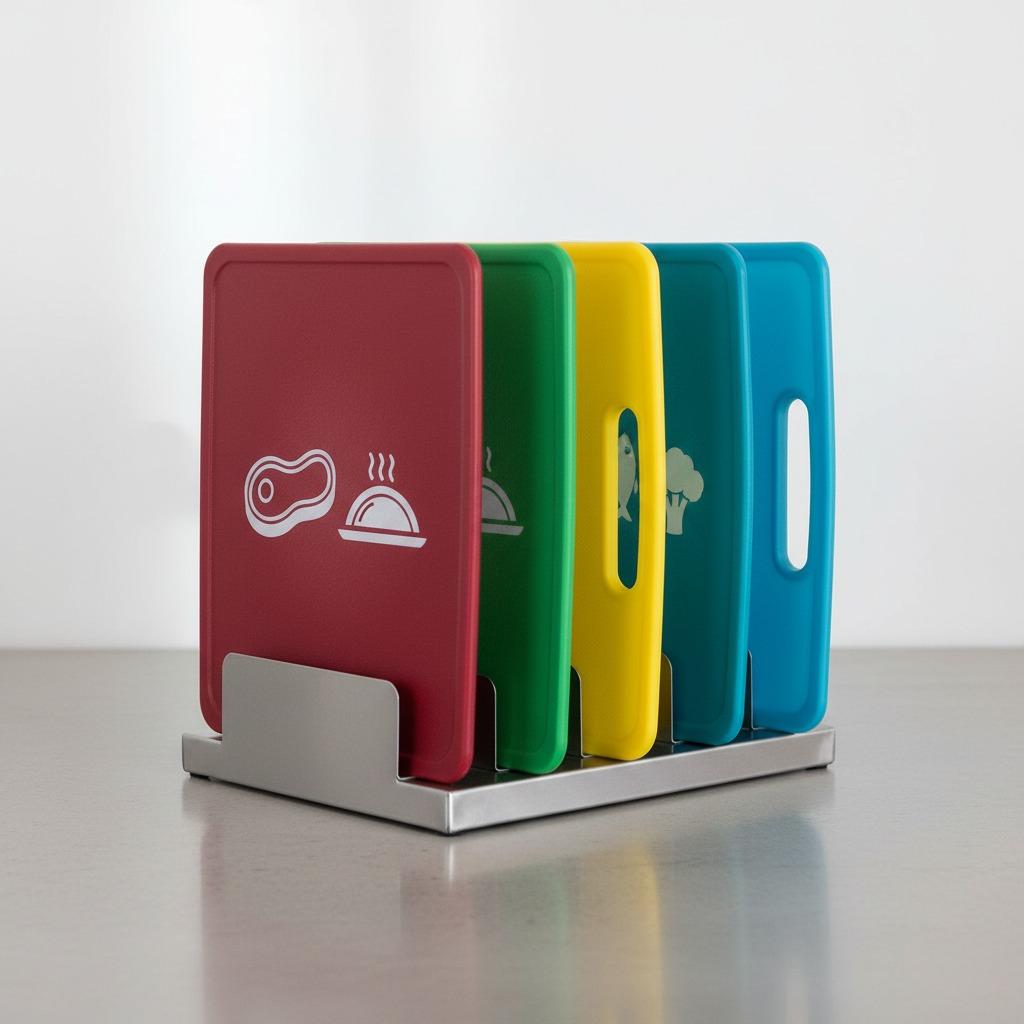


A Beginner’s Guide to Plastic Cutting Board Materials
Welcome to the kitchen! If you’re new to cooking or simply shopping for your first set of tools, a Plastic Cutting Board is one of the smartest investments you can make. Lightweight, affordable, easy to clean, and available in fun colors, Plastic Cutting Boards are perfect for beginners. But not all plastic is the same. Understanding the main materials will help you choose a durable, knife-friendly, and food-safe Plastic Cutting Board that lasts for years.
Plastic Cutting Boards are non-porous, which means they don’t absorb juices or bacteria like wood can. They’re dishwasher-safe, stain-resistant when cared for, and come in color-coded sets to prevent cross-contamination—making them a hygienic choice for any home kitchen.
The two most popular materials for quality Plastic Cutting Boards are High-Density Polyethylene (HDPE) and Polypropylene (PP). Both are FDA-approved, BPA-free, and completely food-safe. Let’s explore each one.
High-Density Polyethylene (HDPE) Plastic Cutting Boards
HDPE is the gold standard for most home and commercial Plastic Cutting Boards. It’s tough, impact-resistant, and gives knives just enough “give” so your blades stay sharp longer.
Pros • Excellent scratch and gouge resistance • Very gentle on knife edges • Non-porous and easy to sanitize • Affordable and widely available
Cons • Lower heat tolerance (around 250°F / 121°C) — avoid leaving near hot pans or using in very high-heat dishwashers
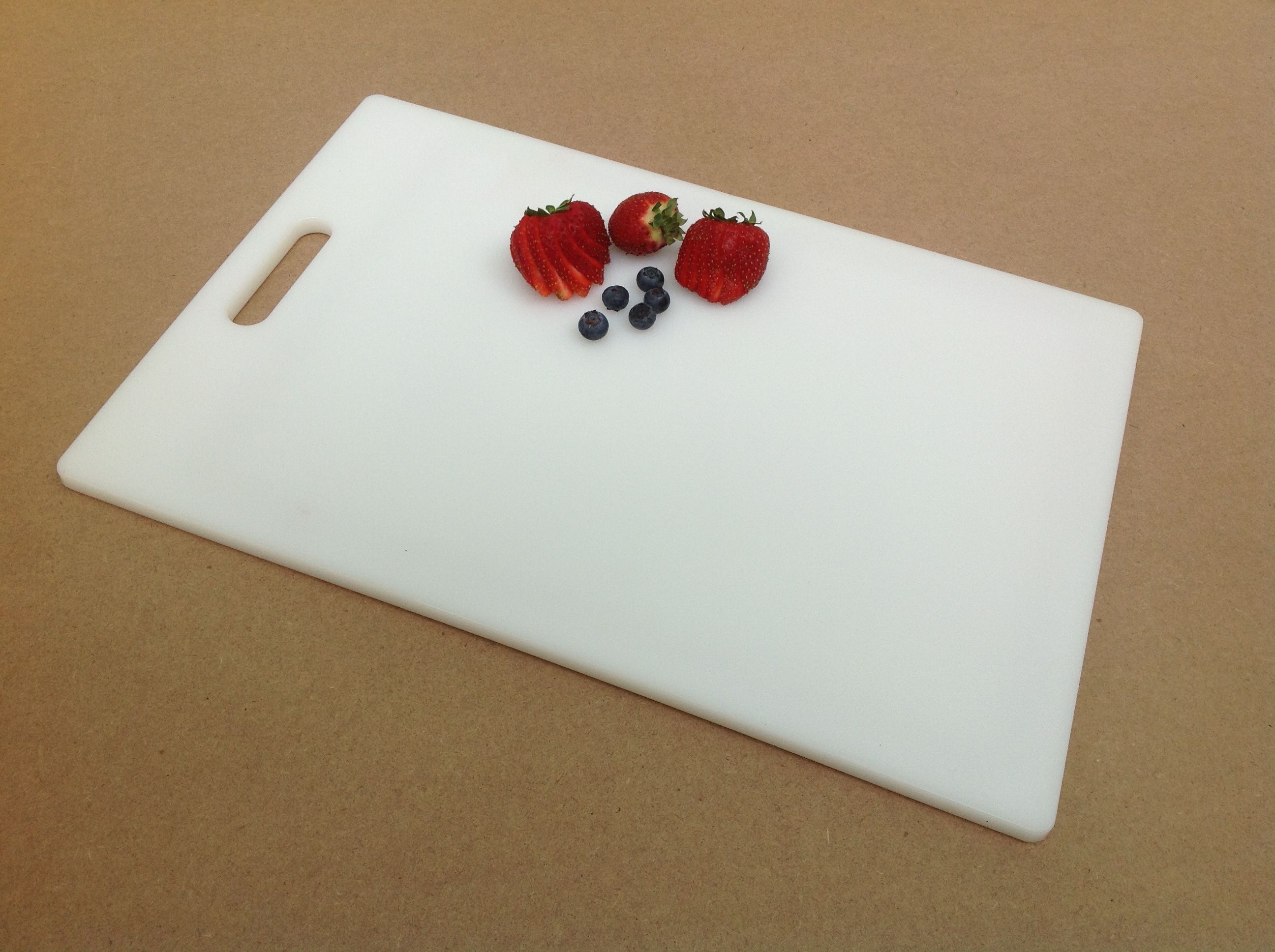
Example of a classic white HDPE Plastic Cutting Board — clean, durable, and ready for everyday use.
Polypropylene (PP) Plastic Cutting Boards
PP boards are becoming increasingly popular because they handle heat better than HDPE. They’re a great choice if you want a Plastic Cutting Board that can go straight into the dishwasher after hot prep work.
Pros • Higher heat resistance (up to 320°F / 160°C) • Lighter weight • Smooth, non-porous surface that resists stains • Often more rigid for stability
Cons • Can develop deeper grooves over heavy use • Slightly more expensive than basic HDPE
:max_bytes(150000):strip_icc()/sea-tier-3-primary-plastic-cutting-boards-nsimpson-336-b01e9c61520b4d7eb5f4923273feea7b.jpeg)
:max_bytes(150000):strip_icc()/1500x1000-sea-cuttingboard-update-54c73a77e3e143fe87b27cba1dfe33ac.jpg)
Modern PP and composite-style Plastic Cutting Boards — note the clean lines and textured surfaces that help grip food while staying gentle on knives.
Quick Comparison Table: HDPE vs PP Plastic Cutting Boards
| Feature | HDPE (High-Density Polyethylene) | PP (Polypropylene) |
|---|---|---|
| Heat Resistance | Medium (up to ~250°F) | High (up to ~320°F) |
| Knife Friendliness | Excellent (soft enough to protect edges) | Very Good (slightly stiffer) |
| Scratch/Groove Resistance | Superior | Good (may groove faster with heavy use) |
| Weight | Standard | Lighter |
| Cost | Lower | Slightly higher |
| Best For | Everyday home use, raw meat prep | Hot foods, heavy dishwasher use |
This simple table makes it easy for beginners to pick the right Plastic Cutting Board material for their cooking style.
Color-Coded Plastic Cutting Boards: Stay Safe in the Kitchen
One of the biggest advantages of plastic is color coding. Using different colors prevents cross-contamination between raw meat, vegetables, and cooked foods.
Standard color guide: • Red – Raw meat • Green – Fruits & vegetables • Blue – Fish & seafood • White/Yellow – Dairy or cooked foods
:max_bytes(150000):strip_icc()/color-coded-cutting-boards-996030_final-01-9ca266b91e76472ba659dc307e22b24c.png)
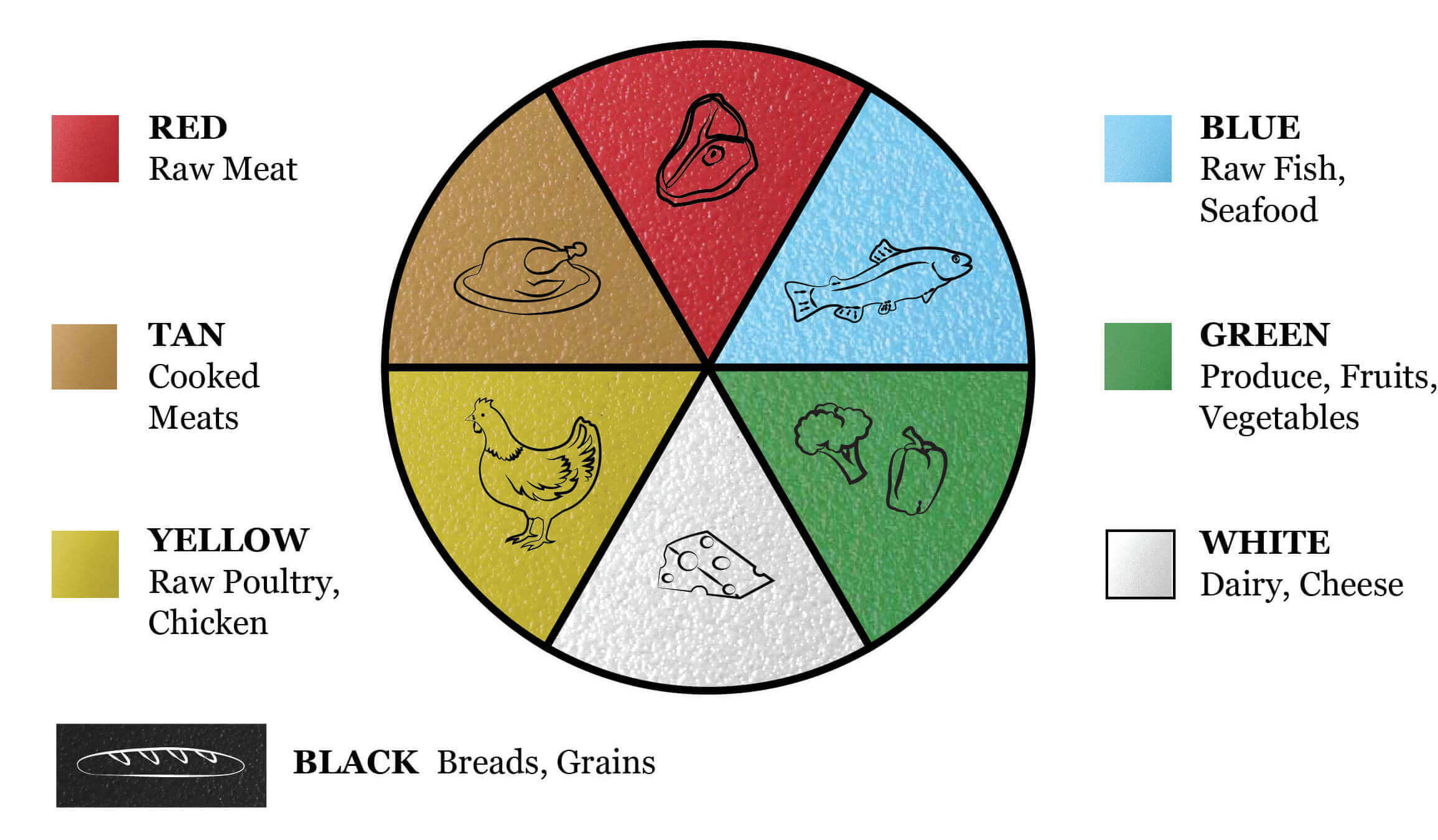
Visual guide to color-coded Plastic Cutting Boards — the easiest way for beginners to cook safely!
How to Choose and Care for Your Plastic Cutting Board
Choosing tips • Go for at least ½-inch thickness for stability. • Pick a size that fits your counter and tasks (18×12 inches is great for most home cooks). • Look for NSF-certified or FDA-approved labels. • Start with a 4–6 piece color-coded set.
Care tips • Wash with hot soapy water or pop in the dishwasher (check the label). • Sanitize weekly with a vinegar solution or diluted bleach. • Replace when deep grooves appear (usually after 1–2 years of heavy use). • Store flat or hang to avoid warping.
:max_bytes(150000):strip_icc()/winco-plastic-cutting-board-grace-kelly-01-a2f64fd497eb4e53b1633aa6e67ea8fc.jpg)
:max_bytes(150000):strip_icc()/faw-oxo-good-grips-plastic-carving-cutting-board-brian-luckey-08-d1da3e52903c4262b06a5f05d3fbf15f.jpeg)
Real-life use: A sharp knife gliding across a quality Plastic Cutting Board — exactly what you want in the kitchen!
Final Thoughts
Whether you choose HDPE for unbeatable durability or PP for superior heat resistance, a well-made Plastic Cutting Board will become your kitchen’s hardest-working tool. Start simple with a color-coded set, follow basic care rules, and you’ll enjoy safer, cleaner, and more enjoyable cooking from day one.
Ready to upgrade? Head to your favorite store or online shop and look for “HDPE” or “PP” on the label — your perfect Plastic Cutting Board is waiting!
Happy chopping! 🥕🔪